A Wall of Separation
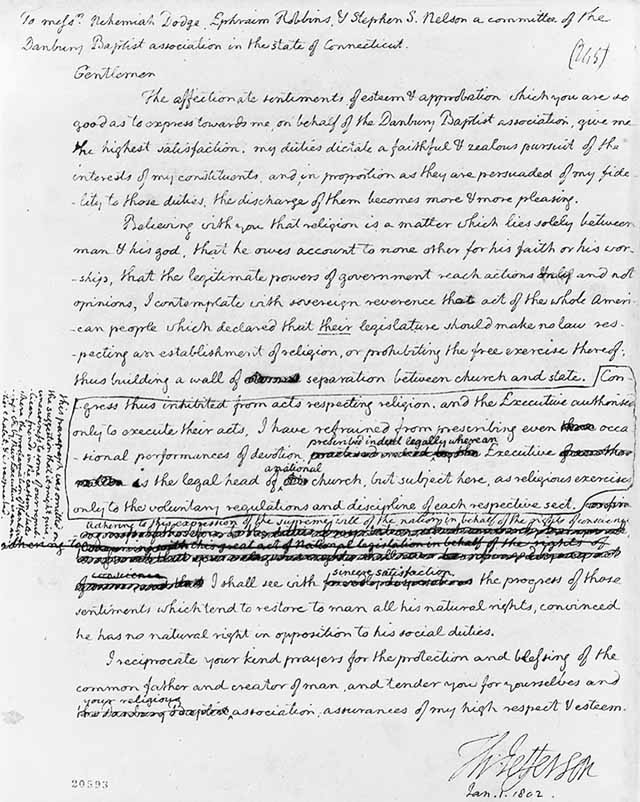
The celebrated phrase, "a wall of separation between church and state," was contained in Thomas Jefferson's letter to the Danbury Baptists. American courts have used the phrase to interpret the Founders' intentions regarding the relationship between government and religion. The words, "wall of separation," appear just above the section of the letter that Jefferson circled for deletion. In the deleted section Jefferson explained why he refused to proclaim national days of fasting and thanksgiving, as his predecessors, George Washington and John Adams, had done. In the left margin, next to the deleted section, Jefferson noted that he excised the section to avoid offending "our republican friends in the eastern states" who cherished days of fasting and thanksgiving.
George Washington
1st U.S. President
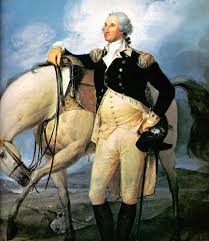
"While we are zealously performing the duties of good citizens and soldiers, we certainly ought not to be inattentive to the higher duties of religion. To the distinguished character of Patriot, it should be our highest glory to add the more distinguished character of Christian."
--The Writings of Washington, pp. 342-343.
John Adams
2nd U.S. President and Signer of the Declaration of Independence
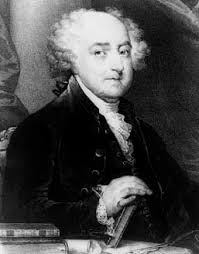
"Suppose a nation in some distant Region should take the Bible for their only law Book, and every member should regulate his conduct by the precepts there exhibited! Every member would be obliged in conscience, to temperance, frugality, and industry; to justice, kindness, and charity towards his fellow men; and to piety, love, and reverence toward Almighty God ... What a Eutopia, what a Paradise would this region be."
--Diary and Autobiography of John Adams, Vol. III, p. 9.
"The general principles on which the fathers achieved independence were the general principles of Christianity. I will avow that I then believed, and now believe, that those general principles of Christianity are as eternal and immutable as the existence and attributes of God."
--Adams wrote this on June 28, 1813, in a letter to Thomas Jefferson.
"The second day of July, 1776, will be the most memorable epoch in the history of America. I am apt to believe that it will be celebrated by succeeding generations as the great anniversary Festival. It ought to be commemorated, as the Day of Deliverance, by solemn acts of devotion to God Almighty. It ought to be solemnized with pomp and parade, with shows, games, sports, guns, bells, bonfires and illuminations, from one end of this continent to the other, from this time forward forever."
--Adams wrote this in a letter to his wife, Abigail, on July 3, 1776.
Benjamin Franklin
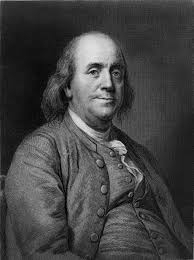
Signer of the Declaration of Independence and Unites States Constitution
"Here is my Creed. I believe in one God, the Creator of the Universe. That He governs it by His Providence. That He ought to be worshipped.
That the most acceptable service we render to him is in doing good to his other children. That the soul of man is immortal, and will be treated with justice in another life respecting its conduct in this. These I take to be the fundamental points in all sound religion, and I regard them as you do in whatever sect I meet with them.
As to Jesus of Nazareth, my opinion of whom you particularly desire, I think the system of morals and his religion, as he left them to us, is the best the world ever saw, or is likely to see;
But I apprehend it has received various corrupting changes, and I have, with most of the present dissenters in England, some doubts as to his divinity; though it is a question I do not dogmatize upon, having never studied it, and think it needless to busy myself with it now, when I expect soon an opportunity of knowing the truth with less trouble. I see no harm, however, in its being believed, if that belief has the good consequence, as probably it has, of making his doctrines more respected and more observed; especially as I do not perceive, that the Supreme takes it amiss, by distinguishing the unbelievers in his government of the world with any peculiar marks of his displeasure."
--Benjamin Franklin wrote this in a letter to Ezra Stiles, President of Yale University on March 9, 1790.
Thomas Jefferson
3rd U.S. President, Drafter and Signer of the Declaration of Independence
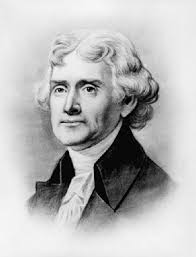
"God who gave us life gave us liberty. And can the liberties of a nation be thought secure when we have removed their only firm basis, a conviction in the minds of the people that these liberties are of the Gift of God? That they are not to be violated but with His wrath? Indeed, I tremble for my country when I reflect that God is just; that His justice cannot sleep forever; That a revolution of the wheel of fortune, a change of situation, is among possible events; that it may become probable by Supernatural influence! The Almighty has no attribute which can take side with us in that event."
--Notes on the State of Virginia, Query XVIII, p. 237.
"I am a real Christian - that is to say, a disciple of the doctrines of Jesus Christ."
--The Writings of Thomas Jefferson, p. 385.
John Hancock
1st Signer of the Declaration of Independence
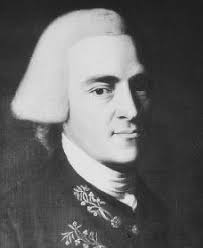
"Resistance to tyranny becomes the Christian and social duty of each individual. ... Continue steadfast and, with a proper sense of your dependence on God, nobly defend those rights which heaven gave, and no man ought to take from us."
--History of the United States of America, Vol. II, p. 229.
Samuel Adams
Signer of the Declaration of Independence and Father of the American Revolution
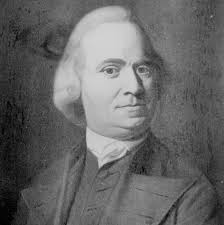
"And as it is our duty to extend our wishes to the happiness of the great family of man, I conceive that we cannot better express ourselves than by humbly supplicating the Supreme Ruler of the world that the rod of tyrants may be broken to pieces, and the oppressed made free again; that wars may cease in all the earth, and that the confusions that are and have been among nations may be overruled by promoting and speedily bringing on that holy and happy period when the kingdom of our Lord and Saviour Jesus Christ may be everywhere established, and all people everywhere willingly bow to the sceptre of Him who is Prince of Peace."
--As Governor of Massachusetts, Proclamation of a Day of Fast, March 20, 1797.
James Madison
4th U.S. President
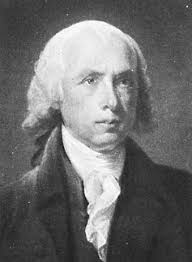
"Cursed be all that learning that is contrary to the cross of Christ."
--America's Providential History, p. 93.
James Monroe
5th U.S. President
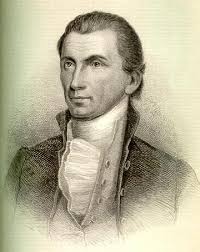
"When we view the blessings with which our country has been favored, those which we now enjoy, and the means which we possess of handing them down unimpaired to our latest posterity, our attention is irresistibly drawn to the source from whence they flow. Let us then, unite in offering our most grateful acknowledgements for these blessings to the Divine Author of All Good."
--Monroe made this statement in his 2nd Annual Message to Congress, November 16, 1818.
John Quincy Adams
6th U.S. President
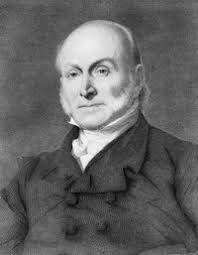
"The hope of a Christian is inseparable from his faith. Whoever believes in the divine inspiration of the Holy Scriptures must hope that the religion of Jesus shall prevail throughout the earth. Never since the foundation of the world have the prospects of mankind been more encouraging to that hope than they appear to be at the present time. And may the associated distribution of the Bible proceed and prosper till the Lord shall have made 'bare His holy arm in the eyes of all the nations, and all the ends of the earth shall see the salvation of our God' (Isaiah 52:10)."
--Life of John Quincy Adams, p. 248.
William Penn
Founder of Pennsylvania
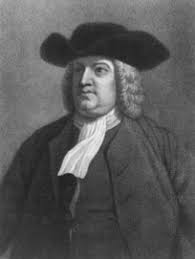
"I do declare to the whole world that we believe the Scriptures to contain a declaration of the mind and will of God in and to those ages in which they were written; being given forth by the Holy Ghost moving in the hearts of holy men of God; that they ought also to be read, believed, and fulfilled in our day; being used for reproof and instruction, that the man of God may be perfect. They are a declaration and testimony of heavenly things themselves, and, as such, we carry a high respect for them. We accept them as the words of God Himself."
--Treatise of the Religion of the Quakers, p. 355.
Roger Sherman
Signer of the Declaration of Independence and United States Constitution
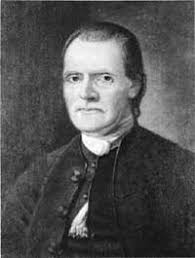
"I believe that there is one only living and true God, existing in three persons, the Father, the Son, and the Holy Ghost, the same in substance equal in power and glory. That the scriptures of the old and new testaments are a revelation from God, and a complete rule to direct us how we may glorify and enjoy him. That God has foreordained whatsoever comes to pass, so as thereby he is not the author or approver of sin. That he creates all things, and preserves and governs all creatures and all their actions, in a manner perfectly consistent with the freedom of will in moral agents, and the usefulness of means. That he made man at first perfectly holy, that the first man sinned, and as he was the public head of his posterity, they all became sinners in consequence of his first transgression, are wholly indisposed to that which is good and inclined to evil, and on account of sin are liable to all the miseries of this life, to death, and to the pains of hell forever.
I believe that God having elected some of mankind to eternal life, did send his own Son to become man, die in the room and stead of sinners and thus to lay a foundation for the offer of pardon and salvation to all mankind, so as all may be saved who are willing to accept the gospel offer: also by his special grace and spirit, to regenerate, sanctify and enable to persevere in holiness, all who shall be saved; and to procure in consequence of their repentance and faith in himself their justification by virtue of his atonement as the only meritorious cause.
I believe a visible church to be a congregation of those who make a credible profession of their faith in Christ, and obedience to him, joined by the bond of the covenant.
I believe that the souls of believers are at their death made perfectly holy, and immediately taken to glory: that at the end of this world there will be a resurrection of the dead, and a final judgement of all mankind, when the righteous shall be publicly acquitted by Christ the Judge and admitted to everlasting life and glory, and the wicked be sentenced to everlasting punishment."
--The Life of Roger Sherman, pp. 272-273.
Benjamin Rush
Signer of the Declaration of Independence and Ratifier of the U.S. Constitution
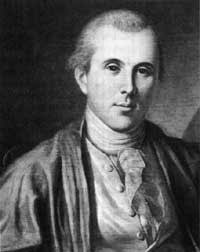
"The Gospel of Jesus Christ prescribes the wisest rules for just conduct in every situation of life. Happy they who are enabled to obey them in all situations!"
--The Autobiography of Benjamin Rush, pp. 165-166.
"Christianity is the only true and perfect religion, and that in proportion as mankind adopts its principles and obeys its precepts, they will be wise and happy."
--Essays, Literary, Moral, and Philosophical, published in 1798.
"I know there is an objection among many people to teaching children doctrines of any kind, because they are liable to be controverted. But let us not be wiser than our Maker.
If moral precepts alone could have reformed mankind, the mission of the Son of God into all the world would have been unnecessary. The perfect morality of the Gospel rests upon the doctrine which, though often controverted has never been refuted: I mean the vicarious life and death of the Son of God."
--Essays, Literary, Moral, and Philosophical, published in 1798.
John Witherspoon
Signer of the Declaration of Independence, Clergyman and President of Princeton University
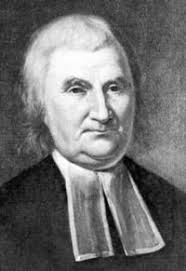
"While we give praise to God, the Supreme Disposer of all events, for His interposition on our behalf, let us guard against the dangerous error of trusting in, or boasting of, an arm of flesh ... If your cause is just, if your principles are pure, and if your conduct is prudent, you need not fear the multitude of opposing hosts.
What follows from this? That he is the best friend to American liberty, who is most sincere and active in promoting true and undefiled religion, and who sets himself with the greatest firmness to bear down profanity and immorality of every kind.
Whoever is an avowed enemy of God, I scruple not to call him an enemy of his country."
--Sermon at Princeton University, "The Dominion of Providence over the Passions of Men," May 17, 1776.
Alexander Hamilton
Signer of the Declaration of Independence and Ratifier of the U.S. Constitution
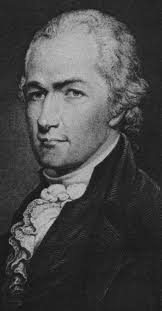
"I have carefully examined the evidences of the Christian religion, and if I was sitting as a juror upon its authenticity I would unhesitatingly give my verdict in its favor. I can prove its truth as clearly as any proposition ever submitted to the mind of man."
--Famous American Statesmen, p. 126.
Patrick Henry
Ratifier of the U.S. Constitution
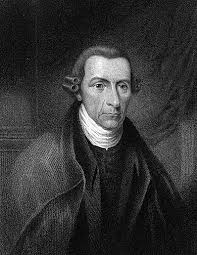
"It cannot be emphasized too strongly or too often that this great nation was founded, not by religionists, but by Christians; not on religions, but on the Gospel of Jesus Christ. For this very reason peoples of other faiths have been afforded asylum, prosperity, and freedom of worship here."
--The Trumpet Voice of Freedom: Patrick Henry of Virginia, p. iii.
"The Bible ... is a book worth more than all the other books that were ever printed."
--Sketches of the Life and Character of Patrick Henry, p. 402.
John Jay
1st Chief Justice of the U.S. Supreme Court and President of the American Bible Society
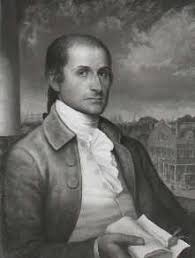
"By conveying the Bible to people thus circumstanced, we certainly do them a most interesting kindness. We thereby enable them to learn that man was originally created and placed in a state of happiness, but, becoming disobedient, was subjected to the degradation and evils which he and his posterity have since experienced.
The Bible will also inform them that our gracious Creator has provided for us a Redeemer, in whom all the nations of the earth shall be blessed; that this Redeemer has made atonement "for the sins of the whole world," and thereby reconciling the Divine justice with the Divine mercy has opened a way for our redemption and salvation; and that these inestimable benefits are of the free gift and grace of God, not of our deserving, nor in our power to deserve."
--In God We Trust?The Religious Beliefs and Ideas of the American Founding Fathers, p. 379.
"In forming and settling my belief relative to the doctrines of Christianity, I adopted no articles from creeds but such only as, on careful examination, I found to be confirmed by the Bible."
--American Statesman Series, p. 360.
Charles Carroll (Signer of The Declaration of Independence)
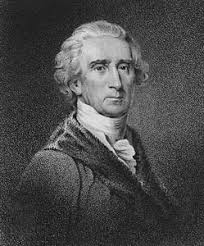
" Without morals a republic cannot subsist any length of time: they therefore who are decrying the Christian religion, whose morality is so subline and pure... are undermining the solid foundation of morals, the best security for the duration of free government."
THe Seven Principles of the Judeo-Christian Ethic
WHEN OUR NATION'S FOUNDING FATHERS gave us documents such as the Declaration of Independence, the Constitution, the Bill of Rights, and others, they had to lean upon a common understanding of law, government, social order, and morality. That understranding sprang from the common acceptance of what has come to be known as the Judeo-Christian Ethic, which is the system of the moral and social values that originates in the Old and New Testaments of the Word of God.
Whether each of the Founding Fathers was a Christian is not the issue. Their writings, their statements, and their votes evidence the fact that the majority of them embraced these great principles as the basis for a civilized nation.
Principle #1 The Dignity of Human Life
The Scriptures emphatically teach the great importance of the respect and preservation of human life. In the Declaration of Independence our nation's Founding Fathers wrote that everyone has "unalienable rights," and that among these rights are "life, liberty, and the pursuit of happiness." We Americans not only believe this for our land, but also we send our brave military men and women around the world to defend the rights of those who are threatened.
If people and nations do not grant ultimate respect and protection to both the born and the unborn, all other professed morals and values are meaningless. The dignity of human life is not just a principle of the Bible- it is the first principle of any civilized society.
"You shall not murder." - Exodus 20:13
"You shall love your neighbor as yourself." - Matthew 22:39
Principle #2 The Traditional Monogramous Family
Our society has been based upon the belief that the biblical view of traditional marriage and family is the backbone of a healthy social order. Since the joining together of Adam and Eve, marriage has been recognized as a holy union between one man and one woman, and out of that union comes children- born into a home with a father and a mother to love them, nurture them, and teach them how to become healthy, productive, and responsible citizens.
The plan of God, nature, and common sense is a man and a woman producing children within the institution of marriage. When that plan is lost, "marriage" and "family" become meaningless, and a nation and its people will follow the road to ruin. World history has proven it over and again. Preserving the traditional family is vital to the future of any great nation.
"And Adam said: 'This is now bone of my bones and flesh of my flesh; she shall be called Woman, because she was taken out of Man.' Therefore a man shall leave his father and mother and be joined to his wife, and they shall become one flesh." - Genesis 2:23,24
Principle#3 A National Work Ethic
Ingrained deep within the American spirit is the willingness and the desire to give an honest day's work for an honest day's pay. This independent spirit has no desire to simply exist on handouts from government or to depend on the generosity of others. It is this same independent spirit that has allowed America to create the greatest and strongest economy in the history of the world.
Americans have had their challenges. The Great Depression of the 1930's knocked us to our knees, but it did not beat us. Together, Americans helped one another and lifted our nation back to its economic might. The powers of the world look at our nation and ask where that spirit of honest labor came from and where this work ethic originated. It came from the men and women who lived before us. Those generations were raised to believe in this third principle of honest work, which is found throughout the Word of God.
"For even when we were with you, we commanded you this: If anyone will not work, neither shall he eat." - 2nd Thessalonians 3:10
Principle#4 The Right to a God-Centered Education
We see in Proverbs 1:7 that "the fear of the LORD is the beginning of knowledge." How can one understand the creation without first knowing its Creator? The answer is that one cannot.
Our Forefathers certainly understood this. For example, did you know that most of America's oldest universities such as Harvard, Yale, Princeton, and Dartmouth were founded by Christian preachers or churches? Harvard University, founded in 1636, adopted "Rules and Precepts" which stated: "Let every Student be plainly instructed, and earnestly pressed to consider well, the main end of his life and studies is, to know God and Jesus Christ which is eternal life." Harvard's original seal has upon it these words: "Truth for Christ and the Church."
The early children's textbook "The New England Primer" taught the ABC's by having children memorize: "A- In Adam's fall, we sinned all. B- Heaven to find, the Bible mind." Today's youth are tomorrow's America. There is truth in the statement attributed to George Washington: "Reason and experience both forbid us to expect that national morality can prevail to the exclusion of religious principle.... It is impossible to rightly govern the world without God and the Bible."
"And you, fathers, do not provoke your children to wrath, but bring them up in the training and admonition of the Lord." - Ephesians 6:4
Principle#5 The Abrahamic Covenant
A covenant is a decision involving two individuals or groups stating that they will keep a promise or fulfill an agreement between them. The Book of Genesis records the story of God making a covenant with Abraham. The basis of that covenant was that if Abraham would follow God, obeying His laws and commandments, God would bless Abraham with generations of children that would outnumber the stars in the heavens (Genesis 15:5). Abraham believed God, obeyed his Word, and God rewarded him with many descendants, a nation of people now know as Israel.
This principle of the Abrahamic covenant states that if a person or a nation obeys God, observing the moral truths found in the Bible, that person or nation will be blessed. If they disobey, they will bring punishment upon themselves. For most of our nation's history, Americans have accepted the belief that good deeds produce good results and that people who were "God-fearing" in language and in lifestyle would be blessed by Him. That belief has been proven to be true time and again. The writer of Proverbs tells it plainly, "Righteousness exalts a nation, but sin is a reproach to any people" (14:34).
"Now the LORD had said to Abram: 'Get out of your country, from your family and from your father's house, to a land that I will show you. I will make you a great nation; I will bless you and make your name great; and you shall be a blessing. I will bless those who bless you, and I will curse him who curses you; and in you all the families of the earth shall be blessed.'" - Genesis 12:1-3
"Therefore know that only those who are of faith are sons of Abraham." - Galatians 3:7
Principle#6 Common Decency
Simply put, this is the belief that a decent nation is made up of decent people. That nation, when faced with any trying or difficult situation, will do the decent, right, and honest thing. And for the most part, that has been the record of our national history. For example, Americans have given their lives in wars on foreign soil so that others might experience freedom. Americans have worked to feed the world's poor, to clothe the naked, and to aid the hurting. Americans have opened their arms to many of the world's oppressed and given them safe haven.
Engraved on a bronze plaque on the base of the Statue of Liberty are these words from the poem "The New Colossus" by Emma Lazarus: "Give me your tired, your poor, your huddled masses yearning to breathe free, the wretched refuse of your teeming shore. Send these, the homeless, tempest-tost to me; I lift my lamp beside the golden door!" A world-renowned symbol of freedom, this statue stands to remind us all that America has indeed been, and continues to be today, a nation of common decency.
"You shall lvoe your neighbor as yourself." -Matthew 22:39
Principle#7 Our Personal Accountability to God
Perhaps the greatest restraint against acts of evil towards others is the knowledge that every person and nation will one day give an account for their actions to Almighty God. Certainly the Bible tells us that we are responsible for our actions and we must be accountable for what we do or don't do. It also teaches that there is a penalty for doing wrong and a blessing when we do that which is right, noble, and just.
The great American statesman Daniel Webster was once asked, "What is the most sobering thought that ever entered your mind?" He quickly responded, "My personal accountability to God." Webster knew that he would one day stand before God in eternity and give an account for his actions. The same applies to every man, woman, and nation.
"And as it is appointed for men to die once, but after this the judgment." -Hebrews 9:27
The Battle Hymn of the Republic
In November 1861, after a visit to the Union Army camp, Julia Ward Howe wrote the poem that came to be called " The Battle Hymn of the republic." It became the best-known civil War song of the Union Army as well as a well-loved American patriotic anthem.
Genesis: 3:15 " He shall bruise your head, and you shall bruise His heel."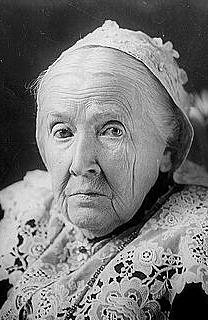
Mine eyes have seen the glory of the coming of the Lord;
He is trampling out the vintage where the grapes of wrath are stored;
He hath loosed the fateful lightning of His terrible swift sword;
His truth is marching on.
Glory! Glory! Hallelujah! Glory! Glory! Hallelujah!
Glory! Glory! Hallelujah! His truth is marching on.
I have seen Him in the watch fires of a hundred circling camps
They have builded Him an altar in the evening dews and damps;
I can read His righteous sentence by the dim and flaring lamps;
His day is marching on.
Glory! Glory! Hallelujah! Glory! Glory! Hallelujah!
Glory! Glory! Hallelujah! His day is marching on.
I have read a fiery Gospel writ in burnished rows of steel;
"As ye deal with My contemners, so with you My grace shall deal";
Let the Hero, born of woman, crush the serpent with His heel,
Since God is marching on.
Glory! Glory! Hallelujah! Glory! Glory! Hallelujah!
Glory! Glory! Hallelujah! Since God is marching on.
He has sounded forth the trumpet that shall never call retreat;
He is sifting out the hearts of men before His judgment seat;
Oh, be swift, my soul, to answer Him! be jubilant, my feet;
Our God is marching on.
Glory! Glory! Hallelujah! Glory! Glory! Hallelujah!
Glory! Glory! Hallelujah! Our God is marching on.
In the beauty of the lilies Christ was born across the sea,
With a glory in His bosom that transfigures you and me:
As He died to make men holy, let us live to make men free;
[originally .let us die to make men free]
While God is marching on.
Glory! Glory! Hallelujah! Glory! Glory! Hallelujah!
Glory! Glory! Hallelujah! While God is marching on.
He is coming like the glory of the morning on the wave,
He is wisdom to the mighty, He is honor to the brave;
So the world shall be His footstool, and the soul of wrong His slave,
Our God is marching on.
Glory! Glory! Hallelujah! Glory! Glory! Hallelujah!
Glory! Glory! Hallelujah! Our God is marching on.
The Right to Keep and Bear Arms
The Second Amendment to the U.S. constitution reads:"A well-regulated militia being necessary to the security of a free State, the right of the Peole to keep and bear arms shall not be infrigned."
Genesis 14:14 Now when Abram heard that his brother was taken captice, he armed his three hundred and eighteen trained servants
Having fled persecution in Great Britain, the Puritans had laws requiring every family to own a gun, to carry it in public places, and to train children in the use of firearms. In 1619, the colony of Virginia had statutes that required everyone to bear arms. Connecticut law of 1650 required every man above the age of sixteen to possess " a good musket or other gun, fit for service." The early laws of America are very clear about his. The people were responsible for their own defense and freedoms and needed to be prepared to fight. Thomas Jefferson said, " The strongest reason for the peopel to retain the right to bear arms is , as a last resort, to protect themselves against tyranny in government." At that time, there was no concept of a professional army, created and paid to defend the colonies. George Mason, called the father of the Bill of Rights, said, What is the militia? It is what hold people. To disarm the people is the best and most effectual way to enslave them." With the approach of the American Revolution, the natural rights philosophers had established the foundation for self-defense. Every man's life, they said, belongs to God, and to allow one's life to be taken because one failed to defend it was wrong. This natural law to the right of self-defense was also applied to the duty to protect one's family, community, and national liberties. For the colonist, at the hear tof their religion was liberty, a sacred gift from God. For the most part, the colonial churches, particulary New Englands's Congregational congregations, beleived that to revolt against tyrants, such as King George, was to obey God. It may have had its roots in the Old Testament accounts of Isreal's war for freedom, but it became a powerful fire that impassioned the citizenry. And it remains a beleif that continues to influence American's views about the right to bear arms today.
What can we do for our county:
Service: " So this day shall be to you a memorial..."
In honor of the veterans of the Civil War, Supreme Court Justice Oliver Wendell Holmes Jr., who had been wonduded three times during the war, said in the Memorial Day Address in 1884:
It is now the moment when by common consent we pause to become conscious of our national life and to rejoice in it, to recall what our country has done for each of us, and to ask oursleves what we can do for our country in return.
Reverence for the Word
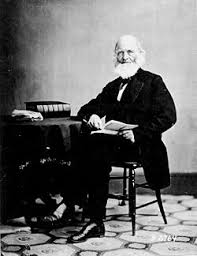
William Cullen Bryant(1794-1878), known as the " Father of American Poets" and long-time editor of the New York Evening Post, wrote about he Bible: The sacredness of the Bible awes me, and I approach it with the same sort of reverential feeling that an ancient Hebrew might be supposed to feel who was about to touch the ark of God with unhallowed hands. Exodus 25:22 " and there I will meet with you..."
Science and the Bible
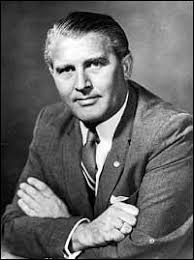
Known as " The father of the American Space Programs, " Wernher von Braun (1912-1977) wa the director of NASA. he was sometiems said to be the preeminent rocket scientish of the twentieth centry, and he stated: In this age of space flight, when we use the modern tools of science to advance into new regions of human activity, the Bible-this grandiose, stirring history of the gradual revelation and unfolding of the moral law remains in every way and upto date book. our knowledge and use of the laws of nature that enable us to fly to the moon also uneable us to destroy our home planet with the atom bomb. Science itself does not address the question whether we shoudl use the pwoer at our disposal for good or for evil. The guidelines of what e ought to do are furnished in the moral law of God. It is not loinger enought at we pray that God may be with us on our side. We must learn to pray that we may be on God's side.
Harriet Powers
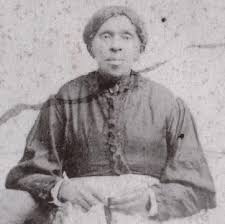
Harriet Powers (1837-1910) was an African_American slave folk artist and quilt maker from rural Gerogia. While only two of her quilts have survived, Bible Quilt 1886 and Bible Quilt 1898, they are nationally recongize as masterworks of American folk art. her panel-storied quilts use traditional applique technigues and piecework to record local legends, Bible stories, and astronomical events. Considered among the finest examples of nineteeth-century Southern quilting, her work is on display at the National Museum of American History in Washington, D.C., and the Museum of Fine Arts in Boston, Massachusetts. Her quilts demonstrate both African and African-American influences and consist of numerous pictorial squares, with each panel depicting a biblical sotry or celestial phenomenon. Scenes such as Adam and Eve naming the animals in the Garden of Eden, Cain killing his brother Abel, and the baptism of Christ are observed. Her art is powerful, vivid, and clearly tells a story. It is thought that Powers could neither read nor write, but she know the Bible stories from singing Negro spirituals and from church sermons. Exodus 35:35, " He has filled them with skill to do all manner of work of the .....tapestry maker....
NOAH WEBSTER and EDUCATION
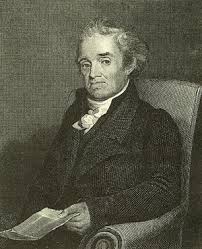
Noah Webster, who has been called the " Father of American Scholarship and Education, " was the great American lexicographer who gave us the very first American Dictionary of the English Languarge. To do so, he learned 26 languages in order to supplement the documentation of the etymology of the words. In that dictionary, Webster defined education as:
The bringing us, as of a child: instructions; formaton of manners. Education comprehends all that series of instruction and discipline which is intended to enlighten the understanding, correct the timper, and form that manners and habits of youth, and fit them for usefulness in their future stations. To give children a good education in manners, arts, and science is important: to give them a religious education is indespensable; and an immense responsibility rest on parents and guardians who neglect these duties.
Webster beleived a well-educated citzenry was essential to the preservation of freedom. " Information is fatal to despotism, " he wrote, and part of his life was spent in the writing and publishing of textbooks to be used in local schools and in homes that would convery the rudiments of spelling and grammar, as well as provided both moral formation and civic education. he wrote:
An attempt to conduct the affairs of a free government with wisdom and impartiality and to preserve the just rights of all classes of citizens, without the guidance of Divine precepts, will certainly end in disappointment. God is the supreme moral Governor of the world. He has made, and as He Himself governs with perfect rectitude, he requires His rational creatures to govern themselves in like manner. If men will not submit to be controlled by His laws, he will punish them by the evils resulting from their own disobedience...
Any system of education, therefore, which limits instructions to the arts and science and rejects the aids of religion in forming the characters of citizens, in essentially defective.....
In my view, the Christian religion is the most important and one of the first things in whcih all children, under a free government ought to be instructed... No truth is more evident to my mind than that the Christian religion must be the basis of any government intended to secure the rights and privileges of a free eople.
As one of America's Founders, he knew that an education devoid of religious training was defective. " ....teach the children of Isreal all the statutes which the LORD has spoken....."
PUBLIC SCHOOLS and RELIGIOUS INSTRUCTION
In the 1952 case of Zorach v. Clauson, the Supreme Court upheld the position that New York City permits its public schools to release students during schools hours to go to religious centers for religious instructions or devotional exercises:
The First Amendment, however, does not say that in every respect there shall be a seperation of Church and State. Rather, it studiously defines the manner, the specific ways, in which there shall be no concert or union or dependency one on the other. That is the common sense of the matter. Otherwise the state and religion would be aliens to each other-hostile, susicious, and even unfriendly......
Municipalities would not be permitted to render police or fire protection to religious groups. Policemen who helped parishioners into their places of worship woudl violate the Constitution. Prayers in ouor legislative halls; the appeals to the Almighty in the messages of the Cheif Executive; the proclamation making Thanksgiving Day a holiday; " so help me God in our courtroom oaths-these all all other references to the Almighty that run through our laws, oru public rituals, our ceremonies, would be flouting the First Amendment.
A fasidious atheist or agnostic could even object to the supplication with which the Court opens each sessions: " God save the United States and this Honorable Court."
We are a religious people and our institutions presuppose a Supreme Being.......
When the state encourages religious instruction or cooperates with religious authorities by adjusting the schedule of public events to sectarioan needs, it follows the best of our traditions. For it then respects the religious nature of our people and accommodates the public service to their spiritual needs. To hold that it may not would be a find in the Constitution a requirement that the governemtn show a callous indifference to religious group. That would be preferring those who beleive in no religion over those who do believe......
We find not constitutional requirement make it necessary for goveernment to be hostile to relgion and to throw its weigth against the efforts to widen the scope of religious influence. The government must remain neutral when it comes to cmpetition between sects....We cannot read into the Bill of Rights such a philosophy of hostility to religion. "These are the feats of the LORD which you shall proclaim to be holy convocation...."Leviticus 23:37
THE LIBERTY BELL
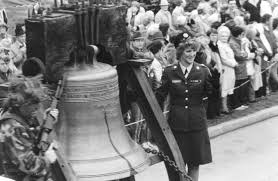
The Pennsylvania Assembly orderd the bell in 1751 to commemorate the golden anniversary of William Penn's 1701 Charter of Pivileges, Pennsylvania's original Constitution, which speaks of the rights and freedoms valued by people the world over. As the bell was created, the biblical quotation " Proclaim liberty throughout all the land unto all the inhabitants thereof' was particulary apt. For the line in the Bible immediately preceding " proclaim liberty' is, " And ye shall hallow the 50th year." What better way to pay homage to Penn and hallow the fiftieth year than with a bell proclaing liberty? The Liberty Bell gained iconic importance when abolitionists in their efforts to put an end to slavery throughouth American adopted it as a symbol of emancipation and liberty in 1837. Related to a popular fictional story written in 1747, tradition says that on July 8,1776, the Liberty Bell rang out from the tower of Independence Hall, summoning the citizens of Philadelphia to hear the first public reading of the Declaration of Independence hall, summoning the citizens of Philadelphia to hear the first public reading of the Declaration of Independence. The truth is that the steeple was in bad condition, and historians today highly doubt this account. However, its association with the Delaration of Independence became fixed in the collective mythology. "......proclaim liberty throughout all the land...." Leviticus 25:10
ETERNAL VIGILANCE
In his Farewell Address in 1837, President Andrew Jackson stated:
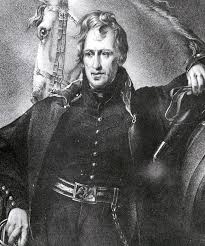
But you must remember, my fellow citizens, that eternal vigilance by the people is the price of liberty, and that you must pay the price if you wish to secure the blessings. You have no longer any cause to fear danger from abroad; your strength and power are well known throughout the civilized world, as well as the high and gallant bearing of your sons. It is from within, among yourselves-from cupidity, from corruption, from disappointed ambition and inordinate thirst for power-that factions will be formed and liberty endangered. It is against such designs, whatever disguise and actors may assume, that you have especially to guard yourselves. You have the hightest of human trusts committed to your care. Providence has showered on this favored land blessings without number, and has chosen you as the guardians of freedom, to preserve it for the benefit of the human race. May He who hold in His hands the destinies of nations make you worthy of the favors He has bestowed and enabled you, with pure hearts and pure hands and sleep less vigilance, to guard and defend to the end of time the great charge He has committed to your keeping. "... as a guardian carries a nursing child.... NUMBERS 11:12
RELIGION AND MORALITY
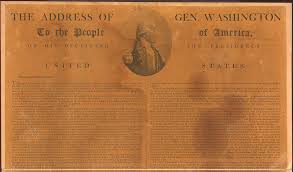
In his Farewell Address in 1796, President George Washington put his finder on the importance of preserving a freedom of religion within a society: Of all the dispositions and habits which lead to political prospertiy, religion and morality are indispensable supports. In vain would that man claim the tribute of patriotism who should labor to subvert thes great pillars of human happiness-these firmest props of the duties of men and citizens. The mere politician, equally with the pious and, ought to respect and to cherish them. A volume could not trace all their connections with private and public felicity. Let is simply be asked, " Where is the security for property, for reputation, for life, if the sense of religious obligation desert the oaths which are the instruments of investigation in courts of justice?" And let us with caution indulge the supposition that morality can be maintained without religion. Whatever may be conceded to the influence of refined education on minds of peculiar structure, reason and experience both forbid us to expect that national morality can prevail in exclusion of religious principle. It is substantially true that virtue of morality is a necesary spring of popular government. The rule indeed extends with more or less force to every species of free government. Who that is a sincere friend to it can look with indifference upon attempts to shake the foundation of the fabric? " If a man.... swears an oath to bind himself by some agreement, he shall not break his word....... NUMBERS 30:2
THE NORTHWEST ORDINANCE
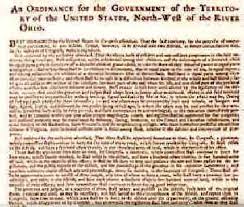
On July 13, 1787, the Continental Congress passed the " Northwest Ordinance," which declared that the United States intended to settle the region north of the Ohio River and est of the Mississippi River. It set u themethod by which new states would be admitted to the Union, giving them the same rights andpwers as thestablished states, incliding the freeedom of religion. Interestingly, it also stated that importance that Congress attached to religion: " Religion, morality, and knowledge being mecessary to good government and the happiness of mankind, schools and the means of education shall forever be encouraged." While the exact meaning of this sentence is till hotly debated, it is certanily positive legislation regarding religion and morality. James Wilson, one of only six Founders to have signed both the Declaration of Independence and the Constitution, pronounced in his law lectures at the University of Pennsylvania: " Far from being rivals of enemies, religion and law are twin sisters, friends, and mutual assistants." Not surprisingly, throughout American history up until the middle years of the twentieth century, government looked positively on both religion and morality. Various states worked out particular arrangements reflecting their particular circumstances, but in each case, religious freedom was respected while religion was looked upon as part of the common good, and " seedbed of virtue" contributing to American society......MORAL STRENGTH...." You shall teach them diligently to your children....... DEUTERONOMY 6:7"
THE FINGER OF GOD
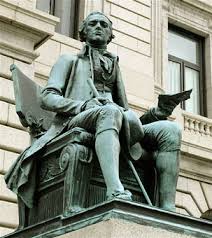
Alexander Hamilton (1755-1804) was a Founding Father, one of America's first Constitutional lawyers, and wrote 51 of the 85 Federalist Papers. After the Constitutional convention of 1787, Hamilton stated: For my own part, I sencerely esteem it a system which without the finger of God, never could have been suggested and agreed upon by such a diversity of interests........written with the finger of God....DEUTERONOMY 9:10"
The Purest Patriotism
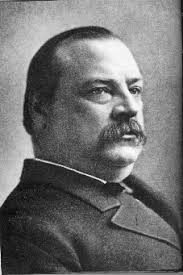
Stephen Grover Cleveland, who served as both the 22nd and 24th President of the United States, stated: All must admit that the reception of the teachings of Christ results in the purest patriotism, in the most scrupulous fidelity to public trust, and in the best type of citizenship. Thos who manage the affairs of government are by this means reminded that the law of God demands that they should be courageously true to the interests of the people, and that the Ruler of the universe will require of them a strict acount of their stewardship. The teachings of both human and Divine law thus merging into one word, duty, form the only union of church and state that a civil and religious government can recognize.
Covered with His Providence
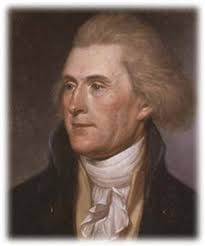
In his 1805 Inaugual Address, President Thomas Jefferson stated: I shall need, too, the favor of the Being in whose hands we are, who led our forefahters, as Isreal of old, from their native land and planted them in a country flowing with all the necessities and comforts of life, who has covered our infancy with His Providence and our riper years with His wisdom and power, and to whose goodness I ask you to join with me in supplications that He will so enlighten the minds of your servants, guide their councils and prosper their measures, that whatever they do shall result in your good,a nd shall secure to you the peace, friendship, and approbation of all nations. ...... and the glory of the Lord apeared(NUMBERS16:42)
Chaplains for the United States Congress
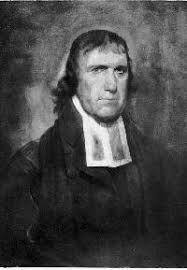
On May 1, 1789, the United States Congress elected the Reverend William Linn, a Dutch Reformed minister from New York city, to be the first chaplain of the U.S. House of Representatives, appropriating five hundred dollars from the federal treasury to pay his salary. During the period when Congress first met in the new capital of Washington, D.C., the House and Senate chaplains regularly led Christian services every Sunday in the House Chamber. In 1860, Rabbi Morris Jacob Raphall was the frist Jewish clergyman invited to open a House session with prayer. Both the House and the Senate have continued to regularly open every session with prayer........So Moses prayed for the people(Numbers 21:7)
Samuel Morse

Samuel Morse (1791-1872), an accomplished artist by profession, was captivated with the notion that electricity could be used to transmit messages instantly. He worked for years to become the creator of a single wire telegraph system, and co-inventor, with Alfred Vail, of the Morse code, with letters represented by dots and dashes, to convey the telegraph messages. His invention in the 1820s revolutionized and changed forever the realm of communications. Although Morse has a patent, it took him years of failures and poverty before he was able to secure financial backing to implement his project. About those years, he said, " The only gleam of hope... is from confidence in God. When I look upward in calms any apprehension for the furture, and I seem to hear a voice saying: "If I clothe the lilies of the field, shall I not also clothe you? Here is my strong confidence, and I will wait patiently for the direction of Providence." In 1843, congress finally awarded Morris $30,000 to construct a telegraphic line between Baltimore and Washington. By Friday May 24, 1844, the lines were ready, and the words of the first official message were sent: " What hath God wrought!" selected from Numbers 23:23, in recognition that it was God who had inspired and sustained Morse throughout......."Oh, what God has done!"(Numbers 23:23)
Purpose of a Public Education
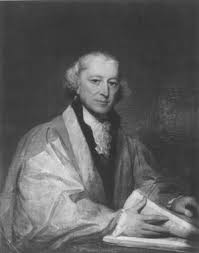
William Samuel Johnson (1727-1819), president of Columbia University (formerly King's College), said to the first graduating class after ther Revolutionary War: You have...received a public education, the purpose whereof hath been to qualify you the better to serve your Creator and your country... Your first great duties... are those you owe to heaven, to your Creator and Redeemer. Let these be ever present to your minds and exemplified in your lived and conduct. Imprint deep upon your minds the principles of piety toward God, and a reverence and fear of His holy name. The fear of God is the beginning of wisdom, and its consummaton is everlasting felicity... Remember, too, that you are the redeemed of the Lord, that you are bought with a price, even the inestimable price of the precious blood of the Son of God. Adore Jehovah, therefore, as your God and your Judge. Love, fear, and serve Him as your Creator, Redeemer, and Sanctifier. Acquaint yourselves with Him in His Word and holy ordinance. Make Him your friend and protector and your felicity is secured both here and hereafter. And with respect to particular duties to Him, it is your happiness that you are well assured that he best serves his Maker, who does most good to his country and to mankind. ".......to serve the Lord your God with all your heart..."(Deuteronomy 10:12)
"GOD BLESS AMERICA"
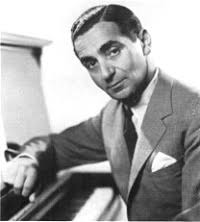
Born in a poor Russian Jewish ghetto, Irving Berlin immigrated to America with his parents when he was five, settling in New York's Lower East Side. He became one of the most prolific American songwriters in history. " God Bless America" is an American patriotic song he originally wrote in 1918 and revised in 1938, as war and the Nazis were threatening Europe. It takes the form of a prayer for God's Blessing and peace for the nation. Singer Kate Smith introduced the revised " God Bless America" during her radio broadcast on Armistice Day 1938, and the song was an immediate sensation. It is considered an unofficial national anthem of the United States.
While the storm clouds gather far across the sea, Let us swear allegiance to a land that's free, Let us all be grateful for a land so fair, as we raise our voices in a solemn prayer.
God bless America, land tha I love Stand beside her and guide her Through the night with the light from above From the mountains, to the prairies, to the oceans white with foam God bless America, my home sweet home.
" For the Lord your God will bless you jus as He promised you........," DEUTERONOMY 15:6
THE CONNECTION BETWEEN RELIGION AND DEMOCRACY
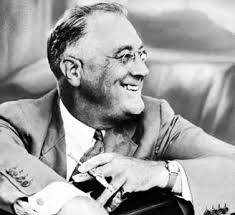
The follwoing excerpt from Franklin D.Roosevelt's State of the Union to Congress in 1939 underscores how, until recent years, America's leadership understood the vital connection between religion and democracy. With Hitler on the move in Europe, President Roosevelt said:
Storms from aboad directly challenge three institutions indispensable to Americans, now as always. The first is religion. It is the source of the other two-democracy and international good faith.
Religion, by teaching man his relationship to God, gives the individual a sense of his own dignity and teaches him to respect himself by repecting his neighbor.
Democracy, the practice of self-government, is a covenant among free men to respect the rights and liberties of their fellows.
International good faith, a sister of democracy,springs from the will of civilized nations of men to respect the rights and liberties of other nations of men.
In a modern civilization, all three-religion, democracy, and international good faith-complement and support each other.
Where freedom of religion has been attacked, the attacked has come from sources opposed to democracy. Where democracy has been over thrown, the spirit of free worship has disappeared. And where religion and democracy have vanished, good faith and reason in international affairs have given way to strident ambition and brute force.
An ordering of society which relegates religion, democracy, and good faith among nations to the background can find no place within it for the ideals of the Prince of Peace. The United States rejects such an ordering and retains its ancient faith.
There comes a time in the affairs of men when they must prepare to defend, not their homes alone, but the tenets of faith and humantiy on which their churches, their governements, and their very civilization are founded. The defense of religion, of democracy, and of good faith among nations is all the same fight. To save one we must now make up our minds to save all.
".....the Lord your God is He who goes with you, to fight for you against your enemies....." DEUTERONOMY 20:4
THE NEW ENGLAND PRIMER
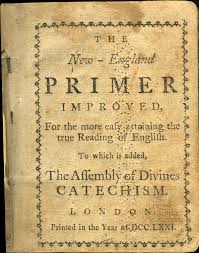
The New England Primer was first published between 1688 and 1690 by Bengamin Harris of Boston. It was the first reading primer designed for the American colonies and became the most successful educational textbook published in the early days of U.S. history. The 90-page work contained religious maxims, woodcuts, alphabetical assistants, catechisms, and moral lessons. Many of its selections were drawn from the King James Bible.
SHIELD OF STRENGTH

Captain Russell Rippetoe was a member of the Alpha Company, Third Battalion, 75th Ranger Regiment, serving in Operation Iraqi Freedom in March 2003. Previously, while serving in Afghanistan, Rippetoe saw men die for the first time; and it brought a renewal to his Christian faith and a new passion for the Bible, which he carried in his backpack. On the chain around his next, he wore a "Shield of Strength," a one-by-two-inch emblem that displays a U.S. flag on one side and the words from Joshua 1:9 on the other. In his combat diary dated March 27, Rippetoe has written; "Think about what Mom and I talked about: all things happening for a reaon, and God knows the reason." On April 3,2003, Alpha Company was manning a nighttime checkpoint near the Hadithah Dam in western Iraq when a vehicle approached. Suddenly, a women jumped out and cried, " I'm hungry. I need food and water!" Protecting his men, Rippetoe gave and order to "hold back" as he moved toward the woman to see how he could help. When she hesitated, the driver detonated a car bomb that killed Captain Rippetoe, Sergeant Nino Livaudais, and Specialist Rayan Long, and wounded others. Rippetoe beleived and ancient words given to Joshua "....the Lord your God is with you wherever you go." That those who knew him. He became the first casualty of the Iraq conflict to be buried at Arlington National Cemetery, the hallowed ground that is memorial to more than 250,000 American soldiers spanning back to the Revolutionary War.
PROTECTOR "Be strong and of good courage;; do not be afraid..." JOSHUA 1:9
WOMEN IN THE CIVIL WAR
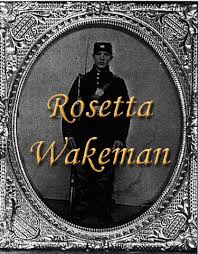
During the Civil War, hundreds of women served as frontline nurses, spies, saboteurs, and in the infantry, cavalry, and artillery for both the Union and Confederate armies. From all walks of life and for numerous reasons, many took on male disquises and often remained undiscovered until they were either wounded or killed, enduring hardships and dangers and serving with distrinction.
Sarh Rosetta Wakeman, called Rosetta, was a poor farm girl who cut her hair and joined the 153rd Regiment of New York State Volunteers. Enlisting under the name"Lyons Wakeman" on August 30, 1862, she sent most of her army pay home to keep the family farm going. Her regiment first performed guard duty in Alexandria, Virginia, and then they marched 700 miles to join General Banks 'Red River campaign in Louisiana in February 1864. The Unionists repelled a Confederate attack, but soon had to retreat.
Near the end of the campaign, Rosetta was stricken with dysentery and died in the Marine Hospital of New Orleans on June 19, 1864. Her identity remained undiscovered for more than a century until her letters home surfaced. She has left behind a ring, which was engraved with her regiment and name on it. She is buried in Louisiana in a grave marked by a headstone that reads simply:"4006 Lyons Wakeman, N.Y."
In her letters home, Rosetta wrote of the battlefield and the pride she felt at being a good soldiers, but she also expressed her strong religious faith as well as her strong desire to be financially independent and buy a farm of her own after the war. In one letter she wrote; " I don't feel afraid to go (into battle). I don't beleive there are any Rebel bullets made for me yet... But if it is God's will for me to fall in the field of battle, it is my will to go and never return home."
Rose Rooney joined the Confederate Army, openly signing on as a female enlistee to serve as cook and laundress for the Crescent Blues Volunteers at New Orleans in 1861. her unit eventually became Company K of the 15th Louisiana Infantry and went to Virginia. At the First Battle of Bull Run, she is reported to have run through a field of heavy fire to tear down a rail fence, allowing a battery of Confederate artillery to stop a Union charge. She served through the end of the war.
COURAGE....she hid the messengers whon Joshua sent to spy out Jericho.....JOSHUA 6:25
MORAL STRENGTH
" Therefore the children of Isreal count not stand before their enemies....." JOSHUA 7:12
The Loss of Virtue
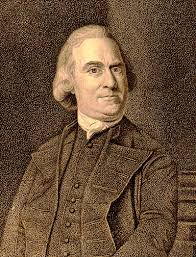
Samuel Adams, the great American patriot accused by King George III of being " The chief rablle-rouser" of American independence, wrote in a letter to James Warren in 1779: A general dissolution of principles and manners will more surely overthrow the liberties of America than the whole force of the common enemy. While the people are virtuous they cannot be subdued; but when once they lose their virtue, they will be ready to surrender their liberties to the first external of internal invader. How necessary then is it for those who are determined to transmit the blessings of liberty as a fair inheritance to posterity, to associate on public principles in support of public virtue.
CIVIL DUTY " Pick out from among you three men for each tribe..... JOSHUA 18:4
Voting: Since the founding of our nation, voting has been considered on one of the core responsibilities of citizenship. The " Father of the American Revolution' and signer of the declaration of Independence, Samuel Adams, said of voting in 1781: Let each citizen remember at the moment he is offering his vote that he is not makin a present or a compliment to please an individual-or at least that he ought not so to do: but that he is executing one of the most solemn trusts in human society for which he is accountable to God and his country.
".........ASK NOT.........."
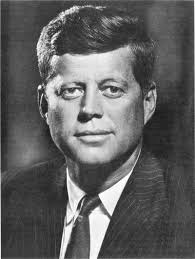
Called the most memorable speech of any twentieth-century politician, President John F. Kennedy spoke these inspirational words to an American citizenry that was torn by fears of war in his 1961 Inaugural Address: .........The world is very different now. For man holds in his mortal hands the power to abolish all forms of human poverty and all forms of human life. And yet the same revolutionary beleifs for which our forebears fought are still at issue around the globe- the beleif that the rights of man come not from the generosity of the state, but from the hand of God.
We dare not forget today that we are the heirs of that first revolution. Let the word go forth from his time and place, to friend and foe alike, that the torch has been passed to a new generation of Americans, born is this century, tempered by war, disciplined by a hard and bitter peace, proud of our ancient heritage and unwilling to witness or permit the slow undoing of those human rights to which this nation has always been committed, and to which we are comitted today at home and around the world.
Let every nation know, whether it wishes us well or ill, that we shall pay any price, bear any burden, meet any hardship, support any friend, oppose any foe, to assure that survivial and the success of liberty.....
In the long history of the world, only a few generations have been granted the role of defending freedom in its hour of maximum danger. I do not shrink from this responsibility-I welcome it. I do not beleive that any of us would exchange places with any other people or any other generation. The energy, the faith, the devotion which we bring to this endeavor will light our country and all who serve it- and the glow from the fire can truly light the world.
And so, my fellow Americans: ask not what your country can do for you- ask what you can do for your country..........
Finally,...... with a good conscience our only sure reward, with history and final judge of our deeds, let us go forth to lead the land we love, asking His blessing and His help, but knowing that here on earth God's work must truly be our own.
" But as for me and my house, we will serve theLord." Joshua 24:15
WOMEN IN THE REVOLUTIONALRY WAR:
It was not unusual to see women of the battlefield during the Revolutionary War, particulary as camp followers, who mostly came from poor families that were rescued to homelessness withouth their husband's income. Camp followers would perform the army's mundane but vital chores of cooking, doing laundry and mending, carrying water, loading weapons, and nursing the wounded. Though not in uniform, these women shared soldiers' hardships, including inadequate housing and little compensation.
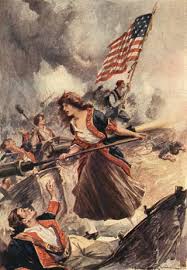
Margaret Corbin, for instance, followed her husband, John, when he joined the Continental Army in 1776. During the Battle fo Fort Washington in 1776, an artillery bombardment fatally wounded John, who manned one of the two cannon until she also was severly wounded. Three years, she became the first women in the United States to receive a pension from Congress.
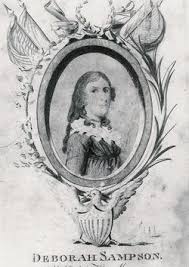
Deborah Sampson Gannett was the first known American woman to impersonate a man in orde to join the army to take part in combat. She fought in several skirmishes and took musket balls in her thigh and a huge cut on her forehead from the bullet. Her secret was discovered after she came down with a malignant fever. After the war, Sampson requested equal payment for her service and recieved a pension that matched that of the men who fought.
Women also served a spies during the Revolutionary War, alerting American troops to enemy movement, carrying messages and contraband. For instance, Ann Simpson Davis was handpicked by General Washington to carry messages to his generals while the army was in eartern Pennsylvania. Davis was a accomplished horsewoman and slipped throught areas accupied by the British army unnoticed.. She carried secret orders in sacks of grain and sometimes in her clothing to various mills around Philadelphia and Bucks Country. Davis recieved a letter of commendation for her services from General Washington.
...they lay Sisera, dead with a peg in his temple. JUDGE 4:22
FRANCIS MARION, THE "SWAMP FOX"
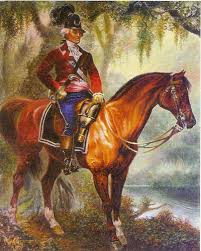
Francis Marion (1732-1795) was a brigadier general in the South Carolina Militia during the American Revolutionary War. He becme known as the " Swamp Fox" because he set up his base of operations in a swamp. " Marion's Brigade" as a volunteer force that could assemble at a moment's notice, hit Brtish and Loyalist units and garrisons, and then disappear in the swamps. He is considered one of a fathers of modern guerrilla warfare.
While the British occupied most of the southern colonies, large-scale resistance was impossible. Marion and his patriot unit was a poweful force in the south, as Nathanael Greene later wrote in praise: " Surrounded on every side wih a superior force, hunted from ever quarter with veteran troops, you have found means to elude their attempts and keep alive the expiring hopes of oppressed militia,"
After the war, Marion served in the state senate of South Carolina for several terms. He stated: "Who can doubt that God created us to be happy, and thereto made us to love one another? It is plainly written ast he Gospel. The heart is sometiems so embittered that nothing but Divine love can sweeten it, so enraged that devotion can only becalm it, and so broken down that it takes all the forces of heavenly hope to raise it. In short, the religion of Jesus Christ is the only sure and controlling power over sin."
COURAGE: " The LORD is with you, you mighty man of valor!" JUDGES 6:12
THE FOUNDATION OF AMERICA
On September 11, 2001, in his address to the American people, President George Bush stated:
The pictures of airplanes flying in to buildings, fires burning, huge structures collapsing, have filled us with disbeleif, terrible sadness, and a quiet, unyeilding anger. These acts of mass murder were intended to frighten our nation into chaos and retreat. But they have failed; our country is strong.
A great people has been moved to defend a great nation. Terrorist attacks can shake the foundations of our biggest buildings, but they cannot touch the foundation of America. These acts shattered steel, but they cannot dent the steel of American resolve.
America was targeted for attack because we're the brightest beacon for freedom and opportunity in the world. And no one will keep that light from shining.
Today, our nation saw evil, the very worst of human nature. And we respnded with the best of America with the daring of our rescue workers, with the caring for stangers and neighbors who came to give blood and help in any way they could. This is a day when all Americans from every walk of life unite in our resolve for justice and peace. America has stood down enemies before, and we will do so this time. None of us will ever forget this day. Yet, we go forward to defend freedom and all this is good and just in our world.
DEFENDER... united together as one man. JUDGES 20:11
THE PLEDGE OF ALLEGIANCE

Every morning across the United States of America, over 60 million teachers and students recite The Pledge of Allegiance. Congress sessins open with a recitation of the Pledge,and it is recited at any public events:
I pledge allegiance to the Flag of the United States of America, and to the Republic for wich it stands: one Nation under God, indivisible, With Liberty and Justice for all.
The Pledge of Allegiance to the United States of America was first created in 1892 as a celebratory remark used throughout public schools in celebration of the 400th anniversary of Columbus discovering the New World. Since then it has become a national oath of loyalty to the country, a motto of unity, and a defense of a American way of life. It should be recited by standing a attention facing the flag with the right hand over the heart. When not in uniform, men should remove any non-religious headdress with their right hand and hold it at the left shoulder, and hand being over the heart, Person in uniform should remain silent, face the flag, and stand at the position of attention.
The Pledge of Allegiance was recited daily by children in schools across America and gained heighted popularity among adults during the patriotic fervor created by World War II. It was in unofficial pledge until June 22, 1942, when the United States Congress included the Pledge to the Flag in the United State Flag Code (Title 36). This was the first official sanction given to the words that had been recited each day by children for almost 50 years. One year after recieting this official sanction, the US. Supreme Court ruled that schoolchildren could not be forced to recite the pledge as part of their daily routine. In 1945, the Pledge to the Flag received is official title: The Pledge of Allegiance.
IN 1954, President Dwight D. Eisenhower approved th words, " Under God"in the Pledge in order to differentiate the United States from the officially atheist Soviet Union. As he authorized this change he said; " In this way we are reaffirming the transcendence of religious faith in America's heritage and furtune; In this way we shall constantly strengthen those spiritual weapons which forever will be our country's most powerful resource in peace and war."
SERVICE: " Your people shall be my people, and yur God, my God." RUTH 1:16
"UNDER GOD"
On July 2,1776, as the Continental Congress was meeting in Philadelphia to declare independence, Commander-in-Chief George Washington was gatherin his triips on Long Island to meet the British in battle in and around New York City. He wrote in the General Orders to his men that day these memorable words, wih declare that we, as a nation, serve under God:
The time is now near at hand which must probably determine whether Americans are to be freemen or slaves: whether they ar to have any property they can call their own; whether their houses and farms are to be pillaged and destroyed, and tey consighed to a state of rithedness from which no human efforts will now depend, under God, on the courage and conduct of this army. Our cruel ad unrelenting enemy leaves us no choice but a brave resistance, or the most abject submission; this is all we can expect.
We have therefore to resolve to conquer to die: Our own counrty's honor, all upon us for a vigorous and manly exertion, and if we now shamefully fail, we shall becme infamous to the whole world.
Let us therefore rely upon the goodness of the case, and the aid of the supreme Being, in whose hands victory is, to animate and encourage us to geat and noble actions. The eyes of all our countrymen are now upon us, and we shall have their blessings and praises, if happily we are the intruments of saving them from the tyranny meditated against them.. Let us therfore animate the encourge each other and show the whole world that a freeean contending for liberty on his own ground is superior to any slavish mercenary on earth.
HONOR ".....for those who honor me I will honor............ I SAMUAL 2:30
A Nation's Flag
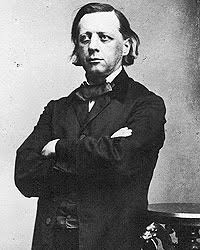
Henry Ward Beecher, a prominet nineteenth-century Congregationalist clergyman and social reformer, stated: A thoughtful mind, when it sees a nation's flag,sees not the flag only, but the nation itself; and whatever may be its symbols, it's insignia, he reads chiefly in the flag the governemtns, the principles, the truths, the history which belongs to the nation that sets it forth.
HONOR " The glory has departed from Isreal!" I SAMUEL 4:21
The History of Liberty
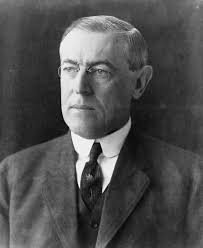
In 1912, the 28th president of the United States, Woodrow Wilson, who was also a distinguished historian and a profound student of government, stated: The history of liberty of resistance. The history of liberty is a history of the limitation of governmental power, not the increase of it. When we resist the concentration of power, we are resisting the powers of death. Concentration of powers of death. Concentration of power precedes the destrucion of human liberties.
PORTECTOR, " And you will be his servants."
THE PRIVILEGE AND RESPONSIBILITY FOR VOTING

Benjamin Rush, on of America's Founding Fathers, said," Every citizen of a republic.. must watch for the state as if its liberties depended upon his vigilance alone." The most basic democratic participation of citizenry is voting. When we vote, we help determine who will lead the nation, make the laws, and protect our liberties. Unfortunately, the church and people of faith often vote at an alarmingly low rate. When people of faith fail to vote, is it any wonder that policies are enacted that are contrary to beleivers' core values?
Not participating in the civic and political arenas not only vilotates historical precedent but ignores what America's leaders have alsways taught. For example:
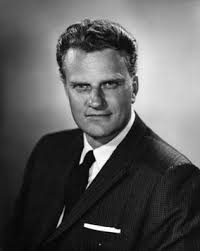
If America is to survive, we must elect more God-centered men and women to public office-individuals who will seek Divine guidance in the affairs of state.(Billy Graham)
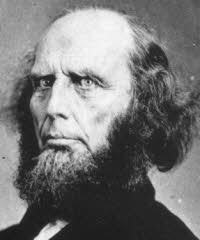
The time has come that Christains must vote for honest men and take consistent ground in politics.... God cannot sustain this free and blessed counrty which we love and pray for unless the Church will take right ground...... It seems sometimes as if the foundations of the nation are becoming rotten, and Christians seem to act as if they think God does not see what they do in politics.(CHARLES FINNEY)
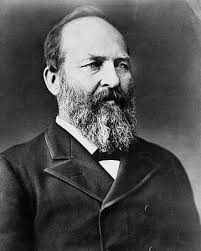
Now, more than ever before the people are responsible for the character of their Congress. If that body be ignorant, reckless, and corrupt, it is because the people tolerate ignorance, recklessness, and corruption. If it be intelligent, brave, and pure, it is because the people demand these high qualities to represent them in the national legislature.(PRESIDENT JAMES A. GARFIELD)
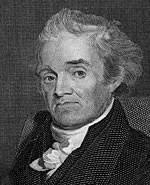
...God command you to choose for rulers, just men who will rule in the fear of God. The preservation of the republican government depends on the faithfull discharge of this duty; if the citizens neglect their duty and place unprincipled men in office, the government will soon be corrupted; laws will be made, not for the public good, so much as for selfish or local purpose; corrupt or incopentent men will be appointed to execute the laws; the public revenues will be squanded on unworthy men; and the rights of the citizen will be violated or disregarded(NOAH WEBSTER)
CIVIL DUTY " ....here is the king whom you have chosen and whom you have desired......"(1 Samual 12:13)
When Kings Un-Kings Themselves
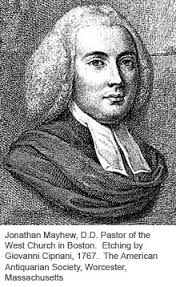
Jonathona Mayhew (1720-1766), a Congregational minister and distinguished Dudlein Lecturer at Harvard in 1765, reflected on the colonist's feeling toward King Georg III's hated Stamp Act:
The king is as much bound by his oath not to infringe the legal rights of the people, as th people are bound to yield subjection to him. From whence it follows that as soon as the price sets himself above the law, he loses the king in the tyrant. He does, to all intets and purposes, un-king himself.
DEFENDER" But now your kingdom shall notn continue."(1 Samuel 13:14)
DUTY-HONOR-COUNTRY
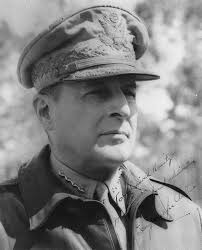
In his farewell speech to Corps of Cadets at West Point, General Douglas MacArthur gave a moving tribute to the ideals that inspire the great American soldier. For as long as other Americans serve their country courageously and honorably, his words will live on. The following excerpt fro May 1962 is one small paragraph of his famous speech;
Duty-Honor-Country
The code which those words perpetuate embraces the highest moral laws and will stand the test of any ethics of philosophies ever promulgated for the uplift of mankind. Its requirements are for the things that are right, and its restrainsts are from the things that are wrong. The soldier, above all other men, is required to practice the greatest act of religious training-sacrifice. In battle and in the face of danger and death, he discloses those divine attributes which his Maker gave when He created man in His own image. No physical courage and not brute instict can take the place of the Divine help which alone can sustain him.. However horrible the incidents of war may be, the soldier who is called upon to offer and to give is life for his country is the noblest development of mankind.
HONOR: " How the might have fallen in the midst of the battle!" 2 SAMUEL 1:25
Government Support of Missions
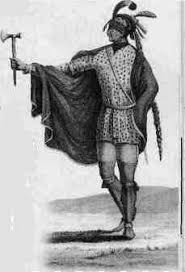
In December 1803, upon recommendation by Prsident Thomas Jefferson, the United States Congress ratified a treaty between the United States and the Kaskaskia Indian tribe that provided:
And whereas the greater part of the said tribe have been baptized and recieved in to the Catholic Church, to which they are much attached, The United States will give annually, for seven years, one hundred dollars toward the suport of a priest of that religion, who will engage to perform for said tribe the duties of his office, and also to instruct as many of their children as possible, in the rudiments of literature, and the United States will further give the sum of three hundred dollars, to assist the said tribe in the erection of a church.
Service: Then Hiram king of Tyre sent...cedar trees, and carpenters and masons... 2 SAMUEL 5:11
PATRIOTISM
Noah Webster's An American Dictionary of the English Language, 1828
Patriotism, n. Love of one's country; the passion which aims to serve one's country, either in defending it from invasion, or pretecting its rights and maintaining its laws and institutions in viqor and purity. Patriotism is the characteristic of a good citizen, the noblest passion that animates a man in the character of a citizen.
Merriam-Webster's Collegiate Dictionary, Eleventh Edition, copyright 2004
Patriotism, n. Love for a devotion to one's country.
Note how the definiton have changed. Noah Webster's patriot defends his country with objective actions, versus the vaque, subjective patriotism of one who only feels and expressesl love for his country. True patriotism is not just an emotional feeling; it is action.
Webster's original definition includes a love for country, service to country, defense of country, protection of the rights of country, maintenance of the laws and institutions of country, preservation of religion and morality in public and private life, and puts the needs of the country above personal or partisan desires as well as above the favor of foreign nations.
SELFLESS: But the men of Judah...remained loyal to their king 2 SAMUEL 20:2
FREEDOM'S DEFENSE
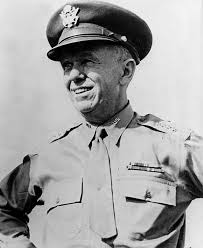
The soldier's heart, the soldier's spirit, the soldier's soul are everything. Unless the solder's soul sustains him, he connant be relied upon and will fail himself, his commander, and his country in the end. GENERAL GEORGE C MARSHALL

Wars may be fought with weapons, but they are won by men. It is the spirit of the men who follow and of the man who leads that gain that victory. General George S. Patton
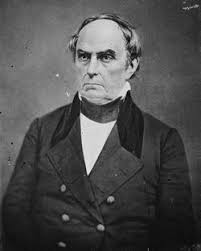
God grant liberty only to those who love it and are always ready to guard and defend it. Daniel Webster
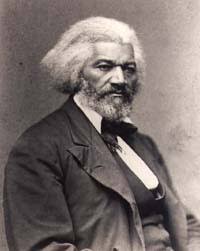
Those who profess to favor freedom and yet depreciate agitation, are people who want crops without plowing the ground; they want rain without thunder and lightning; they want the ocean without the roar of its many waters. The stuggle may be a moral one, or it may be a physical one, or it may be both. But it must be a struggle. Power concedes nothing without a demand; it never has and it never will. Frederick Douglass
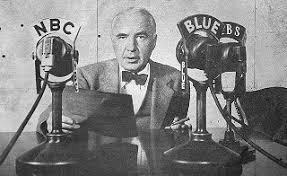
This nation will remain the land of the free only so long as it is the home of the brave. Elmer Davis
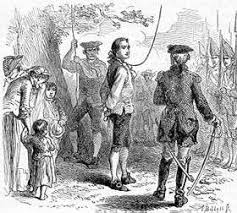
I only regret that I have but one life to lose for my country. Nathan Hale
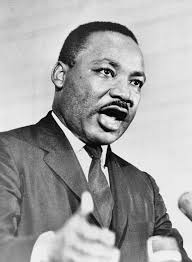
A man who won't die for something is not fit to live. Martin Luther King Jr.

The liberties of our country, the freedom of our civil Constitution, are worth defending at all hazards; and it is our duty to defend them against all attacks. We have recieved them as a fair inheritance from our worthy ancestors: they pruchased them for us with toil and danger and expense of treasure and blood, and transmitted them to us with care and diligence. it will bring an everlasting mark of infamy on the resent generation, enlighted as it is, if we should suffer them to be wrested from us by violence without a struggle or to be cheated out of them by the artifices of false and designing men. Samuel Adams.
DEFENDER These are the names of the mighty men whom David had....... 2 Samuel 23:8
MY COUNTRY, ' TIS OF THEE'
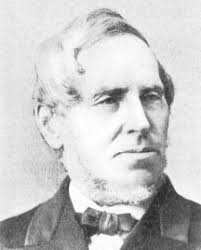
Samuel Francis Smith wrote the words to " My Counry, 'Tis of Thee," also known as " America," while studying at Andover Theological Seminary in 1831. The songs inspirational words are matched with a popular international melody used by many nations, including England, where it accompanies" God Save the King/Queen." The hymn soon became a national favorite, serving as a de facto national anthem of the United States for much of the nineteenth century.
My country, 'tis of thee, sweet land of liberty, of thee I sing; Land where my fathers died, land of the pilgrims' pride, From every mountainside let freedom ring!
My native country, thee, land of the noble free, they name I love: I love they rocks and rills, they woods and templed hills; My heart with rapture thrills, like that above.
Let music swell the breeze, and ring from all the trees sweet freedom's song: Let mortal tongues awake; let all the breathe partake; Let rocks their selence break, the sound prolong.
Our father's God, to Thee, author of liberty, to Thee we sing; Long may our land be bright with freedom's holy light. Protect us by Thy might, great God, our King!
WORSHIP: " May the Lord our God be with us, as He was with our fathers. " 1 Kings 8:57
The World's Best Currency
William Mckinley, the 25th president of the United States (1897-1901), stated: There is no currency in this world that passes at such a premium anywhere as good Christian character... The time has gone by when the young man or the young woman in the United States has to apologize for being a follower of Christ...No cause but one could have brought together so many people, and that is the cause of our Master.
INTEGRITY " ...walk before Me....in integrity of heart..." 1 KINGS 9:4
FREEDOM'S COST:
A wise person once said, " Freedom in never free," and that is certainly true in America. Nathan Hale (1755-1776) was a schoolteacher when the Revolutionary War broke out in April 1775 at Concord and Lexington. Nathan's friend witnessed the siege of Boston and wrote a letter in which he said;" Was I in your conditon......I think the more extensive service would be my choice. Our holy religion, the honor of our God, a glorious country, and a happy constitution is what we have to defend," Soon after receiving the letter, Hale joined his five brothers in the fight for independence against the British and quickly rose to the rank of captain.
Hale fought under General George Washington in New York, as British General William Howe Began a military buildup on Long Island. Washington took his army onto Manhattan Island. At the battle of Harlem Heights, Washington asked for a volunteer to go on a spy mission behind enemy lines. Hale stepped forward and was sent out on his mission. For a week he gathered information on the positon of British troops, but was captured while returning to the American side. Because in incriminating papers Hale possessed, the British knew he was a spy. Howe ordered the 20-year-old Hale to be hanged the following day without a trial.
Widely considered America's first spy, patriot Nathan Hale was hanged on September 22, 1776. Before he gave his life for his country, he made a short speech, ending with these famous words that have inspired Americans from every generation:"I only regret that I have but on life to lose for my country."
We have enjoyed so much freedom for so long that we are perhaps in danger of forgetting how much blood it cost to establish the Bill of Rights. Felix Franfurter
We on this continent should never forget that men first corssed the Atlantic not to find soil for their ploughs but to secure liberty for their souls. Robert J. McCracken
Posterity: you will never know how much it has cost my generation to preserve your freedom. I hope you will make good use of it. John Quincy Adams
SELFLESS " As the Lord lives, whatever the Lord says to me, that I will speak," 1Kings 22:14
" THE STAR-SPANGLED BANNER"
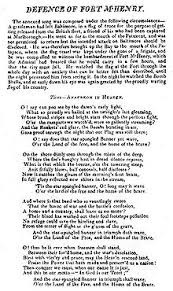
During the War of 1812, the British namy unleashed a fierce bombardment on Fort McHenry from the Baltimore harbor. On September 13, 1824, a young American lawyer named Francis Scott Key watched the relentless bombing throughout the night, then silence followed. Had the fort been forced to surrender? As the first rays of sunlight broke the darkness, Key could see the American flag waving proudly. In the inspiration of the moment, he began a poem titled " Defense of Fort McHenry," which was set to a opular tune and renamed, " The Star-Spangled Banner." It became a well-known American patriotic song and was eventually made the national anthem by a congressional resolution on March 3,1931. More than just a song, it expresses one man's deep gratitude for America's freedom and godly foundation.
O! say can you see by the dawn's early light; What so proudly we hailed at the twilight's last gleaming?; Whose broad stripes and bright stars throught the perilous fight, O'er the ramparts we watched were so gallantly streaming?; And the rocket's red glare, the bombs burrsting in air, Gave proof through the night that our flag was still there.; Oh, say does that star-spangled banner yet wave; O'er the land of the free and the home of the brave;
On the shore, dimly seen through the mist of the deep,; Where the foe's haughty host in dread silence reposes,; What is that which the breeze,o'er the towering steep,; As it fitfully blows, half conceals, half discloses?; Now it catches the gleam of the morning 's first beam,; In full glory reflected now shines in the stream.;" Tis the star-spangled banner! Oh long may it wave O'er the land of the free and home of the brave!
O! thus be it ever, when freemen shall stand; Between their loved home and the war's desolation! Blest with victory and peace, may the heav'n rescued land; Praise the Power that hath made the preserved us a nation.; The conquer we must, when our cause it is just,; And this be our mott: " In God is our Trust."; And the star-spangled banner in truimph shall wave; O'er the land of the free and the home of the brave!
FREEDOM, " Look, if the LORD would make windows in heaven, could this thing be?" 2Kings 7:2
" I WAS FREE"
Harriet Tubman (1820-1913) was an escaped slave who repeatedly risked her life to free slaves using the network of antislavery activists and safe houses known as the Underground Railroad. Also known as "Moses," Tubman was an African-American abolitionist who inspired generations of African-Americans struggling for equality and civil rights. During the Civil War she served as a Union spy, and after the war she helped set up schools for freed slaves and struggled for women's suffrage.
To her biographer, Sarah H. Bradford, Harriet Tubman stated:
I had crossed de line of which I had so long been draming. I was free; but dere was no one to welcome me to de land of freedom, I was a stranger in a strange land, and my home after all was down in de old cabin quarter, wid de ole folks, and my brudders and sisters. But to dis solemn resolution I came; I was free, and dey should be free also; I would make a home for dem in de North, and de Lord helping me, I would bring dem all dere. Oh, how I prayed den, lying all alone on de cold, damp ground; " Oh, dear Lord, " I said, " I haint got no friend but you. Come to my help, Lord, for I'm in trouble!" " Twant me, " twas the Lord. I always told him, " I trust to you. I don't know where to go or what to do, but I expect You to lead me, " and He always did.
FREEDOM, For the LORD Saw that the afflication........there was no helper for Isreal. 2 Kings 14:26
" I AM A AMERICAN'
On June 2, 1995, U.S. Air Force Captain Scott O'Grady was patrolling the United Naitons designated no-fly zone over war torn Bosnia when his F-16 fighter was struck by a surface-to-air missile at 27,000 feet above the Earth. He desperately pulled his ejection lever and was catapulted into the sky at 350 miles per hour. Remarkably, he managed to land unscathed in enemy territory. For six incredible days and night, O'Grady eluded capture by the Bosnian Serbs who relentlessly hunted him. Utilizing his survival training to the mazimum, O'Grady said it was also his faith in God that sustained him. On his third day on the ground, he experienced the love of God to such a level that it took away his fear of death. On the sixth day in a daring daylight rescue, an elite team of Marines moved in with a chopper, dodged enemy fire, and pulled the young American hero to safety. At a national press conference following his trumphant return, O'Grady said, " If it wasn't for my love for God and God's love for me, I wouldn't be here right now." His inspirational and patriotic story is a brilliant testimony to Article Six of the United States Military code of Conduct: " I will never forget that I am an American, fighting for freedom, responsibel for my actions, and dedicated to the principles which made my country free. I will trust in my God and in the United States of America."
Honor " He trusted in the LORD GOD of Isreal............2 Kings 18:5
IN GOD ALONE

Tom Campbell Clark, an Associate Justice of the U.S. Supreme Court (1949-1967), stated: The Founding Fathers beleive devoutly that there was a God and that the unalienable rights of man were rooted-not in the state, nor the legislature, nor in any other human power-but in God alone. FAITH, " You are God, You alone, of all the kingdoms of the earth." 2 Kings 19:15
" A CHRISTIAN NATION"
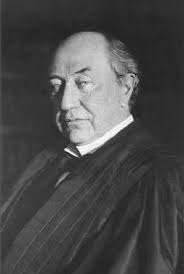
In 1892, the United States Supreme Court determined, in the case The Church of the Holy Trinity vs. United States, that an English minister was not a foreign laborer under the U.S. Code statute even though he was a foreigner. While this case was not specifically about religion and considered the legality of contracts for other foreign professionals, the court considered America's Christian identity to be a strong support for its conclusion that Congress could not have intended to prohibit foreign ministers.
Justice David Josiah Brewer penned the court's opinion, in which he stated that the United States was a "Christian nation." This statement is included as part of the dicta-that is, it is a gratuitious state-ment that is not essential to the Court's holding. The Court had already decided the issue before venturing its opion as to the religious character of the country. Included was a remarkable list of 87 examples taken from pre-Constitutional documents, historical practice, colonial charters, and the like, which reveal our undisputed religious roots. They range from the commission of Christipher Columbus to the first charter of Virginia to the Declaration of Independence and included the following statements:
No purpose of action against religion can be imputed to any legislation, state or national, because this is a religious people. This is historically true. From the discovery of this continent to the present hour, ther is a single voice making this affirmation... There is no dissonance in these declarations. There is a universal language pervading them all, having one meaning; they affirm and reaffirm that this is a religious nation. These are not individaual saying, declarations of private person; they are organic utterance; they speak the voice of the entire people... These, and many other matters which might be noticed, add a volume of unofficial declarations to the mass of organic utterances that this is a Christian nation.
Brewer later clarified his position on a "Christian nation," stating the U.S. is "Christian" in the many of its traditons are rooted in Christianity, not that Christianity should receive legal privileges or is established to the exclusion of other religions or to the exlusion of irreligion.
And they were unfaithful to the God of their fathers......1 Chronicles 5:25
"GOD, GIVE US MEN"

Josiah Gilbert Holland(1819-1881), a poet and the founder and editor of the popular Scribner's Monthly ( afterward the Century Magazine), penned these famous words: God, give us men! A time like this demands Strong minds, great hearts, true faith and ready hands; Men whom the lust of office does not kill; Men whom the spoils of office can not buy; Men who possess opinions and a will; Men who have honor; men who will not lie; Men who can stand before a demoagogue: And damn his treacherous flatteries without winking! Tall men, sun-crowned, who live above the fog; In public duty, and in private thinking; For while the rabble, with their thumb-worn creeds, Their large professions and their little deeds, Mingle in selfish strife, lo! Freedom weeps, Wrong rules the land and waiting Justice sleeps.
HONOR.....mighty men of valor,...whose faces were like the faces of lions.......!
The First Expression of Americanism
In a National Day of Prayer Proclamation, December 5, 1974, President Gerald Ford Quoted President Dwight Eisenhower's 1955 statement:
Without God there could be no America form of government, nor an American way of life. Recognition of the Supreme Being is the first-the most basic-expression of Americanism. Thus, the Founding Fathers of America saw it, and thus with God's help, it will continue to be.
HONOR Remember His covenant forever...1 CHRONICLES 16:15
National Day of Prayer
On January 25, 1988, the United States Congress, by the Joint Resolution of the 100th Congress, declared the firest Thursday of each May to be recognized as a national Day of Prayer.
Be it enacted by the Senate and House of Representatives of the United States of America in Congress assembles, That the joint resolution entitled " Joint Resolution to provide for setting aside an appropriate day as a National Day of Prayer, " apprived April 17, 1952 (Public Law 82-324; 66 Stat. 64), is amended by strking " a suitable day each year, other than a Sunday, " and inserting in lieu therof " the first Thursday in May in each year."
Prayer, " ... if My perople... will humble themselves and pray...." 2 CHRONICLES 7:14
Dwight D. Eisenhower placed his hand on Psalm 127:1 and 2 Chronicles 7:14 as he took the presidential oath of office in 1953.
Ronald Reagon placed his hand on 2 Chronicles 7:14 as he took the presidential oath of office in 1981 and 1985.
THE GETTYSBURG ADDRESS
The Battle of Gettysburg (July 1-3, 1863) resulted in the largest number of casualties in the Civil War (over 51,000) and is frequently cited as the war's turning point. Abraham Lincoln's address at the dedication of the Soldiers National Cemetery in Gettysburg, Pennsylvania, on November 19, 1863, has come to be regarded as one of the greatest speeches in American history. His opening words invoked the principles of human equality espoused by the Declaration of Independence and defined the Civil War as" a new birth of freedom" That world bring true equality to all of its citizens. His ending words symbolized the definition of democracy itself, and those words consecrated the living in the struggle to ensure that " governemtn of the people, by the people, for the people, shall not perish from the earth."
Fourscore and seven years ago our fathers brought forth on this continent a new nation, concieved in Liberty and dedicated to the propositoin that all men are created equal. Now we are engaged in a great civil war, testing whether that nation or any nation so concieved and so dedicated can long endure. We are met on a great battlefield of that war. We have come to dedicated a portion of the field as a final resting place for those who here gave their lives that that nation might live. It is altogether fitting and proper that we should do this. But in a larger sense, we cannot dedicate, we cannot consecrate, we cannot hallow this ground. The brave men , living and dead, who struggled here have consecrated it far above our poor power to add or detract. The world will little note nor long remember what we say here, but it can never forget what they did here. It is for us the living rather to be dedicated here to the unfinished work which they who fought here have thus far so nobly advanced. It is rather for us to be here dedicated to the great task remaining before us-that from these honored dead we take increased devotion to that cause for which they gave the last full measure of devotion-that we here highly resolve that these dead shall not have died in vain, that his nation under God shall have a new birth of freedom, and that government of the people, by the people, for the people shall not perish from the earth.
FREEDOM And the children of Isreal fled before Judah, ... so five hundred thousand choice men of Israel fell slain 2 CHRONICLES 13:16,17
Dignity and Courage
Martin Luther King Jr. (1929-1968), a pivotal leader of the civil rights movement, stated: If you will protest courageously, and yet with dignity and Christian love, when the history books are written in future generations, the historians will have the pause and say, " There lived a great people-a black people-who injected new meaning and dignity into the veins of civilization."
Courage " Behave courageously, and the LORD will be with the good." 2 Chronicles 19:11
"CHESTER"
When the Continental Army fought to defend the new nation's independence, it chose as its favorite marching song an adapted hymn, " Chester," by the Boston church composer William Billings around 1778. It became the song of the American revolution, sung around the campfires of the Continental Army and played by fifers on the march to battle. The music and words express perfectly the burning desire for freedom that sustained the patriots as they risked their lives. One detects no" separation of church and state" in their convictions.
Let tyrants shake their iron rod, And slavery clank her galling chains, We fear them not we trust in God, New England's God forever reigns. Howe and Burgoyne and Clinton too, With Prescott and Cornwallis join'd, Together plot our overthrow, In one infernal league combin'd. When God inspir'd us for the fight, Their ranks were broke, their lines were fore'd, Their ships were shatter'd in our sight Or swiftly driven from our coast. The foe comes on with haughty stride, Our troops advance with martial noise, Their vet'rans flee before our youth, And gen'rals yield to beardless boys. What gratefull offerings shall we bring? What shall we render to the Lord? Loud Hallelujahs let us sing, And praise His name on ev'ry chord.
INSPIRING Now when they began to sing and to praise, the LORD set ambushes....2 Chronicles 20:22
THUS, IT WAS THE CHURCHES THAT became the primary source that stirred the fires of liberty, telling the colonist that the English government was usurping their God-given rights, and the King and Parliament were violating the laws of God. The Founding Fathers were convinced that it was their sacred duty to start a revolution to uphold the law of God against the unjust and oppressive laws of men. And the fight for political liberty was seen as a sacred cause because civil liberty was an inalienable right, according to God's natural law.
The New England ministers, in particular, were decisive in rallying the popular moral support for war against England. They pressed their congregations to overthrow King George because they believed that rebellion to tyrants was obedience to God. From many pulpits, ministers recruited troops and strengthened them in battle with patriotic sermons.
While the church leaders were well schooled in the fact that the Bible placed great emphasis on due submission to civil authorities (Romans 13), they noted there are also many passages that approve resistance to ungodly authority. For instance, when the apostles were commanded by the Sanhedrin to cease preaching that Jesus Christ had risen from the dead, Peter bodly asserted: " We ought to obey God rather then men" (Acts 5:29)
Therefore, it is not coincidence that one of the watchwords of the American Revolution was, " No King but King Jesus." For most of the patriots, their faith gave them the courage to stand on God's Word and risk their lives and properties to break the tyranny of an unjust human authority. In their Christian worldview, obedience to God took precedence over cournty or government, and their primary allegiance was to the Lord Jesus Christ.

INDICATIVE OF THIS SPIRIT, in 1775, the Lutheran pastor John Peter Gabriel Huhlenberg preached a sermon on Ecclesiastes 3:1, “ To everything there is a season, a time for every purpose under heaven.” Concluding the message, he declared, “ In the language of the Holy Writ, there is a time for all things. There is a time to preach and time to fight. And now is the time to fight. “ He then threw off his clerical robes to reveal the uniform of the Revolutionary Army officer. That afternoon, at the head of 300 men, he marched off to join General Washington’s troops and became Colonel of the 8th Virginia Reginment. Ministers turned the colonial resistance into a righteous cause and served at every level in the conflict, from military chaplains to members of state legislatures to taking up arms and leading troops into battle. And, ultimately, after two main British armies were captured by the Continental Army at Saratoga in 1777 and Yorktown in 1781, the other words of Patrick Henry to his fellow Virginians proved true: “ Three millions of people, armed with the holy cause of liberty, and in such a country as that wich we possess, are invincible by any force which our enemy can send against us. “
GOVERNMENT PAID LEGISLATIVE CHAPLAINS

Warren Earl Burger was Chief Justice of the U.S. Supreme Court from 1969 to 1986. He delivered the court’s opinion in the 1982 cas of March v. Chambers, regarding chaplains opening legislative sessions with prayer:
The men who wrote the First Amendment religion clause did not view paid legislative chaplains and opening prayers as a violation of the amendment… the practice of opening sessions with prayer has continued without interruption ever since that early session of Congress. It can hardly be thought that in the same week the members of the first Congress voted a appoint and pay a chaplain for each House and also voted to approve the draft of the First Amendment……(that) they intended to forbid what they had just declared accetable. (Prayer and chaplains) are deeply embedded in the history and tradition of this country. The legislature by majority vote invites a clergyman to give a prayer, neither the inviting nor the giving nor the hearing of the prayer is making a law. On the basis alone…..the sayings of prayers, per se, in the legislative halls at the opening session in not prohibited by the First and Fourteenth Amendments.
PRAYER…..and their prayer came up to His holy dwelling place, to heaven 2 Chronicles 30:27
GOD'S PLACE IN AMERICA'S BIRTHRIGHT
Democratic Senator Robert Byrd, the longest-serving member in the history of the U.S. Senate, delivered a message on June 27, 1962, just two days after the Supreme Court declared prayer in schools unconstitutional, warning Congress about disastrous decisions such as this one:
Inasmuch as our greatest leaders have shown no doubt about God's proper place in the American birthright, can we, in our day, dare do less?... In no other place in the United States are there so many, and such varied official evidences of deep and aboding faith in God on the part of government as there are in Washington....
Every sesson of the House and the Senate begins with prayer. Each house has its own chaplain.
The Eighty-third Congress set aside a small room in the Capitol, just off the rotunda, for the private prayer and meditaton of members of Congress... The room's focal point is a stained glass window showing George Washington kneeling in prayer. Behind him is etched these words from Psalm 16:1: " Preserve me, O God, for in Thee do I put my trust."
Inside thr rotunda is a picture of the Pilgrims.... Very clear are the words, " The New Testament according to our Lord and savior, Jesus Christ." On the sail is the motto of the Pilgrims, " In God We Trust, God With Us."
The phrase, " In God We Trust," appears opposite the president of the Senate, who is the vice-president of the United States. The same phrase, in lareg words inscribed in teh marble, backdrops the Speaker of teh House of Representatives.
Above the head of the Cheif Justice of the Supreme Court are the Ten Commandments, with the great American eagle pretecting them. Moses is included among the great lawgivers in Herman A. MacNeil's marble sculpture group on the eat front. The crier who opens each session closes with the words, " God save the United States and this Honorable Court"........
On the south banks of Washington's Tidal Basin, Thomas Jefferson still speaks: " God who gave us live gave us liberty. Can the liberties of the gift of God? Indeed I tremble for my courntry when I reflect that God is just, that his justice cannot sleep forever."
[Jefferson's words are] a forceful and explicit warning that to remove God from this country will destroy it.
DEFENDER And the Lord God of their fathers sent warnings to them by His messengers....2 CHRONICLES 36:15
THE EMANCIPATION PROCLAMATION
The Emancipation Proclamation consists of two executive orders issued by President Abraham Lincoln during the American Civil War. The first one, issued September 22, 1862, delcared the freedom of all salves in any state of the Confederate States of America that did not return to Union control by Janurary 1, 1863. The second order, issued January 1, 1863, named the specific states where it applied.
The Emanicpation Procalmation was widely attacked at the time because it did not free any slaves of the borders states(Kentrucky, Missouri, Maryland, Delaware, and West Virginia) already under Union control. But in practice, it committed the Union to ending slavery, and as the union armies conquered the Confederacy, thousands of salves were freed each day.
President Lincoln stated the Bibles moved him to issue this, the most controversial document in his presidency, which was met with both hostility and jubilation in the North. He noted especially the words of Exodus 6:5 "(God) have also heard the groaning of the children of Isreal whom the Egyptians keep in bondage." After the proclamation was made, Lincoln noted that " stocks have declined, and troops come forward more slowly than ever," But he later remarked, " I never is my life, felt more certain that I was doing right, than I do in signing this paper."
Booker T. Washington, as a slave boy of maine, remembered the day of freedom for his family:
As the great day drew nearer, there was more singing in the slave quarters than usual. It was bolder, had more ring, and lasted later into the night. Most of the verses of the plantation songs had some reference to freedom.... Some man who seemed to be a stranger(a United States officer, I presume) made a little speech and then read a rather long paper_the Emanicpation Proclamation, I think. After the reading, we were told that we were all free and could go when and where we pleased. My mother, who was standing by my side, leaned over and kissed here children, while tears of joy ran down her cheeks. She explained to us what it all meant, that this was the day for which she had been so long praying, but fearing that she would never live to see.
FREEDOM May his God be with him, and let him go up to Jerusalem......EZRA 1:3
SERVICE: Let the cost be paid at the king's expense.......EZRA 6:8
State-Funded Ministers
The State of Massachusetts paid the salaries of the Congregational ministers in the state until 1833. Other states had cut official ties to a church previous to Massachusetts.
FAITH....set magistrates and judges...such as know the laws of your God.....EZRA 7:25
STATE CONSTITUTIONS AFTER DECLARING INDEPENDINCE
Folowing the declaration of independence from Great Britain, all the state governments, which had been controlled by the British, had to be established with new state constitutions. It is interesting to read what many of the Founders who signed the founding documents placed in their original new stae constitutions. Delaware provide one example, but other states were similar;
Every Person appointed to public office shall say" I do profess faith in God the Father, and in Jesus Christ His only Son, and in the Holy Ghost, one God, blessed for evermore; and I do acknowledge the Holy Scriptures of the Old and New Testament to be given by divine inspiration.
PRESIDENTS AND INAUGURAL ADDRESSES
Every president from George Washington forward has prayed, invoked prayer, or otherwise asked God for His continued blessing on the United States during their Inaugual Address. Here is a short sample that reflects this nations dependence upon God:
No people can be bound to acknowledge and adore the Invisible hand which conducts the affairs of men more than those of the United States George Washington, April 30, 1789
I shall need, too, the favor of the Being in whose hands we are, who led our fathers, as Israel of old, from their native land and planted them in a country flowing with all the necessaries and comforts of life; who has convered our infancy with His provided and our riper years with His wisdom and ower, and to whose goddness I asked you to join in supplication with me that He will so enlighten the minds of your servants, guide their councils, and prosper their measures.......Thomas Jefferson, March 4, 1805
With malice toward none, with charity for all, with firmness in the right as God gives us to see the right, let us strive on to finish the work we are in, to bind up the nation's wounds, to care for him who shall have borne the battle and for his widow and hsi orphan, to do all wich may achieve and cherish a just and lasting peace among ourselves and with all nations. Abraham Lincoln, March 4, 1865
The Almighty God has blessed our land in many ways. He has given our people stout hearts and strong arms with which to strike mighty blows for freedom and truth. He has given to our country a faith wich has become the hope of all peoples in a anguished world. So we pray to Him now for the vision to see our way clearly-to see the way that leads to a better life for oursleves and for all our fellow men-to the achievement of His will to peace on earth. Franklin Roosevelt, Janurary 20, 1945
And may He continue to hold us close as we filled the world with our sound-sound in unity, affection, and love-one people under God, dedicated to the dream of freedom that He has placed in the human heart, called upon now to pass that dream on to a waiting and hopeful world. Ronald Reagon, January 21,1985
LEADERSHIP Then I proclaimed a fast...that we might humble ourselves before our God.......EZRA 8:21
HUMILITY.... I fell on my knees....... EZRA 9:5
When Wisdom Fails
After the Union Army's devastating loss at the Second Battle of Bull Run in August 1862, Prsident Abraham Lincoln stated:
I have been driven many times upon my knees by the overwhelming conviction that I had nowhere else to go. My own wisdom, and that of all about me, seemed in sufficient for that day.
Sins Forgiven

Peter Cartwright (1785-1872) was a Methodist circuit rider and evangelist in Tennessee, Kentucky, and surrounding states during the Second Great Awakening. He preached nearly 15,000 sermons, and personally baptized 12,000 people. In recalling his own conversion, he stated: I went with weeping multitudes and bowed before the reaching stand and earnestly prayed for mercy. In the midst of a solemn struggle of soul, an impression was make upon my mind, as though a voice said to me: " Thy sins are all forgiven thee."
HUMILITY....for the people wept very betterly. EZRA 10:1
BOOKER T. WASHINGTON

Booker T. Washington (1856-1915) was the most influential American black leader and educator of his time. He was the founder and head of the famous Tuskegee Institute, a vocational school for blacks in Tuskegee, Alabama, and his students became leaders and educators across the nation. He also advised two Presidents-Theodore Roosevelt and William Howard Taft-on racial issues and policies and was influential in the appointment of several balcks to federal office.
Born a slave in the hills of Virginia, from the age of nine Washington worked in coal mines and salt furnaces. Determined to get an education, at the age of sixteen he attended Hampton Institute, and industrial school for blacks in Hampton, Virginia. Upon graduating with honors in just three years (1875), Washington joined the faculty and was soon offered the position to lead a new school in Tuskegee, Alabama. He started this school in a old abandoned church and a shanty, and by 1915, he had built Tuskegee Institute into a school of 107 buildings on 2,000 acres with over 1,500 students and more than 200 teachers and professors-a phenomenal accomlishement, especially considering the times in which Washington lived.
As the presiding principal, Washington outlined several objectives for the new school. He not only offered the traditional academic courses, but industry and trade skills were also required. Students learned bricklaying, forestry and timber skills, sewing, cooking, and practical agriculture; in addition, every student was obligated to master at least two trades.. Washington's goal was to produce independent small businessmen, farmers, and teachers.
He also insisted on high moral character for both students and faculty. His clear emphasis on the value of character and the training of the "head, hand, and heart" was filled with great insight. Christian faith was something Washington learned as a child in Sunday school, and it helped shape his ideals. Devotional exercises were held every morning at Tuskegee as well as evening prayers. He wrote that the support that " The Christ-like work which the Chruch of all denomination in America has done" wold have convinced him of the value of the Christian life, if he wasn't already a beleiver.
LEADERSHIP Nehemiah 2: 17 " Come and let us build....."
Celebrating the Fourth of July
Erma Bombeck, one of America's most popular humorists in the second half of the twentieth century, wrote:
You have to love a nation that celebrates its independence every July 4, not with a parade of guns, tanks, and soldiers who file by the White House in a show of strenghth and muscle, but with family picnics where kids through Fresbees, and potato salad gets " iffy, " and the flies die from happiness. You may think you have overeaten, but it is patriotism.
FAMILY VALUES
And there was very great gladness.......NEHEMIAH 8:17
Early Settlements in America

In 1564, Rene de Laudeonniere led a group of Huguenots (Protestants from France) to colonize and build Fort Caroline near present-day Jacksonville. He recorded on June 30, 1564: We sang a psalm of thanksgiving unto God, beseeching Him that it would please Him to continue His accustomed goodness toward us.
HUMILITY.......to celebrate the dedication with gladness.......NEHEMIAH 12:27
SEPTEMBER 11, 2001

In his book A Time for Heroes, Lance Webbels paid tribute to the patriotic heroes the world watched on September 11, 2001:
It was a day of unthinkable horror and desyruction, but it became a day for American Heroes. Heroes were everywhere you looked. Giants rose out of relative obscurity to cast long shadows across the smoke and dust and rubble. Ordinary Americans citizens, suddenly caught in the crossfire of terrorism, put their lives on the line to preserve the lives of others.
They emerged as the truly mighty and valiants ones of Flight93. Among the smoldering wreckage of the Pentagon, they stood with undimmed spirits as fire fighters unfurled a gigantic flag from the roof of the burned-out structure. At Ground Zero, hundreds and thousands of people on dozens of fronts searched the mountain of unstable rubble in an epic battle to win back as many lives as could possibly be rescued.
Most of them remain nameless to us, but their undaunted faces are engraved forever upon our hearts. They are the fire fighters, the tireless fire fighters, who were forever captured by the photo of the three ashen-caked firemen raising the American flag on the pole that stuck up out of the debris of the World Trake Center. Framed against the monstrous heap of steel and concrete in the background, it was an easy reminder of the heroic marines who raised the flag on IWO Jima during another of this nations great conflicts.
They are the police, paramedics, rescue workers, doctores, nurses, National Guard, Red Cross workers, and others we have so often taken for granted. And they are the janitors and security guards and office managers and the coworkers who said no to death and helped thousands escape who might have easily perished.
In that sudden moment of time, the real heroes of our world stood out as brilliant luminaries cast against the darkest night.
In a world where rock superstars, athlests, and clebrities have been elevated to hero status, we wre given a lesson on true heroism and patriotism. Such acts of selfless devotion are nearly beyond our imaginations. It is little wonder that the world seems so empty when they are gone.
SELFLESS "....... and if I perish, I perish!" ESTHER 4:16
THE FOURTH OF JULY CELEBRATION
On July 3,1776, following the signing of the Declaration of Independence, John Adams wrote to his wife, reflecting on what he has shared in Congress concerning the importance of that day:
The second day of July 1776 will be the most memorable epoch in the history of America. I am apt to beleive that it will be celebrated by succeeding generations as the great anniversary festival. It ought to be commemorated as the day of deliverance, by solemn acts of devotion to as the day of deliverance, by solemn acts of devotions to God Almighty. It ought to be solemnized with pomp and parade, with shows, games, sports, guns, bells, bonfires, and illumination, from one end of this continent to the other, from this time forward forever.
You will think me transported with enthusiams, but I am not. I am well aware of the toil and blood and treasure that it will cost to maintain this Declaration and support and defend these States. Yet through all the gloom I can see the rays of ravishing light and glory. I can see that the end is worth more than all the means; that posterity will triumph in that day's transactions, even though we (way regret) it, which I trust in God we shall not.
INSPIRING ..........that withough fail they should celebrate these two days every year..... ESTHER 9:27
HOW TO BE SUCCESSFUL
William Bross (1813-1890) was a highly successful American Journalist, the copublisher of the Chicago Tribune. In an interview, he discussed his success.
Q. What maxims have had a strong influence on your life and helped to your success?
A. The provers of Solomon and other Scriptures. They were quoted a thousand times by my honored father and caused an effrort to do my duty each day, under a constant sense of obligation to my Savior and fwllow man.
Q. What do you consider essential elements of success for a young man entering upon such a profession as yours?
A. Sterling , unfliching integrity in all matters, public and private. Let everyone do his whole duty, both to God and man. Let him follow earnestly and teaching of the Scriptures and eschew infidelity in all its forms.
Q. What , in your observation, have been the chief causes of the numerous failures in the life of business and professional men?
A. Want of integrity, careless of the truth, reckless in thought and expression, lack of trust in God, and a disregard of the teachings of His Holy Word, bad company, and bad morals in any of their many phases.
INTEGRITY, " Do you still hold fast to your integrity" JOB 2:9
THE GREAT AWAKENINGS

When Jonahan Edwards began preaching in Northampton, Massachusetts, in 1734, the moral conditions were at an extreme low, as was prevalent throughout most of the American colonies. Under his preaching that stressed the importance of an immediate, personal spiritual rebirth, a revival began in his church among the youth and then spread to the adults. Edwards wrote that, " in the spring and summer following, anno 1735, the town seemed to be so full of the presence of God: it never was so full of love, nor of joy, and yet so full of distress, as it was then." In two years, 300 converts were added to the church, and news of the revival spread throughout New England.
THE BRITISH METHODIST PREACHER
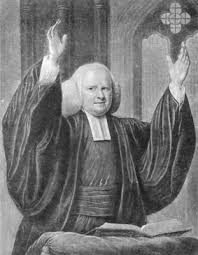
George Whitefield continued the movement, making seven separate trips to America and spending nine years preaching across the colonies. He preached to five thousand on the Boston Commons and eight thousand at once in the open fields. Between 1740 and 1742, an estimated 25,000 to 50,000 people were added to the New England church, changing the region's moral tone and gaining the name of a " Great Awakening".
The revival spread in to the Middle Colonies, beginning in New Jersey largely among the Presbyterians trained under William Tennents, including his son Gilbert, who became the leading figure of the Great Awakening in the Middle Colonies. The revival reached the South with the Preaching of Damuel Davies among the Presbyterians of Virginia (1748-1759), with the great success of the Baptist in North Carolina in the 1760's, and with the rapid spread of Methodism shortly before the American Revolution.
Because the First great Awakening served to build up interestes what were intercolonial in character and increased oppositions to the Anglican Church and the royal officials who supported it, many historians say it helped set in motion a democratic spirit that eventually brought America its political freedoms. It also resulted in a outburst of missionary activity among Native Americans by such men as David Brainerd, and it was the impetus to the first movement of importance against slavery, In education, it let to the founding of a number of academies and colleges, notably Princeton, Brown, Rutgers, and Dartmouth.
By the year 1800, nearly a million people has made their way west, settling in the area west of the Blue Ridge in Virginia, in Kentucky, Tennessee, the Northwest, and in the Indian Territory. Most did not have access to a church, and moral conditions once again west into decline. However, a second great spiritual revival began that continued into the 1830s. Many historians refer to Logan County in Kentucky as its starting point, where several Methodist and presbyterian ministers joined efforts in 1799; and vistitors to the revival would camp out for two or three nights. One such gathering was held at Cane Ridge, Kentucky, in 1801, and drew perhaps as many as 15,000 to 20,000 people. More than 10,00 people were swepte into the Kentucky churches between 1800 and 1803.
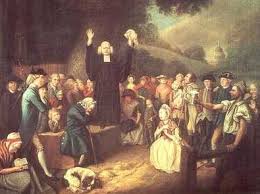
The great revival quickly spread throughout Kentucky, Tennessee, and southern Ohio. The Methodist has created an efficient organization of " districts" of churches, each of which would be served by circuit riders-preachers who traveled from church to church to preach the minister, especially in rural areas. The circuit rider came from among the common people, which helped them establish a raport with the frontier families they hoped to bring to faith. They promoted "Sunday schools", in which children were taught reading, wrighting, and arithmetic.
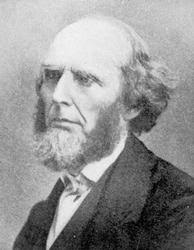
While the Focus of the Second great Awakening was primarily on personal salvation experienced in revival meetingings, it accomplished far more than that, for it had a greater impact on secular society than any other in American history through its vast social concern. Through a multitude of channels, this revival encouraged Christians to become involved in causes dealing with prison reform, temperance, women's suffrage, and the crusade to abolish slavery.
For instance, Charles Finney, on of the greatest American preachers in teh 1800's, became the president of Oberlin College in Ohio. He srongly supported giving freedom to the slaves, and the college was a busy station for the Underground Railroad, which secretly brought slaves to freedom.. Oberlin was among the first American colleges to coeducate blacks and women with white men. Finney also helped from a great network of volunteer societies organized to aid in solving social problems. By 1834, the budget of these societies was nearly as large as teh federal budget of that time.

During revivals that Finney held in Boston, fifty thousand people put their faith in Christ in just one week. Finney always demanded a verdict from his questions:"What will you do with Jesus Christ?" Perhaps that is a fitting description of what happenee across America through the Second Great Awakening. Hundred of thousands put their faith in Christ and went on to exert a profound spiritual and social impact in their day.
THE LAST BASTION OF FREEDOM
Richard Wurmbrand (1909-2001), a Romanion evangelical Christian minister and author who spent a total of 14 years imprisoned in Romania for his faith, was also the founder of the Voice of the Martyrs, and interdenominational organization working with and for persecuted Christians around the world. In 1967, he expressed this view of America: Every freedom-loving man has two fatherlands; his own and America. Today, America is the hope of every enslaved man, because it is the last bastion of freedom in the world. Only America has the power and spiritual resources to stand as a barrier between militant communism and the people of the world. It is the last, " dike" holding back the rampaging floodwaters of militant communism. If it crumples, there is no other dike, no other dam; no other line of defense to fall back upon. America is the last hope of millions of enslaved peoples. They look to it as their second fatherland. In it lies their hopes and prayers. I have seen fellow-prisoners in communist prisons beaten, tortured, with 50 pounds of chains on their legs-praying for America........that the dike will not crumple; that it will remain free.
HOPE " Where then is my hope?" JOB 17:15
A Resurrection Body
In his early twenties, Bengamin Franklin, one of America's renowned Founding Fathers, wrote this verse, reminiscent of words of Job, to serve as his epitaph:
The Body of Bengamin Franklin, Printer, " Like the cover of an old book, It's contents torn out And stripped of its lettering and gilding," Lies here, food for worms. But the world shall not be lost; For it will, as he believ'd, appear once more In a new and more elgant edition, Revised and Corrected By the Author.
FAITH "........AND AFTER MY SKIN IS DESTROYED......." JOB 19:26
THE RIGHTEOUSNESS OF NATIONS
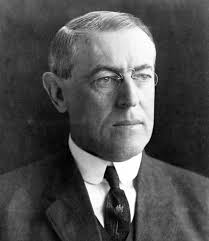
When Germany started unrestricted submarine warfare in early 1917 and made an attempt to enlist Mexico as an ally, Woodrow Wilson, the 28th presdient of the United States, led America into World War 1 against the Central Powers. In his declaration of war speech, he stated that unless America threw its weight into the war, Western civilization itself could be destroyed. This excerpt from a speech given in 1911 is his veiw of the Word of God in society;
There are great problems before the American people. There are problems which will need purity of spirit and an integrity of purpose such as has never been called for before in the history of this country. I should be afraid to go forward if I did not beleive that there lay at the foundation of all our schooling and of all our thought this incomparable and unimpeachable Word of God. If we cannot derive our strength thence, there is no soure from which we can derive it, and so I would bid you go from this place, if I may, inspired once more with the feeling that the providence of God is the foundation of affairs, and that only those can guide, and only those can follow, who take this providence of God from the sources where it is authentically interpreted.................
The happiness of seeing a great company of people like this gathered together in the interest of the Sunday school is the happiness of knowing that there are they who seek light and who know that the lamp from which their spirits can be kindled is the lamp that glows in the Word of God.
Every Sunday school should be a place where this great book is not only opened, is not only studied, is not only revered, but is drunk of as if it were a fountain of life, is used as if it were the only source of inspiration and of guidance. No great nation can ever survive its own temptatons and its own follies that does not indoctrinate its children in the Word of God; so that as schoolmaster and as Governor I know that my feet must rest with the feet of my fellowmen upon this foundation, and upon this foundation only; for the rrighteousness of nations, like the righteousness of men, must take its source from these foundations of inspiration.
MORAL STRENGTH, " I PUT ON RIGHTEOUSNESS, AND IT CLOTHED ME............" JOB 29:14
" GOD OF OUR FATHERS"

Daniel C. Roberts survived the Civil War and went on to become the rector of the small Episcopal parish in Brandon, Vermont. He wanted a new hymn for his congregaton to celebrate the American Centennial in 1876, so he wrote " God of Our Fathers, " which his congregation sang on July 4. In 1892, this hymn was chosen for the celebration of the centennial of the United States Constitution.
God of our fathers, whose almighty hand
Leads forth in beauty all the starry band
Of shining worlds in splendor through the skies
Our grateful songs before They throne arise
They love divine hath led us in the past,
In this free land by Thee our lot is cast,
Be Thou our Ruler, Guardian, Guide and Stay,
They Word our law, Thy paths our chosen way.
From war's alarms, from deadly pestilence,
Be Thy strong arm our ever sure defense;
Thy true religion in our hearts increase,
They bounteous goodness nourish us in peace.
Refresh They people on their toilsome way,
Lead us from night to never ending day;
Fill all our lives with love and grace divine,
And glory, laud, and praise be ever Thine.
WORSHIP " HE COMES FROM THE NORTH AS GOLDEN SPLENDOR; WITH GOD IS AWESOME MAJESTY." JOB 37:22
" IF THE FOUNDATIONS BE DESTROYED......."
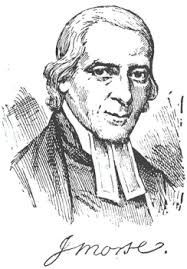
Jedidiah Morse(1761-1826) was a prioneer American educator, clergyman, geographer, and the father of Samuel Morse, inventor of the telegraph and " Morse Code." After the American Revolution, he taught school to earn money while a graduate student of Yale. The students needed a good geography text, so he wrote Geography Made Easy and published it in 1784. It was the first geography book published in the United States and went throught over 25 editions. Morse laster published other American and world geographies, earning the informal title of " Father of American Geography."
While at Yale, Jedidiah studied for the ministry. In 1789, he accepted a call to the First Church of Charlestown, Massachusetts, one of the oldest churches in America. He was highly alarmed by how far the Boston clergly had moved away from doctrinal orthodoxy as well as by the growing influence of European rationalism in the United States. In 1799, he preached an insightful Election Sermon; " If the foundations be destroyed, what can the righteous do? " In it, he said;
Our dangers are of two kinds, those which affect our religion, and those which affect our government. They are, however, so closely allied that they cannot, with propriety, be separated. The foundation which support the interest of Christianity, are also necessary to support a free and equal government like our own......
To the kindly influence of Christianity we owe that degree of civil freedom, and political and social happiness which mankind now enjoys. In proportion as the gunuine effects of Christinaity are diminished in any nation, either through unbeleif or the corruption of its doctrine, or the neglect of its institutions; in the same proportion will the people of that nation recede from the blessing of genuine freedom, and approximate the miseries of complete despotism. I hold this to be a truth confirmed by experience. If so, it follows, that all efforts made to destroy the foundation of our holy religion, ultimately tend to the subversion also of our political freedom and happiness. Whenever the pillars of Christianity shall be overthrough, or present republican forms of government, and all the blessings which flow from them, must fall with them.
FREEDOM, IF THE FOUNDATIONS ARE DESTROYED, WHAT CAN THE RIGHTEOUS DO? PSALM 11:3
JOHN GLENN
Between 1957 and 1975, the competition of space exploration between the Soviet Union and the United States became a heated part of the Cold War, both because of its potential military and technological applications and its morale boosting social benefits. The Soviets were the first to acheive a manned orbit of the earth in 1961, putting America behind in the " Space Race."
On Feruary 20, 1962, a top an Atlas rocket, Colonel John Glenn piloted the first American manned orbital mission aboard Friendship 7, cricling the globe three times. Fulfilling America's political and scientific hopes and dreams as declared by President John F. Kennedy, Glenn returned to Earth as virtually every American's hero.
From 1974 to 1999, John Glenn served as a United States senator. In 1998, NASA invited him to rejoin the space program as a member of the Space Shuttle Discovery Crew. On October 29, 1998, Glenn became the oldest human, at the age of 77, ever to venture into space. It was a vivid reminder of the heroic spirit that makes space exploration possible.
As Glenn oserved the heavens and earth from the windows of Discovery, he said, " To look out at this kind of creation out here and not beleive in God is to me impossible. It just stengthens my faith. I wish there were words to describe what it's like."
FAITH The heavens declare the glory of God...........Psalms 19:1
Chester A. Arthur placed his hand on Psalm 31:1-3 as he took the presidential oath of office in 1881.
The Soul of America

Charles Malik(1906-1967), the ambassador to the United Nations from Lebanon and president of the 13th Session of the United Nations General Assembly in 1959, stated: The good(in the United States)would never have come into being without the blessing and power of Jesus Christ...Whever tries to conceive the American word without taking full account of the suffering and love and salvation of Christ is only dreaming. I know how embarrassing this matter is to politicians, bureaucrats, businessmen, and cynics; but , whatever these honored men think, the irrefutable truth is that the soul of America is, at its best and highest, Christian.
FAITH Blessed is the nation whose God is the Lord......Psalm 33:12
Dwight D. Eisenhower placed his hand on Psalm 33:12 as he took the presidential oath of office in 1957
THE FIRST PRAYER OF CONGRESS

When the first Congress of the United States met on September 7, 1774, it began with prayer. On that morning, Congress was very concerned about Great Britains's recent attack on Boston. Reverend Jacob Duch'e, Rector of Christ Church of Philadelphia, was summoned to lead the opening prayers. He first read Psalm 35, after which John Adams stated in a letter to his wife: " I never saw a greater effect upon an audience. it seemed as if heaven has ordained that Psalm to be read on the morning."
Then rather than read a general prayer as was commonly done, Reverence Duch'e broke into extemporaneous prayer:
O Lord our Heavenly Father, high and mighty King of kings and Lord of lords, who dost from Thy throne behold all the dwellers on earth and reignest with power supreme and uncontrolled over all the kingdoms, empires and governments; look down in mercy, we beseech Thee, on these our American States, who have fled to Thee from the rod of the oppressor and thrown themselves on Thy gracious protection, desiring to be henceforth dependent only on Thee. To thee have they appealed for the rigtheousness of their cause; to Thee do they now look up for that countenance and support, which Thou alone canst give. Take them, therefore, heavenly Father, under Thy nurturing care; give them wisdom in council and valor in the field; defeat the malicious designs of our cruel adversaries; convince them of the unrighteousness of their cause and if they persist in their sanguinary purposes, of own unerring justice, souding in their heats, constrain them to drop the weapons of war from their unnerved hands in the day of battle!
Be Thou present, O God of wisdom, and direct the councils of this honorable assembly; enable them to settle things on the best and surest foundation. That the scene of blood may be speedily closed; tha order harmony, and peace may be effectually restored, and truth and justice, religion and piety, prevail and flourish amongst the people. Preserve the health of their bodies and vigor of their minds; shower down on them and the millions they here represent, such temporal blessings as Thou seest expedient for them in this world and crown them with everlasting glory in the world to come. All this we ask in the name and through the merits of Jesus Christ, They Son and our Savior. Amen.
What an amazing way to start Congress!
PRAYER: FIGHT AGAINST THOSE WHO FIGHT AGAINST ME. PSALM 35:1
Woodrow Wilson placed his hand on Psalm 46 as he took the presidential oath of office in 1917.
FILL THE WORLD WITH HIS GLORY
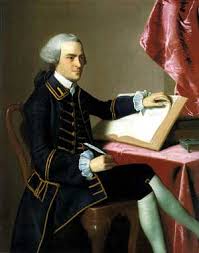
To celebrate the victorious conclusion of the Revolutionary War, Governor John Hancock of Massachusetts issued a Proclamation for a Day of Thanksgiving on December 11, 1783:
Whereas........these United States are not only happily rescued from the danger and calamities to which they have been so longe exposed, but their freedom, sovereignty, and independence ultimately acknowleded.
And Whereas....the interposition of Divine Providence in our favor hath been most abundantly and most graciously manifested, and the citizens of these Unites States have every reason for rasie and gratitude to the God of their salvation.
Impressed therefore with an exalted sense of the blessings by which we are surrounded, and of our entire dependence on the Almigty Being from whose goodness and bounty they are derived; I do by and with the Advice of the Council appoint Thursday the eleventh day of Decemeber next (the day recommended by the Congress to all the States) to be religiously observed as a day of Thanksgiving and Prayer, that all the people may then assemble to celebrate....that he hath been pleased to continue to us the Light of the blessed Gospel;...That we also offer up fervent supplications...to cause pure religion and virtue to flourish...and to fill the world with His glory.
WORSHIP: And let the whole earth be filled with His glory Psalm 72:19
Grover Cleveland placed his hand on Psalm 91:12-16 as he took the presidential oath of office in 1893.
COMMON SENSE BY THOMAS PAINE

In early 1776, Americans still hoped for reconciliation with Britain, and the British were preparing to take advantage of that sentiment with a generous offer for peace that many Americans would have welcomed. But then Thomas Paine anonymously published the political pamphlet Common Sense in January 1776, which presented the American colonists with a convincing argument for independence from British rule that resonate with the colonists. In the first year alone, over 500,000 copies were sold, and the revolution caught fire.
Paine structured Common Sense like a sermon and relied on biblical references and allusions, such as, " But where says some is the king of America? I'll tell you, friend, He reigns above, " To make his case to the people. His vision stirred the colonist to strenghten their resolves. By springs 1776, there was significant support for American independence and Virginia's convention voted to instruct their delgates to Congress to propose that the colonies formally declare their independence. On June 7, Richard Henry Lee moved that Congress declare the united Colonies to be free and independent, resulting in the first successful anit-colonial action in modern history.
DEFENDER; The Lord reigns; let the people tremble Psalm 99:1!
Grover Cleveland placed his hand on Psalm 112:4-10 as he took the presidential oath of office in 1885
Rutherfore B. Hayes placed his hand on Psalm 118: 11-13 as he took the presidential oath of office in 1877.
Woodrow Wilson placed his hand on Psalm 119 as he took the presidential oath of office in 1913
THE BIBLE AS A SCHOOL TEXTBOOK
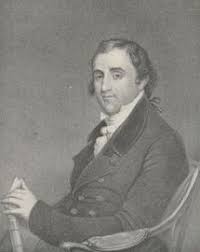
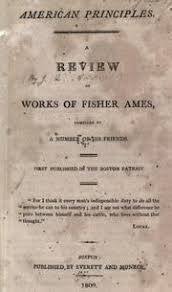
Fisher Ames (1758-1808), a Founder and politician who helped formulate the Bill of Rights, states:
We have a dangerous trend beginning to take place in our education. We're starting to put more and more textbooks in to our schools.....We've become accustomed of late of putting little books into the hands of children containing fables and moral lesson................we are spending less time in the classroom on the Bible, which shoudl be the principal text of our schools... The Bible states these great moral lesson better than any other manmade book.
MORAL STRENGTH. How can a young man clease his way? Psalm 119:9
THE BIBLE OF THE REVOLUTION
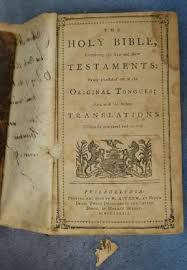
Until the American Revolution, America's bibles had been shipped in from England. When that supply was cut off and supplies dwindled in 1777, Congress resolved to import 20,000 copies of the bible from other countries, based on a Congressional committee's determination that " the use of the Bible is so universal and its importance so great. "
That resolution was not acted upon, though, and the need remained. Robert Aitken of Philadelphia publieshed a New Testament in 1777 and followed it with three addittional editions. In early 1781, he petitioned Congress and received the approval to print the entire Bible. Thus originated he first Ameican prining of the English Bible in 1782, what has come to be called the " Bible of the Revolution, "
W.P. Strickland, an early American historian, said that this Bible publication:" Who, in view of this fact, will call in question the assertion that this is a Bible nation? Who will charge the government with indifference to religion when the first Congress of the States assumed all the rights and performed all the duties of the Bible society long before such as institution has an existence in the world?"
TRUTH Your word is a lamp to my feet and a light to my path Psalm 119:105
GOD'S CROWNING HELP
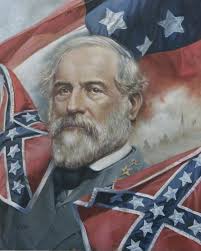
Confederate General Robert E. Lee is among the most celebrated generals in American history, admired equally for his character and his military prowess. One historian has writen, " Robert Lee was one of the small company of great men in whom where is no inconsistency to be explained, no enigma to be solved. What he seemed, he was-a wholly human gentleman, the essential elements of whose positive character were two and only two, simplicity and spirituality." We get a glimpse of Lee's character in this Christmas greeting to his wife written from Fredericksburg on Christmasn Day 1862. His words underscore President Lincoln's ironic summary of the Civil War: " Both invokes (God's )aid against the other."
I will commence this holy day, dearest Mary, by writing to you. My heart is filled with gratitude to Almighty God for His unspeakable merices with which He has blessed us this day, for those He has granted us from the beginning of life, and particularly for those He has vouchsafed us during the past year. What should have become of us without His crowning help and protection? Oh, if our people would only recognize it and cease from vain self-boasting and adulation, how strong would be my beleif in final success and happiness to our country! For in Him alone I know is our trust and safety.
Cut off from you and my children, my grateast pleasure is to write to you and them. Yet I have no time to indulge in it. You must tell them so, and say I constantly think of them and love them fervently with all my heart. But what a cruel thing is war; to seperate and destroy families and friends, and mar the purest joys and happiness God has granted us in this world; to fill our hearts with hatred instead of love for our neighbors, and to devastate the fair face of this beautiful world!
I pray that, on this day when only peace and goodwill are preached to mankind, better thoughts may fill the hearts of our enemies and turn them to peace..... My heart bleeds at the death of every one of our gallant men.
FAITH MY HELLP COMES FROM THE LORD, WHO MADE HEAVEN AND EARTH , PSALMS 121:2
 Benjamin Harrison placed his hand on Psalm 121:1-6 as he took the presidential oath of office in 1889.
 Dwight D. Eisenhower placed his hand on Psalm 127:1 and 2 Chronicles 7:14 as he took the presidential oath of office in 1953.
FRANKLIN SUGGESTS PRAYER FOR THE CONSTITUTION

In th summer of 1787, as America's Founders met at Independence Hall in Philadelphia to hammer out the specifics of our nation's governing constitution, tempers flared among the delegates of the 13 colonies to such an extent that the entire convention was in danger of breaking down. Into this atmosphere thick with division and confict, an 81-year-old stateman slowly rose to speak words of profound wisdom.
Although one of the least religious of our nations Founders, Dr. Benjamin Franklin nonetheless understood how crucial moral and biblical virtues world be to this newborn republic. Appealing to the words of Psalm 127:1, Franklin addressed George Washington, president of the convention, and counseled his fellow delegates to beseech the aid of Almighty God before they proceeded further:
I have lived, sir, a long time, and the longer I live, the more convincing proofs I see of this truth, that God governs in the affairs of men. And if a sparrow cannot fall to the ground without His notice, is it probable that an empire can rise without His aid? We have been assured, sir, in the Sacred Writings, that" except the Lord builds the house, they labor in vain that build it." I firmly beleive this; and I also beleive that without His concurring aid we shall succeed in his political building no better than the builders of Babel: We shall be divided by our partial local interest; our projects will be confounded, and we oursleves shall become a reproach and by word down to furture areas. And what is worse, mankind my hereafter from this unfortunate instance, despair of establishing governments by human wisdom and leave it to chance, war, and conquest.
I therefore beg leave to move that henceforth prayers imploring the assistance of Heaven, and is blessing on our delibertions, be held in this assembly every morning before we proceed to business, and that one or more of the clergy of this city be requested to officiate in that service.
God, indeed, answered the prayers of the Founding Fathers, as on September 17, 1787, the drafting of the U.S. Constitution was completed, the greates political document ever written. Franklin's words remain forever true: as our naton faces today's political, moral, and spiritual issues, we shall fail in this " grand experiment" of liberty unless we seek the " assistance of Heaven."
PRAYER Unless the LORD builds the House.....Psalms 127:1
AMERICAN SUPPORT FOR THE JEWISH STATE, 1948
Margaret Truman said tha most difficult decision Harry Truman ever faced as president was whether he should support the creation of a Jewish homeland in Palestine after World War II. " What I am trying to do is make the whole world safe for Jews, " he wrote as he wrestled over the decison. Deeply affected by the full revelation of the Holocaust as well as his moral and religous upbringing and familiarity with the Bible, Truman sympathized with Jewish aspirations for a homeland. In November 1947, he lobbied for the United Nations resolution that divided Palestine into Jewish and Arab states.
Great Britain announed it would transfer authority over Palestine to the U.N. by May 14, 1948. On the eve of British withdrawal, which would be followed immediately by the Jewish declaration of independence, Secretary of State George Marshall and most of the American foreign service experts strongly oppose the creation of a Jewish state in Palestine, warning Truman that Arab countries would cut off oil and unite to destroy the Jews, But Truman weighed the multifaceted concerns and held firm despite the heated opposition.
On May 14, David Ben-Gurion read a declaration of Jewish independence in front of a small audience at the Tel Aviv Art Museum. Striking the speaker's table for emphasis, he announced, " The name of our state shall be Isreal." At midnight, British rule over Palestine lapsed; eleven minutes later, White House spokesman Charlie Ross announced U.S. Recognition. The American statement recognizing the new State of Isreal bears President Trumans' last-minute handwritten changes.
" God put you in your mother's womb, " The Chief Rabbi of Isreal, Isaac Halevi Herzog, later told Truman, " So you would be the instrument to bring about Isreal's rebirth after 2000 years." With Trumans' decision, the hopes of the Jewish people were realized, but so too were Marshall's fears. Arab opponents of the new nations immediately declared war, prompting a bloody struggle over Israel's existence that continues today.
Truman's favorite Psalm was 137, which begins: " By the rivers of Babylon, there we sat down, yea, we wept when we remembered Zion."
PROTECTOR If I forget you, O Jerusalem.......PSALM 137:5
IN DEFENSE OF LIFE
Pope John Paul II addressed a crowd of over 375,000 people from 70 different countries in a mass celebrated at Cherry Crek State Park, Coloado, as a part of " World Youth Day" on August 15, 1993. He stated:
A " culture of death" seeks to impose itself on our desire to live, and live to the full...In our own century, as at no other time in history, the " culture of death" has assumed a social and institutional form of legality to justify the most horrible crimes against humanity: genocide,"final solutions," "ethnic cleansing," and massive taking of lives of human beings even before thy are born, or before they reach the natural point of death....In much of contemporary thinking, any reference to a "law" guaranteed by the Creator is absent. There remains only each individual's choice of this or that objective as convenient or useful in a given set of circumstances. No longer is anything considered instrinsically "good" and "universally binding." The family especially is under ttack. And the sacred character of Human Life is denied. Naturally, the weakest members of society are the most at risk. The unborn children, the sick, the handicapped, the old, the poor and unemployed, the immigrants and refuge....You must feel the full urgency of the task. Woe to you if you do not succeed in defending life. The church needs your energies, you enthusiam, your youthful ideas, in order to make the Gospel of Life penetrate the fabric of society, transforming people's hearts and the structures of society in order to creae a civilization of true
justice and love.
DEFENDER For You formed my inward parts; You covered me in my mothers womb. Psalms 139:13
AMERICA THE BEAUTIFUL

" America the Beautiful" was written by the professor, poet, and writer Katharine Lee Bates (1859-1929), after an inspriing trip to Pikes Peak, Colorado, in 1893. When she got to the top of Pikes Peak, she said, " All the wonder of America seemed displayed there, with the see-like expanse." It inspired her to write the song that is considered the American national hymn, as opposed to " The Star-Spangled Banner," which is the national anthem.
O beautiful for spacious skies,
For amber waves of grain,
For purple mountain magesties
Above the fruited plain!
America! America!
God shed His grace on thee,
And crown they good with brotherhood
From sea to shining sea!
O beautiful for pilgrim feet
Whose stern impassion'd stress
A thoroughfare for freedom beat
Across the wilderness.
America!America!
God mend thine ev'ry flaw
Confirm thy soul in self-control,
Thy liberty in law.
O beautiful for heroes prov'd
In liberating strife,
Who more than self their country loved,
And mercy more than life.
America! America!
May God thy gold refine
Till all success be nobleness,
Ane ev'ry gain divine.
O beautiful for patriot dream
The sees beyond the years
Thine alabaster cities gleam
Undimmed by human tears.
America! America!
God shed His grace on thee,
And crown they good with brotherhood
From sea to shining sea.
INSPIRING I will meditate on the glorious splendor of Your majesty.....PSALM 145:5
OUR NATIONS COINS AND CURRENCY

Our nation's claims have not always had, “In God We Trust” stamped on them. The motto was placed on United States claims largely because of the increased religious sentiment existing during the Civil War. From Treasury Department records it appears that the first suggestion that God be recognized on U.S. coinage can be traced to a letter addressed to the Secretary of Treasury Salmon P. Chase from a small town Pennsylvania minister in 1861.
As a result, in a letter dated November 20, 1861, Secretary Chase instructed James Pollocked, Director of the Mint at Philadelphia, to prepare a motto: Dear Sir: No nation can be strong except in the strength of God, or save except in His defense. The trust of our people in guide should be declared on our national coins.
“In God We Trust,” first appeared on the 1864 two- cent coin. An Act of Congress passed on March 3, 1865, allowed the Mint Director, with the Secretary's approval, to place the motto on all gold and silver claims, “that shall admit the inscription thereon.” Under the Act, the motto was placed on the gold double- eagle coin, the gold-eagle coin, and the gold-half eagle coin. It was also placed on the silver dollar coin, the half-dollar coin, the quarter-dollar coin, the nickel, and that the recent coin beginning in 1866.
The motto was admitted from the new gold coins issued in 1907, causing a storm of public criticism. As a result, legislation passed in May 19 made, “In God We Trust” mandatory on all coins on which it had previously appeared. Legislation approved July 11, 1955, made the appearance of “In God we Trust” mandatory on all claims and paper currencies of the United States. By an act of Congress, July 30, 1956, “In God We Trust” became the national motto of the United States.
Since 1955, all the United States claims and currencies have carried the motto “In God We Trust”. Not until 1970 and 1978 where the laws authorizing its use legally challenged. Responding to atheists Madalyn Murry O'Hare charge, the federal courts rejected her argument that the motto violated the First Amendment
FAITH, Trust in the LORD with all your heart................
Gerald R. Ford placed his hand on Proverbs 3:5,6 as he took the presidential oath of office in 1974
The Whole Hope of Human Progress

William Henry Seward (1801-1872), the the Secretary of State under President's Abraham Lincoln and Andrew Johnson who negotiated the purchase of Alaska from Russia, stated: I do not believe human society, including not merely a few persons in any state, the whole masses of men, even have attained, or ever contains, a high state of intelligence, virtue, security, liberty, or happiness without the Holy Scriptures; even the whole hope of human progress is suspended on the ever-growing influence of the Bible.
The Last Best Hope of Earth

In December 1862, President Lincoln concluded his second annual message to Congress: In giving freedom to the slave, we assure freedom to the free-honorable a like in what we get and what we preserve. We shall nobly save-or meanly lose-the last best hope of earth. Other means may succeed; this could not fail. The way is plain, peaceful, generous, just-a way which is followed the world will forever applaud and God must forever bless.
Hope
Hope deferred makes the heart sick Proverbs 13:12
Righteousness Exalts the Nation
Patrick Henry, an American Revolutionary leader who pushed to the Stamp Act resolves in May 1765, the most anti-British political action to that point wrote: Whether this will prove a blessing or a curse will depend upon the use our people make of the bloodstains, which a gracious God had bestowed on us. If they otherwise, they will be great and happy. If they are of a contrary character, they will be miserable. Righteousness alone can exalt them as a nation. Reader! whoever thou art, remember this, and in thy sphere practice virtue thyself, and encourage it in others.
Moral Strength: Righteousness exalts a nation Proverbs 14:34

William McKinley placed his hand on Proverbs 16 as he at the presidential oath of office in 1901.
The Minutemen
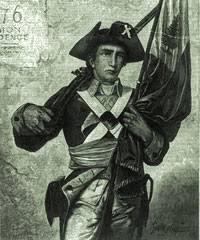
In 1774, the Massachusetts Provincial Congress recognized the Massachusetts militia, providing that one fourth of the entire militia was made up of Minutemen-Patriots who vowed to be ready to fight at a minutes notice. In the Massachusetts provincial Congress charged the Minutemen; You... are placed by Providence in the post of honorr, and because it is the post of danger.... The eyes not only of North America and the whole British Empire, but of all Europe, are upon you. Let us be, therefore, altogether solicitous that no disorderly behavior, not being on becoming our characters as Americans, as citizens and Christians, the justly chargeable to us.
Honor... With dishonor comes reproached Proverbs 18:3

Andrew Johnson placed his hand on Proverbs 21 as he to the presidential oath of office in 1865.

James A.. Garfield Place his hand on Proverbs 20 1:1 as he took the presidential oath of office in 1881.
The Censoring of Religious Activities and Public Schools

In Supreme Court decisions rendered in 1962 and 1963, the inclusion of religious activities, such as school prayer and Bible reading, in major activities of daily student life and public schools was struck down. It was the first time in the history of the United States that any branch of the federal government took such a stand, censoring religious activities long considered an integral part of education.
The sudden restructuring of educational policies was precipitated by the courts controversy all reinterpretation of the phrase “Separation of church and state” as it relates to the First Amendment, which simply states; “Congress shall make no law respecting an establishment of religion where prohibited the free exercise thereof.” The court decided that the First Amendment includes a prohibition against including religious activities and public affairs, inviting skyrocketing numbers of lawsuits that challenged any presence of religion in public life. The court has already delivered for life in reaching decisions to:
Remove student prayer: “Prayer in his public school system breached the Constitution's wall of separation between Church and State.” Engle V. Vitale, 1962.
Remove school Bible readings:”No state law or school may require that passages from the Bible be read what that the Lord's prayer be recited in the public schools of a state at the beginning of each school day.” Abington v Schempp, 1963
Remove the Ten Commandments from view: “If the posted copies of the Ten Commandments are to have any affect at all, it will be to induce the school children to read, meditate upon, perhaps to venerate and obey the Commandments... this... is not a permissible state objective under the establishment clause Stone V. Graham, 1980
Remove benediction and invocations from school activities: “Religious invocations….in high school commencement exercises conveyed the message that district had given its endorsement to prayer and religion, so that school district was properly( prohibited) from including invocation in commencement exercise.” Graham v. Central ,1985: Kay v. Douglas, 1986: Jager v. Douglas, 1989: Lee v. Weisman, 1992
FREEDOM Do not remove the ancient landmark which your fathers have set. Proverbs 22:28
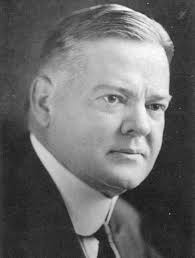
Herbert Hoover placed his hand on Proverbs 29: 18 as he at the presidential oath of office in 1929.
The Universal Education of Youth

Dr. Benjamin Rush, a signer of the Declaration of Independence and one of America's most influential founding fathers, was one of the first founders call for free, national, public schools. The distinguished physician and scientist, he understood the role of the educated citizenry as regards stability of the public, stating:
I believe no man was ever early instructed in the truth of the Bible without having been made wiser or better by the early operation of these impressions upon his mind...
If moral precepts alone could have reform mankind, the mission of the Son of God into our world would have been unnecessary. He came to promulgate a system of doctrines, as well as a system of morals. The perfect morality of the gospel rest upon the doctrine which, though often controverted, has never been refuted; I mean the vicarious life and death of the Son of God. This sublime and ineffable doctrine delivers us from the absurd and hypothesis says of modern philosophers concerning the foundation of moral obligation, and fixes it upon the eternal and self-moving principle of love. It concentrates the whole system of ethics and the single text of Scripture: The new commandment I give unto you that you love one another, even as I loved you”. By withholding the knowledge of this doctrine from children, we deprive ourselves of the best means of awakening moral sensibility into their minds. We do more; we furnish an argument for withholding from them on knowledge of the morality of the gospel likewise; for this, and many instances, is a supernatural, and therefore is liable to be controverted, as any of the doctrines or miracles which are mentioned in the New Testament. Miraculous conception of the Savior of the world by a virgin is not more opposed to the ordinary course of natural events, nor is the doctrine of the atonement more about human reason, then those moral precepts which command us to love our enemies or to die for our friends....
Contemplate and merely the political institutions of the United States, I lament that we waste so much time and money in punishing crimes and take so little pains to prevent them. We profess to be Republicans, and yet we neglect the only means of establishing and perpetuating our republican forms of government; that is, the universal education of our youth in the principles of Christianity by means of the Bible; for this divine book, above all others, favors that equality among mankind, that respect for just laws, and although sober and frugal virtues which constitute the sole of Republicanism.
Equipper every word of God is pure.... Proverbs 30:5
Christian Men of Science

Matthew Maury (1806-1873), nicknamed the “Pathfinder of the Seas” for having charted the ocean and wind currents while serving in the U.S. Navy, was considered the “Father in a Modern Oceanography and Naval Meteorology,” and later the “Scientist of the Seas”. He wrote;
I have always found in my scientific studies, that, when I could get the Bible to say anything on the subject, it afforded me a firm platform to stand upon and around in the laddter by which I could safely ascend.
As her knowledge of nature and her laws has increased, so has their knowledge of many passages of the Bible improved.
The Bible called the earth the round world, yet for ages it was...hearsay for Christian men to say that the world is round; and, finally, sailors circumnavigated the globe and proved the Bible to be right, and saved Christian men of science from the stake.
And as for the general system of circulation which I have been so long and that ring to describe, the Bible tells it all in a single sentence; “the wind goeth toward the South... and return it again to his circuits”.
Truth... The win whirls about continually, and comes again on its circuit. Ecclesiastes 1:6
Correcting Abuses
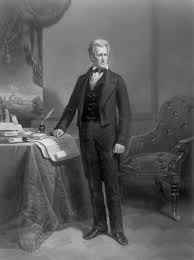
In July 1832, President Andrew Jackson vetoed the Bank Renewal Bill, preventing the rechartering of the Bank of the United States. Believing the bank was unauthorized by the Constitution and concentrated too much economic power in the hands of a small moneyed elite, he stated:
In the full enjoyment of the guest of Heaven and the fruits of superior industry, economy, and virtue, every man is equally entitled to protection by law; but when the laws undertake to add to these natural and just advantage artificial distinctions, to grant titles, gratuities, an exclusive privileges, to make the rich richer and the potent more powerful, the humble member of society-the farmers, mechanics, and laborers-... Have a right to complain of the injustice of their government.
There are no necessary evils in government. It's evils exist only in its abuses. If that would confine itself to equal protection, and, as Heaven does is Rains, shower its favor alike on the high and the low, the rich and the poor, it would be an unqualified blessing. In the act before man there seems to be a wide and unnecessary departure from these just principles....
For relief and deliverance let us firmly rely on the kind providence which I'm sure watches with peculiar care or the destinies of our republic, and on the intelligence and wisdom of our countrymen. Through his abundant goodness and their patriotic devotion are liberty and Union will be preserved.
PROTECTOR Moreover I saw…..in the place of righteousness, iniquity was there. Ecclesisates 3:16
Render Honor to the Creator
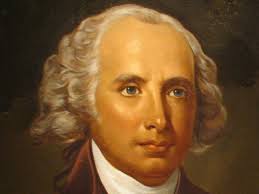
James Madison, the fourth president of the United States and”Chief Architect of the Constitution,” wrote:
The religion then of every man must be left to the conviction and conscience of every man; and it is the right of every man to exercise it as these may dictate. This right is in its nature an unalienable right. It is unalienable, because the opinions of men, depending only on the evidence contemplating by their own minds cannot follow the dictates of other men. It is unalienable also, because what is here a right towards men, is a duty towards the creator. It is the duty of every man to render to the creator such homadge and such only as he believes to be acceptable to him. This duty is precedent, both in the order of time and in degree of obligation, to the claims of civil society. Before any man can be considered as a member of civil society, he must be considered as a subject of the Governor of the Universe....
Honor......Remember now you're creator in the days of your youth... Ecclesiastes 12: 1
The Infallible Word of God

William Strong, an associate justice of the US Supreme Court 1870 to 1880 stated:you asked me what I think of Christ? He is the cheafest among 10 thousands, altogether lovely -- my lord, my savior, and my God.What do I think of the Bible? It is the infallible Word of God, a light erected all along the shores of time to warn against the rocks and breakers, and to show the only way to the harbor of the eternal rest.
Hope... Chief among ten thousands. Song of Solomon 5:10
Criminal punishment
Charles Colson, special counsel to President Richard Nixon and founder of prison fellowship, stated: Imprisonment as a primary means of criminal punishment is a relatively modern concept. It was turned to as a humane alternative to the older patterns of harsh physical penalties for nearly all crimes. Quakers introduced the concept in Pennsylvania.
The first American prison was established in Philadelphia when the Walnut Street Jail was converted into a series of solitary cells where offenders were kept in solitary confinement. The theory was that they would become, “penitents”, confessing their crimes before God and thereby gaining a spiritual rehabilitation. Hence, the name penitentiary-a place for penitents.
Humility... redeemed with justice, and her penitents with righteousness. Isaiah 1:27
Richard M. Nixon placed his hand on Isaiah 2:4 as he took the presidential oath of office in 1969 and 1973.
The Government of God
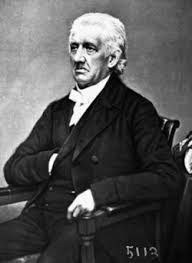
Lyman Beecher (1775 – 1863), a renowned Presbyterian clergyman in New England who later became president of Lane Theological Seminary, wrote:The government of God is the only government which will hold society, against depravity within the temptation without; and this it must do by the force of its own law written upon the hearts.This is the unity of the spirit and that bond of peace which can alone perpetrate national purity and tranquility-that law of universal and impartial law by which alone nations can b kept back from ruin. There is no safety for republics bought in self - government, under the influence of the holy heart, swayed by the government of God.
Protector... and the government will be upon His shoulder that... Isaiah 9:6
Christianity and American Society

Samuel Chase, a signer of the declaration of independence and justice of the United States Supreme Court, gave the court's opinion in the 1799 case of Runkel v. Winemiller:
Religion is all general and public concern, and other support depend, in great measure, the peace and good order of government, and safety and happiness of the people. By our form of government, the Christian religion is the established religion; and all sects and denominations of Christians are placed upon the same equal footing, and are equal entitled to protection in and they are religious liberty.
Defender... you will keep him in perfect peace.... Isaiah 26:3
God and State Constitutions:

While there have been revisions to state constitutions over the years, forty-three state constitutions acknowledged God or a higher power in their preambles( introductory clause of explanation), and the other seven state acknowledge God in their religious freedom provisions. You may want to read your state constitution in and discover how your state government acknowledges God. The following is a sure sample from various state constitutions:
Connecticut 1818, Preamble. “The people of Connecticut, acknowledged with gratitude the good providence of God and permitting them to enjoy a free government....”
Maine 1820, Preamble. “We the people of Maine... Acknowledge the grateful hearts the goodness of the sovereign ruler of the universe in affording us an opportunity... And poor in his aid and direction and its accomplishment...”
Massachusetts 1780, Preamble. “We, therefore, the people of Massachusetts, it now to a grateful hearts, the goodness of the Great Legislator of the Universe, in affording us, in the course of his providence, and opportunity….” and devoutly imploring his direction....
New York 1846, Preamble. “We, the people of the State of New York, grateful to Almighty God for freedom, in order to secure its blessings....”
Honor And you who are near, acknowledged my might. Isaiah 33:13
AMERICA ON ITS KNEES

Conrad Hilton (1887 – 1979), founder of the Hilton Hotel chain, being a man of conviction during the fight against communism in the Cold War, published his prayer on full-page ads in major magazines on July 4, 1952:
Our Father in heaven.
We pray that you save us from ourselves.
The world that you have made for us, to live in peace, we have made into an armed camp. We live in fear of war to come. We are afraid of” the terror that flies by night, and the arrows that fly by day, the pestilence that walks in the darkness and the destruction that waste at new day.”
We have turned from You to go our selfish ways. We have broken your commandments and denied your truth. We have left your altars to serve the faults God of money and pleasure and power.
Forgive us and help us.
Now, darkness gathers around us, and we are confused in all our councils. Losing faith in You, we lose faith in ourselves.
Inspire us with wisdom, all of us of every color, race, and create, to use our wealth, our strength to help our brothers, instead of destroying him. Help us to do Your will as it is done in heaven and to be worthy of your promises of peace on Earth. Fill us with new faith, new strength and new courage, that we may win the Battle for Peace.
Be swift to save us, dear God, before the darkness falls.
Prayer,” incline your ear, O Lord, and hear; open Your eyes, O Lord come and see.... “ Isaiah 30 7:17
" I HAVE A DREAM"
Martin Luther King Jr. was a driving force in the push to end segregation and racial discrimination through civil disobedience and other non-violent means in the turbullent 1950s and the 1960s. His efforts led to the 1963 March on Washington , where King deliver his" I Have a Dream" speech, which is credited with mobilizing supporters of desegregation and prompting the 1964 Civil Rights Act. On the steps of the Lincoln Memorial, he delivered these unforgettable words:
Now is the time to rise from the dark and desolate valley of segregation to the sunlit path of racial justice... Now is the time to make justice a reality for all of God's children.....
I have a dream that one day this nation will rise up and live out the true meanign of its creed; " We hold thes truths to be self-evident; that all men are created equal."
I have dream that one day on the red hills of Georgia the sons of former slaves and the sons of former slave owners will be able to sit down together at the table of brotherhood......
I have a dream that my four little children will one day live in a nation where they will not be judged by the color of their skin by by the context of their character......
This is our hope. This is the faith that I go back to the South with, With this faith we will be able to hew out the mountians of despair a stone of hope. With thie faith we will be able to transform the jangling discores of our nation into the beautiful symphony of brotherhood. With this faith we will be able to work together, to pray together, to struggle together, to go to jail together, to stand up for freedom together, knowing that we will be free one day.....
From every mountainside, let freedom ring. And when this happens, when we allow freedom to ring, when we let it ring from every village and every hamlet, from every state and every city, we will be able to speed up that day when all of God's children, black men and white men, Jews and Gentiles, Protestant and Catholics, will be able to join hands and sing in the words of the old Negro spiritual, " Free at Last! Free at last! Thank God Almighty,we are free at last!"
INSPIRING Every valley shall be exalted and every mountain and hill brought low......ISAIAH 40:4
THE DESIGNER OF THE UNIVERSE
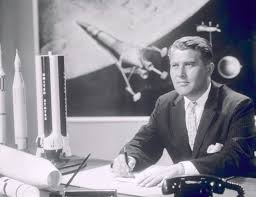
Wernher von Braun (1912-1977), the director of NASA and known as " The Father of the American Space Program" stated in a published article in May 1974:
One cannot be exposed to the law and order of the universe withough concluding that there must be design and purpose behind it all... The better we understand the intricacies of the universe and all it harbors, the more reason we have found to marvel at the inherent design upon which it is based....
To be forced to beleive only one conclusion- that everything is the universe happened by chance-would violate the very objectivity of science itself... What random process could produce the brains of a man or the system of the human eye?.....
They(evolutionist) challenge science to prove the existence of God. But must we really light a candle to see the sun?... They say they cannot visualize a Designer. Well, can a physicist visualize an electron?... What strange rationale makes some physicists accept the inconceivable electron as real while refusing to accept the reality of a Designer on the ground that they cannot conceive Him?
FAITH " Woe to hime who strives with his Maker!" ISAIAH 45:9
CHRISTIANITY AND THE AMERICAN FRONTIER


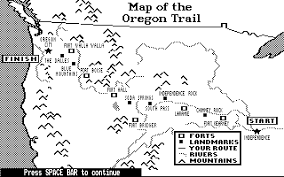

As the American frontier opened up between 1776 and 1850, American colonist first expanded out as far west as Appalachia, then pushed the frontier to the Mississippi River. By 1850, American pioneers pushed the edge of settlement to Texas, the Southwest, and the Pacific Northwest, seeking cheap land and inspired by the belief that they had a " manifest destiny" to stretch across the continet. In 1835, Alexis de Tocqueville, a French historian, traveled America as it was coming into its own as a nation. He wrote down his observatons in Democracy in America. This classic books provides unique insights into what made America such a rapid success. which clearly he beleived to be Christianity. One of his observatons describes what he says happen as the American settler spread accross the continent: " I have known of societies formed by the Americans to send out ministers of the Gospel into the new Western States to found schools and churches there, lest religon should be suffered to die away in those remote settlements, and the rising Sates be less fitted to enjoy free institutions than the people from which they emanated. I met with wealthy New Englanders who abandoned the counrty in which they were born in order to lay the foundations of christianity and of freedom on the banks of the Missouri or in the prairies of Illinois." Following the migration west from the Appalachians cabins to settlements along the Oregon Trail, the American Sunday School Union(ASSA) undertook a great campaign to establish a Sunday school in every new community on the western frontier and sent out a large number of Sunday school missionaries. Thousands of churches eventually sprange up from these Sunday schools. One example of the tremendous influence the Sunday school movement had in American frontier life was the Mississipp Valley Enterprise (MVE), which was a missionary enterprise of the ASSU to " establish a Sunday school in every destitute place where it is practicable throught the Valley of the Mississippi. " The MVE established over 61,000 Sunday schools and enrolled 2,650,000 pupils in fifty years. Remarkably, one missionary, Stephen Paxson, who was born with a speeh impediment and later nicknamed " Stuttering Stephen," started 1,314 Sunday Schools with 83,000 students during his twenty years of service with the mission. Also Following the expansion west were the methodist circuit riders, preachers on horseback who braved the cold weather and lack of roads and danger of Indian attacks to bring the Gospel to the pioneers. Led by the colossal efforts of Francis Asbury, who traveled nearly 300,000 miles on horseback and preached more than 16,000 sermons from 1771 to 1816, an army of circuit riders were inspired to go where inspired to go where the pioneers went. In that span of time, the Methodists grew in number from only 300 numbers with four ministers to over 200,000 with 2,000 ministers, many with little formal education but who spoke the language of the frontier folk. The Methodists also gave unpredented freedom to both women and African-Americans to participate and make a significan contribution. Simultaneously, The Baptist sent out their " farmer-preachers." As was true of the Methodists, the Baptists developed systems that made it easy for committed laypeople to enter the ministry to be deployed quickly where the greatest opportunities were. Most of their preachers had little education and were poorly paid, but they were in touch with the pioneers lives. With an emphasis on the need for a personal conversion and salvation from sin through faith in Jesus Christ, these ministers spread the Gospel far and wide. As was true in the founding of the American colonies, Christians planted many of America's college planted many of America's colleges as the nation moved west, including such notable institutions as Northwestern University in Chicago, which was founded by the Methodist, and the University of California at Berkeley, which was founded by the Presbyterians before becoming a state university.
DETERMINATION
Abraham Lincoln, the 16th president of the United States(1861-1865), in a Special Session Message to Congress at the beginning of the Civil War,concluded: Having this chosen our course, without guile and with pure purpose,let us renew our turst in God and go forward without fear and with manly hearts.
BOSTON TEA PARTY
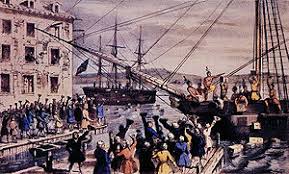
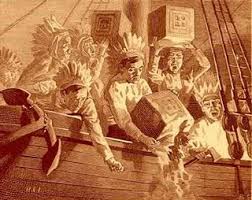
The stamp act of 1765 and the Townshend Acts of 1767 had angered American colonist regarding British decisions on imposing intolerable taxes on the colonies without representation in the Westminister Parliament. In March 1770, the crisis culminated in the deaths of five American colonists killed by British soldiers who were commandeering homes. Early in 1773, the men of Marlborough, massachusetts, declared unanimously: Death is more eligible than slavery. A free-born people are not required by the religon of Jesus Christ to submit to tyranny, but may make use of such power as God has given them to recover and support their laws and liberties...(We) implore the Ruler above the skies, that he would make bare His arm in defense of His Church and people, and let Isreal go. ON December 16,1773, the Sons of Liberty, and band of Boston patriots, threw the cargo of 342 chest of tea from a British East India company ship into the Boston Harbor. The British government responded by clsoing the port of Boston, enacting other laws that were known as the " Intolerable Acts, " and charging John Hancock, Samuel Adams, Joseph Warren, and Bengamin Church with the " Crime of High Treason, " At the very least, the Boston Tea Party rallied the support for revolutionaries in the 13 colonies and sparked the Revolution.
FREEDOM The Lord has made bare His holy arm...........ISAIAH 52:10
THE BIBLE'S INFLUENCE ON THE FOUNDING FATHERS

In 1984, political scientist Donal Lutz and Charles Hymeman at the Universtiy of Houston wrote a paper regarding the research they had done to determine the sources that most influenced the development of American political thought during our nations founding period. Over the course of ten years, they analyzed some 15,000 items of American politcal commentary published between 1760 and 1805, the Founding Era. This research paper, " The Relative Influence of European Writers on Late Eighteenth-Centruy American Political Thought, " Was published in The American Political Science Review, 78 (1984).
The researchers isolated 3,154 direct quotes made by the Founders over this period of time and identified the source of those quotes. The researchers discovered that 34 percent of the Founders quotes came directly out of the Bible. Baron Charles de Montesquieu, a French legal philosopher, was quoted 8.3 percent of the time. Sir William Blackstone, a renowned English jurist whose Commentaries on the Laws of England were highly accepted in America, was next at 7.9 percent of the Founders quotes, and John Locke, and English philosopher, was fourth with 2.9 percent.
While it is true that three-fourths of the biblical citations in the 1760 to 1805 sample came from reprinted sermons (one of the most popular types of political writing during these years), and only 9 percent of all citations came from secular literature, it is a reflection of the powerful role of the Bible upon the thinking of the Founding Fathers.
INSPIRING " So shall My word be that goes forth from My mouth.........ISAIAH 55:11
NATIONAL BLESSING
Abraham Lincoln, anguished by the ravages of civil war, declared a " Procalmation of the National Fast Day" on March 30, 1863:

By the President of the United States of America.

A Proclamation.
Whereas, the Senate of the United States, devoutly recognizing the Supreme Authority and just Government of Almighty God, in all the affairs of men and of nations, has, by a resolution, requested the President to designate and set apart a day for National prayer and humiliation.
And whereas it is the duty of nations as well as of men, to own their dependence upon the overruling power of God, to confess their sins and transgressions, in humble sorrow, yet with assured hope that genuine repentance will lead to mercy and pardon; and to recognize the sublime truth, announced in the Holy Scriptures and proven by all history, that those nations only are blessed whose God is the Lord.
And, insomuch as we know that, by His divine law, nations like individuals are subjected to punishments and chastisements in this world, may we not justly fear that the awful calamity of civil war, which now desolates the land, may be but a punishment, inflicted upon us, for our presumptuous sins, to the needful end of our national reformation as a whole People? We have been the recipients of the choicest bounties of Heaven. We have been preserved, these many years, in peace and prosperity. We have grown in numbers, wealth and power, as no other nation has ever grown. But we have forgotten God. We have forgotten the gracious hand which preserved us in peace, and multiplied and enriched and strengthened us; and we have vainly imagined, in the deceitfulness of our hearts, that all these blessings were produced by some superior wisdom and virtue of our own. Intoxicated with unbroken success, we have become too self-sufficient to feel the necessity of redeeming and preserving grace, too proud to pray to the God that made us!
It behooves us then, to humble ourselves before the offended Power, to confess our national sins, and to pray for clemency and forgiveness.
Now, therefore, in compliance with the request, and fully concurring in the views of the Senate, I do, by this my proclamation, designate and set apart Thursday, the 30th. day of April, 1863, as a day of national humiliation, fasting and prayer. And I do hereby request all the People to abstain, on that day, from their ordinary secular pursuits, and to unite, at their several places of public worship and their respective homes, in keeping the day holy to the Lord, and devoted to the humble discharge of the religious duties proper to that solemn occasion.
All this being done, in sincerity and truth, let us then rest humbly in the hope authorized by the Divine teachings, that the united cry of the Nation will be heard on high, and answered with blessings, no less than the pardon of our national sins, and the restoration of our now divided and suffering Country, to its former happy condition of unity and peace.
In witness whereof, I have hereunto set my hand and caused the seal of the United States to be affixed.
Done at the City of Washington, this thirtieth day of March, in the year of our Lord one thousand eight hundred and sixty-three, and of the Independence of the United States the eighty seventh.

By the President: Abraham Lincoln
HUMILITY" Is this not the fast that I have chosen: to loose the bonds of wickedness.... Isaiah 58:6
Bill Clinton placed his hand on Isaiah 58:12 as he took the presidential oath of office in 1997.
THE DIGNITY OF HUMAN LIFE

Our Founding Fathers held to the biblical principle that humand life is precious and created ewual. In the Declaation of Independence, it is God the "Creator" who endowed every man, woman, and child with the right to " life, liberty, and the pursuit of happiness." The signers called them self-evident truths. Each life has inherent dignity and matchless value, apparently from conception until death.
The Founders knew that if God the " Creator" is taken out of the national value system, our rights as citizens are no longer absolute and become subject to the relative values of those who are in the osition to make or change the laws. In truth, we are no longer equal in value as people, and typically it is the weatkest tand most vulnerable members of society who are the first to pay th price as tohters take the role of dtermining what rights we do and do not have. Universal moral laws that promote the good of all people and protect the innocent and vulnerable give way to the selfish pursuits of those who demand the moral license to do what they want.
The dignity of human life is not just a biblical principle, it is a principle of a decent life.Every human being, born or unborn, deserves the wqual protection of the law, and the value of life is not conditional upon its usefulness to others or to the state. Neither scientific progress not the desire to help others can justify the sacrifice of any human beings life or inherent dignity, whether it takes the form of abortion, euthanasia, or any of the many new forms of biotechnology. We must reaffirm our steadfast determination to defend the sanctity of human life.
PROTECTOR: " Before I formed you in the womb I knew you JEREMIAH 1:5
WHY THE WALL OF SEPARATION?
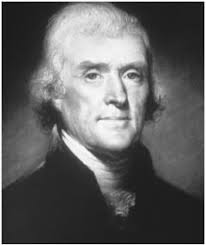
When the founding Fathers fashioned the First Amendment to the Constitution, they began with these forceful words: " Congress shall make no law respecting an establishment of religion, or prohibiting the free exercise therof." For over one hundred and fifty years, this mandate was understood to prohibit the establishment of a national religion by Congress or the preference of one religion over another, or religion over non-religion. Clearly, while limiting the federal government from exercising any authority in matters of religion, there was no hint that it was meant to exclude people of faith or their values from impacting, participating in, or shaping givernemnt.
But in 1947, The Everson v. Board of Education decision took up Thomas Jefferson's " Wall of church and state" metaphor, which is not in the Constitution. It was written in a Letter 13 years after the constitution, and announced: "The First Amendment has erected a wall between church and state. That wall must be kept high and impregnable. We could not approve the slightest breach."
What has followed from decisions rendered by the Supreme Court on down through many lower courts is a highly successful silencing of religion. Those decisions have declared verbal prayer offered in a school as uncontitutional, restricted religious speech in schools, removed the Ten Commandmetns from schools and public buildings, proclaiming that the display of a nativity scen on public property is unconstitutional unless surrounded by sufficient secular displays to prevent it from appearing religious-the list goes on and on.
Soon after the Emerson decision, another wall was erected against relgious freedom. Prior to 1954 and revision of the IRS tax code, religious groups and other nonprofits could oppose or support political candidates without risking their nonprofit status. The revision changed that, stating that all 501(c) (3)s (nonprofits) are tax exempt and are therefore prohibited from endorsing or opposing cadidates running for public office. The IRS says clergy speaking in an official capacity also should not indirectly imply who they endores or oppose.
Since 1947, the religious freedo established by the Founders undergone and ontinues to undergo serious erosion in America. The riches and wisdom of faith are no longer welcome in the pubic square. It is time for a new gernation to pray and take action in reestablishing the primacy of faith in every level of American life and maintaining America as" one nation, under God."
FREEDOM: " ......who refuse to hear My words, who follow the dictates of their hearts...." Jeremiah 13:10
HOPE " O LORD, the hope of Isreal......" JEREMIAH 17:13
IN GOD WE HOPE

On the Seal of the State of Rhode Island, over the picture of an anchor, is incribed the motto: IN GOD WE HOPE
Known Only to God

The Tomb of the Unknowns was originated after the end of World War I (November 1921) in Arlington National Cemetery, Virginia. It contains the remains of unknown American soldiers from Wrold War I and II, the Korean Conflict, and the Vietnam War (until 1998) and represents the missing and unknown service members who died so our country could remain free. The Tomb gives their families a place to grieve and pray and has been guarded continuously, 24 hours a day, 7 days a week, since July 1937, by specially trained Tomb Guards, who ensure they rest in peace.
The Tomb's inscriptions read: Here Rest in Honored Glory an American Soldier Known Only to God.
DEFENDER" ....SO I SHALL NOT SEE HIM?" JEREMIAH 23:24
THE AMERICAN SOUND
Few presidents had the ability to ignite hope in the hearts of those who love liberty more than President Ronald Reagon. In his Second Inaugural Address in 1985, he states:
History is a ribbon, always unfurling; history is a journey. And as we conintue our journey, we think of those who traveled before us.... Now we hear again the echoes of our past: a general falls to his knees in the hard snow of Valley Forge; a lonley president paces the darkened halls and ponders his struggle to preserve the Union; the men of the Alamo call out encouragement to each other; a settler pushes west and sings a song, and the song echoes out forever and fills the unknowing air.
It is the American sound. It is hopeful, big-hearted, idealistic, daring, decent, and fair. That's our heritage; that is our song. We sing it still. For all our problems, our that is our song. We sing it still. For all our problems, our differnences, we are together as of old, as we raise our voices to the God who is the Author of the most tender music. And may He continue to hold us close as we fill the world with our sound-sound in unity, affection, and love-one people under God, Dedicated to the dream of freedom people under God, Dedicated to the dream of freedom that He has placed in the human heart, called upon now to pass that dream on to a waiting and hopeful world.
INSPIRING ....to give you a future and a hope. Jeremiah 29:11
THE CIVIL WAR
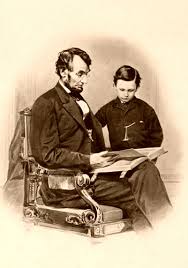

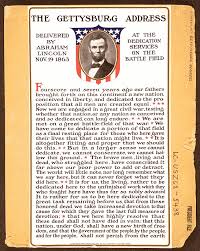
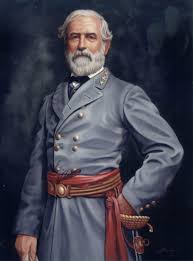
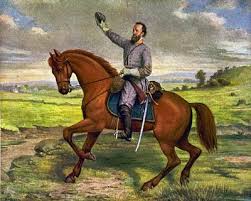
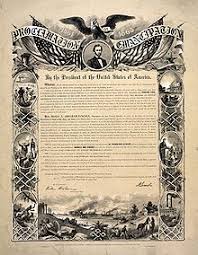

It was a war people thought would be over in three months but lasted four horrible years (1861-1865), and the cost was more American lives than in all other American was combined. By the end of the Civil War, over 360,000 Union and approximately 260,000 Confederate soldiers would be dead. It remains the greatest, and the most tragic, events in American history, where an incalculable sacrifice of " Brothers' blood" was spilled to restore to one a nation betterly torn in two. While the reasons for the Revolutionary War were abundantly clear, the reasons for the Civil War are still being debated. Political desagreements between the North and South began soon after the American Revolution ended in 1782, and those arguments mounted between. 1800 and 1860. Quarrels over unfair taxes paid on goods brought into the South from Foreign countries as well as percieved shifts of political power in the federal government to favor the Northern and Midwestern states fueled the Southern call away from the central federal authority in Washington and to a restoration of states rights. However, Slavery was the defining issue that drove the Southern resolve to make war on the Union rather than accept Abraham Lincolns election as president in 1860. Slavery had been a part of life for well over 200 years of America's history and was protected by state and federal laws regarding unlawful seizure of property. In the early 1800s , slavery was first seen as an economic issue and second as a moral issue, but it became the pivotal issue that divided the nation's political leaders. Extensive Theological debate was waged over a biblical undertanding of slavery, which Scripture never expressly denounces, though abolitionists gave convincing argument that the spirit of the Bible condemned slavery. but the bottom line was that if the South lost her slaves, her socioeconomic system would collapse. The presidential election of Abraham Lincoln in 1860 was the lst straw for the South. As a member of the Republican Party, Lincoln was considered friendly to abolitionist and northern businessmen. South Carolina became the first state to officially secede from the United States, and they were followed by six other Southern states. Together, they formed the " Confederate States of America" and elected Jefferson Davis, a Democratic senator and chapion of states rights from Mississippi, as the first president. The South beleived that the North was threatening their way of life, that it was their sovereign right to secede from the Union, and that the "peculiar institution" of slavery was ordained by God and upheld in the Bible. The North beleived the South was in rebellion and, if allowed to secede, would destroy the republic. In a famous letter to Horace Greeley, whos strong anti-slavery newspaper editorials helped to stir the North to oppose slavery, Linclon said that his first priority was saving the Union, not destroying slavery. But to save the Union meant to solve the problem of slavery; a constitutional government founded on the principle of equality for all had come to the breaking point. Paradoxically, each side beleived unequivocally that God was on its side in the conflict. From early colonial days, New England Political and religious leaders had considered themselves as God's " Chosen people." With the start of the Civil War, Southerners invoked " the favor tha guidance of Almighty God" in their constitution, proclaiming themselves a Christian nation. People of all walks of life-ministers, generals, political leaders, and newpaper editors-went so far as to claim that God had ordianed the war and was sovereign to determine all its outcomes. Nowhere was the religious paradox stated clearer than in Lincoln's Second Inaugural Address of March 1865, at one of the darkest moments of the war; " Both (North and South) read the same Bible, and pray to the same God' and each invokes His aid against the other. It may seem strange that any men should dare to ask a just God's assistance in wringing their bread from the sweat of other men's faces; but let us judge not that we be not judged. The prayers of both could not be answered; that of neither has been answered fully. The Almighty has His own purposes." In the end, over three million americans fought in the Civil War, and two percent of the population perished. It saw the end of slavery and ushered in a new political and economical order. As the era of Southern plantation aristocracy ended, the powers of the federal government expanded, and the days of big industry and business began. The clash over federal and states rights finaly came down to a struggle over the meaning of freedom in America. At Lincoln's Gettysburg Address in 1863, perhaps he was prophetic when he said the war was about a " new birth of freedom."
THE SIGNATURE OF THE CREATOR

Charles Stine (1882-1954), the Director of Research for the E.I. Dupont company and leader in the development of significant new products and patents, most of whcih were connnected with propellant powder, high explosives, dyes, artificial leather, and paints, states: The world about us, far more intricate than any watch, filled with checks and balances of a hundred varieties, marvelous beyond even the imagination of the most skilled scientific investigator, this beautiful and intricate creation, bears the signature of its Creator, graven in its works.
FAITH " ....the Lord who formed it to establish it........"
HOW FAR HAVE WE GONE?
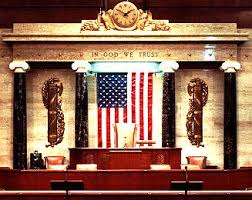
Many staes have adopted laws approving the posting of our national motto, " In God we Trust," in public buildings and school classrooms. For instance, in 1992 the State of Kentucky passed Kentucky Revised Statute, Title XIII, Education, 158.195, regarding conduct of schools:
Reading and posting in public schools of texts and documents on American history and heritage.-Local school boards may allow any teacher or administrator in a public school district of the Commonwealth to read or post in a public school building, classroom, or event any excerpts or portions of the National Motto, the national Anthem, the Pledge of Allegiance, the Preamble to the Kentucky Constitution, the Declaration of Independence, the Mayflower Pact, the writings, speeches, documents, and procalmations of the founding fathers and presidents of the Untiest States, U.S. Supreme Court decisions, and acts of the U.S.Congress, including the published text of the Congressional Record. There shall be no content-based censorship of Amrican history of heritage in the Commonwealth based on religious references in these writngs, documents, and records. How far astray have we gone that we have to pass such laws?
DEFENDER, " My people have been lost sheep. Their shepherds have led them astray...." Jeremiah 50:6
" THE DESTINY OF AMERICA"
Calvin Coolidge, the 30th President of the United States (1923-1929), spoke on the motives of the Puritan forefathers in a message entitled " The Destiny of America":
If there be a destiny, it is of no avail to us unless we work with it. The ways of Providence will be of no advantage to us unless we proceed in the same direction. If we perceive a destiny in America, if we beleive that Providence has been our guide, or won success, our own salvation requires that we should act and serve in harmony and obedience.......
Settlers came here from mixed motives, some for pillage and adventure, some for trade and refuge, but those who have set their imperishable mark upon our institutions came from far higher motives. Generally defined, they were seeking a broader freedom. They were intent upon establishing a Christian commonwealth in accordance to the principle of self-government.
They were a inspired body of men. It has been said that God sifted the nations that He might send choice grain into the wilderness. They had a genius for organized society on the foundations of peity, righteousness, liberty, and obedience of the law. They brought with them the acumlated wisdom and experience of the ages.......Who can fail to see in it the had of destiny? Who can doubt that it has been guided by the Divine Providence?
INSPIRING......She did not consider her destiny; therefore her collaps was awesome.......LAMENTATIONS 1:9
THE LAST BEST HOPE FOR MAN
In 1974, Ronald Reagan gave his famous " Shining City Upon a Hill" speech and concluded by saying: We cannot escape our destiny, nor should we try to do so. The leadership of the free world was thrust upon us two centuries ago in that littlehall of Philadelphia. In the days following World War II, when the economic strength and power of America was all that stood between the world and the return to the dark ages, Pope Plus XII said, " The American people have a great genius for splendid and unselfish actions. Into the hands of America God has placed the destines of an afflicted mankind." We are indeed, and we today, the last best hope of man on earth.
HOPE It is good that one should hope..........LAMENTATIONS 3:26
Sink or Swim Together

William Prescott (1726-1795) commanded the Colonial Militia at the Battle of bunker Hill and was on instrumental part of the battles of Long Island and Saratoga during the Revolutinalry War. In 1774, when the Bristish blockade the Boston harbor, he wrote to the city's inhabitants: We heartily sympathize with you, and are always ready to do all in our power for your support, comfort, and relief, knowing that Providence has placed you where you must stand the first shock We consider that we are all embarked in (the same boat) and must sink or swim together..... Let us all be of one heart, and stand fast in the Libety wherewith Christ has made us free. And may He, of His infinite mercy, grant us deliverance of all our troubles.
THE FOUR FREEDOMS
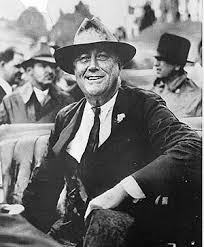
With Germany, Italy, and Japan already waging warfare on four continetns in January 1941, President Franklin D. Roosevelt urged Americans that if democracy was to survive, mobilizaton was necessary to rid the wrold of dictatorships and military rule. He then described " four essential human freedoms" that the United States hoped to secure for the world community:
No realistic American can expect from a dictator's peace international generosity, or return of true independence, or world disarmament, or freedom of expression, or freedom of religion-or even good business. Such a peace would bring no security for us or for our neighbors. Those who would give up essential liberty to purchase a little temporary safety deserve neither liberty nor safety.......
In the future days , which we seek to make secure, we look forward to the world founded upon four essential human freedoms.
The second is freedom of every person to worship God in his own way-everywhere in the world.
The third is freedom from want-which, translated into world terms, means economic understandings which will secure to every nation a healthy peacetime life for its inhabitants-everywhere in the world.
The fourth is freedom from fear-which, translated into world terms, means a worldwide reduction of armaments to such a point and in such a thorough fashion that no nation will be in a position to commit an act of physical aggression against any neighbor-anywhere in the world.
That is no vision of a distant millennium. It is a definite basis for a kind of world attainable in our won time and generation. That kind of world is the very antithesis of the so-called new order of tyranny which the dictators seek to create with the crash of a bomb......
This nation has placed its destiny in the hands and heads and hearts of it millions of free men and women; and its faith in freedom under the guidance of God. Freedom means the supremacy of human rights everywhere. Our support goes to those who struggle to gain those rights or keep them. Our strenght is our unity of purpose.
To the high concepts there can be no end save victory
Freedom " saying " Peace" when there is no peace.... Ezekiel 13:10
IN GOD WE TRUST(ANNUIT COEPTIS) THIS NAITON UNDER GOD
MONUMENTS TO AMERICAN PATRIOTISM
IT IS AMAZING THAT, at a time when such a concerted effort in underway to erase the role of God and faith in America's public life, our nation's capital, Washington, D.C., is filled with Christian religous symbols that adorn its buildings and monuments as an abiding evidence of God's role in America's hertiage. From the hall of Congress, to the monuments, to nearly every landmark building, biblical and religous quotations and images are incribed and preserved as an official testimony to the true place God has in our nations birthright and history.
THE WASHINGTON MONUMENT
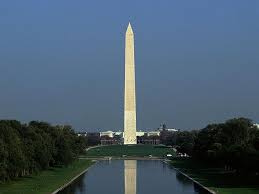
Engraved on the aluminum capstone is the Latin phrase Laus Deo, which means " Praise be to God." Lining the walls of the stairwell are carved tribute blocks that declare such biblical phrases as " Holiness to the Lord"; " Search the Scriptures"; " The memory of the just is blessed"; and " Train up a child in the way he should go, and when he is old, he will not depart from it".
NO PEOPLE CAN BE BOUND TO ACKNOWLEDGE AND ADORE THE INVISIBLE HAND WHICH CONDUCTS THE AFFAIRS OF MEN MORE THEN THOSE OF THE UNITED STATES. GEORGE WASHINGTON
THE U.S. CAPITOL
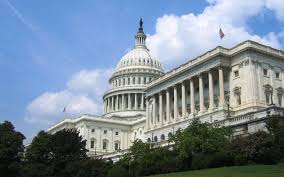
In the House chamber is the incription, " In God We Trust." Also in the House chamber, above the Gallery door, stands a marble relief of Moses, surrounded by twenty-two other lawgivers. At the east entrance to the Senate chamber are the words Annuit Coeptis, which is Latin for " he has favored our undertakings." The words " In God We Trust" are also written over the sountern entrance.
In the Rotunda is the painting of " The Baptism of Pocahontas", and also " The Embarkation of the Pilgrims" that shows the Pilgrims praying on shipboard led by William Brewster. Clearly seen in an open Bible are the wordss," the New Testament according to our Lord and Savior, Jesus Christ." The words" God With Us" are inscribed on the sail of the ship.
In the Capitol's chapel is a stained glass window depicting George Washington in prayer under the inscription " This Nation Under God." Also, the prayer from Psalm 16:1 is etched in the window, which states, " Preserve me, God, for the Thee do I put my trust."
THE SUPREME COURT
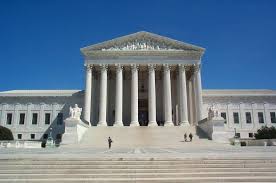
The Supreme Court building has a number of places where there are images of Moses and the Ten Commandments. Moses is included among the great lawgivers in herman MacNeils marble sculpture group on the east front. As you enter the Supreme Court courtroom, the tow huge doors have the Ten commandments engraved on each lower portion of each door and a display of the Ten commandments is also engraved on each lower portion of each door and a display of the Ten Commandmetns is also engraved over the chair of the Chief Justice.
THE JEFFERSON MEMORIAL
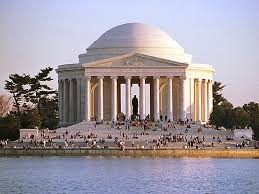
When you enter the Jefferson Memorial, you will find many references to God. A quote that runs around the interior dome says," I have sworn upon the altar of God, eternal hostility against every form of tyranny over the minds of man." One of the panels reads:" God who gave us life gave us liberty. Can the liberties of a nation be secure when we have removed a conviction that these liberties are the gift of God: Indeed I tremble for my cournty when I reflect that God is just, that His justice cannot sleep forever."
THE LINCOLN MEMORIAL
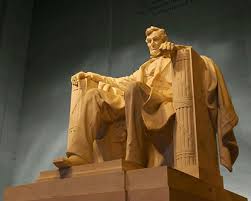
Millions have entered the Lincoln Memorial and gazed up at the magnificent statue of Abraham Lincoln. His famous speeches are inscribed into the walls. On the left side is the Gettysburg Address. he said, " We here highly resolved that these dead shall not have died in vain, that this nation, under God, shall have a new birth of freedom." On the right side is Lincoln's Second Inaugural Address, which mentions God Fourteen times and quotes the Bible twice. He concludes with a lament over the destruction caused by the Civil War, and appeals to charity in healing the wounds of the war. "With malice toward none, with charity for all, with firmness in the rights as God gives us to see the right, let us strive on to finish the work we are in, to bind up the nations's wounds, to care for him who shall have borne the battle and for this widow and his orphan, to do all which many achieve and cherish a just and lasting peace among ourselves and with all nations".
Patrick Henry
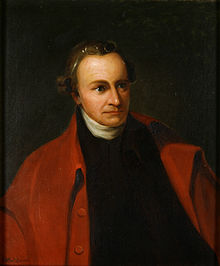
Patrick Henry(1736-1799) was one of the most passionate and fiery advacates of the American Revolutin and republicanism. Many have compared him to an Old Testament prophet in his powerful duninciations of corruption in governemtn officials and his defense of the colonishts rights. Elected to the Virginia legislature in 1775, it was his influence that rallied the state of Virginia, the largest of the thirteen colonies, into military preparedness.
Rebellion against unjust taxes had begun in the colonies, and the British had posted troops througout the coloies and warships in America's harbors. During the Second Virginia convention's debates on whether to declare independence or negotiate with the British, Patrick Henry rose up on March 23,1775 and declared, " Should I keep back my opinions as such a time, ......... I should consider myself a guilty of treason toward my country, and of an acto f disloyalty toward the majesy of heaven, whcih I rever above all earthy kings." Then he called up his countrymen to rust God and use all the mesn that He had placed i their power:" threee million of people, armed in the holy couse of liberty, and in such a country as that we possess, are invincible by any force which our enemy can send us. Besides, sires, we shall not fight our battles alone. There is a just God who presides over the destinies of nations, and who will raise up friends to fight our battles for us. The battle, sir, si not to the strong alone; it is the vigilant, the active, the brave."
Patrick concluded his argument with a passionate call, " Gentelmen may cry, Peace, Peace-but there is no peace. The war is actually begun!.... Our brethren are already in the field! Why stand we here idle?.... Is life so dear, or peace so sweet, as to be purchased at the price of chains and slavery? Forbid it, Almighty God! I know not what course others may take: but as for me, give me liberty or give me death!"
During the war, he served as the first post-colonial governor of Virginia. After ther Revolution, Henry was an outspoken critic of the United States Consitution and urged against its adoption, arguing it gave the federal government too much power. He was instrumental in forcing the adoption of the Bill of Rights to amend the new Constitution. He served five terms as governor of Virginia.
" THE GOD WHO MADE THE PEANUT"

George Washington Carver(1864- 1943) was a fabulous chemist of international fame in the field of agriculture. Much of his fame was based on his research and promotion of alternative crops to soil-depleting cotton, such as the peanut, soybean, pecan, and sweet potato. He wanted poor farmers to grow alternative crops as both a source of their own food as well as a source of other products to inprove their quality of life. In 1921, Carver spoke in favor of a peanut tariff before the Ways and Means Committee of the United States House of Representatives. At the time, it was unusual for a black person to be called as an expert. He also detailed the potential uses of the peanut and other new crops to improve the economy of the South. At the end of his address, the Chairman of the Commitee asked:
" Dr Carver, how did you learn all of these things?"Carver answered: "From an old book." "What book?" Carved replied, "The Bible." The Senator inquired, " Does the bible tell about peanuts? " No, sir, " Dr. Carver replied,"but it tells about the God who made the peanut. I asked Him to show me what to do with a peanut, and He did."
INSPIRING" But there is a God in heaven who reveals secrets...." DANIEL 2:28
A FIREMAN'S PRAYER
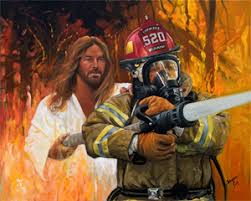
When I am called to duty, God,
Wherever flame may rage,
Give me the strength to save some life,
Whatever be its age.
Help me embrace a little child
Before it is to late,
Or Save an older person from
The horror of that fate.
Enable me to be alert
And hear the weakest shout,
And quickly and efficiently
To put the fire out.
I want to fill my calling and
To give the bet in me,
To quard my every neighbor
And protect his property.
And if according to my fate,
I am to lose my life,
Please bless with Your protecting hand
My children and my wife.
AUTHOR UNKNOWN
SELFLESS. " ........ FROM THE BURNING FIERY FURNACE..... DANIEL 3:17
PRAYER FOR THE PEOPLE
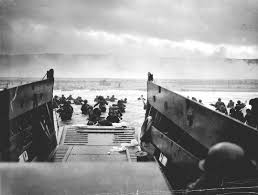
The circumstances were differenct, but centuries later another leader went before God for his people's sake, praying for His mercy and help. This is the prayer originally entitled " Let Our Hearts Be Stout,"read to the nation on radio by President Franklin D. Roosevelt as Allied troops were invading Nazi-occupied Europe on D-Day, June 6, 1944:
Almighty God, our sons, pride of our nations, this day have set upon a mighty endeavor, a struggle to preserve our Republic, our religion, and our civilization, and to set free a suffering humanity. Lead them straight and true; give strength to their arms, stoutness to their hearts, steadfastness in their faith.
They will need Thy blessings. Their road will be long and hard. For the enemy is strong. He may hurl back our forces. Success may not come with rushing speed, but we shall return again and again; and we know that by Thy grace, and by the righteousness of our cause, our sons will truimph
...For these men are lately drawn from the ways of peace. They fight not for the lust of conquest. they fight to end conquest. They fight to liberate. They fight to let justice arise and tolerance and goodwill among all Thy people. They yearn but for the end of battle, for their return to the haven of home. Some will never return. Embrace these, Father, and recieve them. Thy heroic servants, into Thy kingdom.
And for us at home-fathers, mothers, children, wives, sisters, and brothes of brave men overseas, whose thoughts and prayers are ever with them-help us, Almighty God, to rededicate ourselves in renewed fatih in Thee in his hour of great sacrifice.... And let our hearts be stout, to wait out the long travail, to bear sorrows that may come, to impart our courage unto our sons wheresoever they may be.
....With They blessing, we shall prevail over the unholy forces of our enemy. Help us to conquer the apostle of greed and racial arrogances. Lead us to the saving of our country, and with our sister nations into the world unity that will spell a sure peace-a peace invulmerable to the schemigns of unworthy men. And a peace that will let all of men live in freedom, reaping the just rewards of their honest toil.
They will be done, Almighty God. Amen.
PRAYER Then I set my face towrad the Lord God........ DANIEL 9:3
RELIGION AND LAW
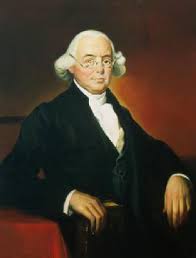
Justice James Wilson was one of the Supreme Court's original members and a signer of both the Declaraton of Independence and the Constitution. A major force in the drafting of th eConstitution. A major force in the drafting of the Constitution, he wrote several legal works, including a 1792 Comenatry of the Constitution of the United States of America and three-volume set of legal lectures, delviered to law students. Wilson played a significant role in laying the early foudnaton of an American system of jurisprudence. Notice what he taught his student;
It should always be remembered that this law,... made for men or for nations, flow from the same Divine source; it is the law of God.... What we do, indeed, must befounded on what He has done; and the dificiencies of our laws must be supplied by the perfectons of His. Human law must rest its authority, ultimately,upon the authority of that law which is Divine... We now see the deep and the solid foundatons of human law... From this short, but plain and , I hope, just statement of things, we perceived a principle of connection between all the learned professons; but especially between the two last mentioned(the profession of Divinity and the profession of law). Far from being rivals or enemies, religion and law are twin sisters, friends, and mutual asistants. Indeed, these two sciences run into each other.
TRUTH " BECAUSE YOU HAVE FORGOTTEN THE LAW OF YOUR GOD....." HOSEA 4:6
AMERICA, NEVER FORGET
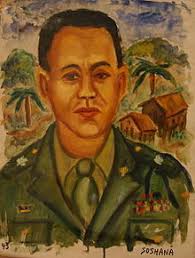
Carlos Romulo(1899-1985), a Phillippine general renowned for his heroic activities during World WarII, stated: Never forget, Americans, that yours is a spiritual country. Yes, I know you're a practical people. Like others, I've marveled at your factories, your skyscrapers, and your arsenals. But underling everything else is the fact that America began as a God-loving, God-fearing, God-worshipping people.
HONOR " For Israel has forgotten his Maker...." HOSEA 8:14
DAYS OF FASTING
After the Boston Tea Party, the British namy retailiated by blockading the port of Boston. The colonies surrounding Massachusetts responded with sympathy and action. On May 24, 1773, the House of Burgesses in Virginia proposed and approved a Day of Fasting, Humiliation, and Prayer.
This House, being deeply impressed with apprehension of the great dangers to be derived to British America from the hostile invasion of the city of Boston in our siter colony of Massachusetts Bay, whose commerce and harbor are, on the first day of June next, to be stopped by an armed force, deem it highly necessary that the said first day of June be set apart, by the members of this House, as a Day of Fasting , Humiliation, and Prayer, devoutly to implore the Divine interposition, for averting the heavy calamity which threatens destruction to our civil rights and the evils of civil war; to give us one heart and mind frimly opposed, by all just and proper means, every injury to American rights; and that the minds of his Majesty and his Parliament, may be inspired from above with wisdom, moderation, and Justice, to remove from the loyal people of America all cause of danger from a continued pursuit of measures pregnant with their ruin.
HUMILITY " TURN TO ME WITH ALL YOUR HEART, WITH FASTING WITH WEEPING, AND WITH MORUNING JOEL 2:12
A Christian Republic
Judge Nathaniel Freeman in 1802 chared with Massachusetts Grand Juries as follows:
The laws of the Christian system, as embraced by the Bible, must be respected as a high authroity in all our courts, and it cannot be thought improper for the officers of such government of acknowlege their obligation to by governed by its rule...(our government) originating in the voluntary compact of a people who in the very intrument profess the Christian religion, it may be considered, not as republic Rome was, a pagan, but a Christian republic.
HONOR, " ......they have despised the law of the LORD....."
Where Justice is Denied

Frederick Douglass(1818-1895), an abolitionist, orator, author, statesman, and one of the msot prominent figures in African-American and American history, stated:
Where justice is denied, where poverty is enforced, where ignorance prevails, and where any one class is made to feel that society is an organized conspiracy to oppress, rob and degrade them, neither persons nor property will be safe.
DEFENDER: "....you who turn justice to wormwood...." AMOS 5:7
The Grand Old Book
James Dwight Danan ( 1813-1895), a famous geologist, mineralogist, and zoologist who became the president of the Geological Society of America as well as the American Association for the Advance of Science, stated: That grand old Book of God still stands; and this old earth, the more its leaves are turned over and pondered, the more it will sustain and illustrate the Sacred Word.
INSPIRING....and has founded His strata in the earth......Amos 9:6
"SAIL ON , O SHIP OF STATE!"

Henry Wadsworth Longfellow (1807-1882) was by far the most widely known and best-loved American poet of his time. He achieved a level of antional and international prominence possibly unequaled in the literary history of the United States. A fervent abolitionist, his poem " The Building of a Ship" was a pro-Union allegory that speaks of his fear that the slavery issue would destroy the Union. Upon hearing the poem recited, President Lincoln was said to have wept:
Thou, too, sail on, O Ship of State!
Sail on, O Union, strong and great!
Humanity with all its fears,
With all the hopes and future years,
Is hanging breathless on thy fate!.......
Our hearts, our hopes, are all with thee,
Our hearts, our hopes, our prayers, our tears,
Our faith triumphant o'er our fears,
Are all with thee-are all with thee!
In early 1941, President Franklin Roosevelt sent a hand-written letter to English Prime Minsiter Churchill and included the first five lines of Longfellow's poem, stating the verse " applies to you people as it does to us." Churchill wrote back that he was " deeply moved" and cited the letter as a symbol of the growing partnership between England and the United States." Give us the tools," he told the president, " and we will finish the job!"
HOPE " But on Mount Zion there shall be deliverance........."OBADIAH 17
REVIVAL FIRES
William W. Bennet was a confederate Chaplain who published a first-hand account of the spiritual renewal that swept through every corps, division, brigade, and regiment in General Robert E. Lee's Army of Northern Virginia Up to Jamuary 1865, it was estimated that nearly 150,000 soldiers had been converted during the progress of the war, and it was beleived that fully one-third of all the soldiers in the field were praying men and members of some brach of the Christian chruch.
INSPIRING . " SO THE PEOPLE OF NINEVEH BELIEVED GOD..... JONAH 3:5
General Dauglas MacArthur, Supreme Commander of the Allied Forces in the Pacific during Warld War II, said in December 1951:
In this day of gathering storms, as moral deterioration of politicial power spreads its growing infection, it is essential that every spiritual force be mobilized to defend and preserve the religious base upon which this nation is founded; for it has been that base which has been the motivating impulse to our moral and national growth. History fails to record a single precedent in which naitons subject to moral decay have not passed into political and economic decline. There has been either a spiritual reawakening to overcome and moral lapse or a progressive deterrioration leading to ultimate national disaster.
MORAL STRENGTH Then God sw... that they turned from their evil way.....JONAH 3:10
Inexplicable Evidences

Robert Morris Page(1903-1970), the physicist known as the "Father of U.S. Radar, " wrote:
The authenticity of the writings of the prophets...is established by such things as the prediction of highly significant events far in the future that could be accomplished only through a knowledge abtained from a realm that is not subject to the laws of time as we know them. One of the great evidences is the long series of prohecies concerning Jesus the Messiah. These prophecies extend hundreds of years prior to the birth of Christ. They include a vast amount of detail concerning Christ himself, His nature and the things He would do when, He came things which to the natural world, or the scientifice world, remain to this day completely inexpicable.
A WISE AND FRUGAL GOVERNMENT
In his 1801 Inaugual Address, President Thomas Jefferson stated:

Sometimes it is said that man cannot be trusted with the government of himself. Can he, then , be trusted with the governemtn of others? Or have we found angels in the forms of kings to govern him? Let history answer this question. Let us, then, with courage and confidence pursue our own federal and republican principles.......
Enlightened by the benign religion, professed, indeed, and practiced in various forms, yet all of them in culcating honestly, truth, temperance, gratitude, and the love of man acknowledging and adoring an overruling Providence, which by all its despensations proves that it delights in the happines of man here and his greater happiness herafter. With all these blessings, what more is neceessary to make us a hpapy and prosperous people? Still one thing more, fellow citizens- a wise and frugal government, wich shall restrain men from injuring one another shall leave them otherwise free to regulate their own pursuits of industry and improvement, and shall not take .. from the mounths of labor and bread it has earned....
You should understand what I deem the essential principles of our government...Equal and exact justice to all men, of whaever state or persuation, religious or political... the arraingment of all abuses at the bar of the public reason; freedom of religion; freedom of the press, and freedom of person under the protection of the habeas corpus and trial by jury impartially selected..........
PROTECTOR He has shown you, O man, what is good............MICAH 6:8
Jimmy Carter placed his hand on Micah 6:8 as he took the presidential oath of office in 1977.
FAITH OF OUR FOUNDING FATHERS
George H.W. bush, the 41st president of the United States, stated:

The great faith that led our nation's Founding Fathers to pursue this bold experience in selfgovernment has sustained us in uncertain and perilus times; it has given us strength and inspiration to this very day. Like them, we do very well to recall our "firm reliance on the pretection of Divine Providence," to give thanks for the freedom and prosperity this nation enjoys, and to pray for continued help and guidance from our wise and loving Creator.
THE FIRST NATIONAL DAY OF THANKSGIVING
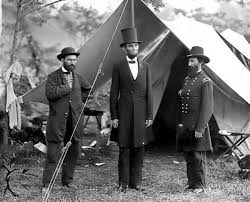
In the midst of the Civil War, President Abraham Lincoln intitiated the first annual national Day of Thanksgiving and Praise on October 3, 1863, issuing a formal Proclamation, passed by an Act of Congress:
....No human counsel hath devised nor hath any mortal hand worked out these great things.. They are the gracous gifts of the Most High God, who, while dealing with us in anger for our sins, hat nevertheless remembered mercy. it has seemed to me fit and prper that they should be solenly, reverently, and gratefully acknowledged as with one heart and on voice by the whole American People. I do therefore invite my fellow citizens in every part of the Untied states, and also whose who are at sea and those who ae sojourning in foreign lands, to set apart and observe the last Thursday of Novemeber next, as a day of Thanksgiving and Praise to our beneficient Father who dwelleth in the heavens.
And I recommend to them that while offering up the ascriptions justly due to Him for such singular deliverances and blessings, they do also , with humble penitence for our national perverseness and disobedience, commend to His tender care all those whom have become widows, orphans, mourners, and sufferers in the lamentable civil strife in which we are unavoidably engaged, and fervently implore the interposition of the Almighty Hand to heal the wounds of the nation and to restore it as soon as may be consistent with the Divine purposes to the full enjoyment of peace, harmony, tranquility, and Union.
HUMILITY: ..........in wrath remember mercy HABAKKUK 3:2
ONE GREAT POLITICAL IDEA
Frederick Dauglass, the greates civil rights leader of the nineteenth century, declared:
I have one great political idea... That idea is an old one. it is widely and generally assented to; nevertheless, it is very generally trampled upon and disregarded. The best expression of it, I have found in the Bible. It is in substance; " Righteousness exalteth a nation; sin is a reproach to any people." This constitutes my politics-the negative and positive of my politics, and th whole of my politics... I feel it my duty to do all in my pwer to infuse this idea into the public mind, that it may speedily be recongnized and practiced upon by our people.
MORAL STRENGTH Seeks,righteousness, seeks humilty ZEPHANIAH 2:3
FACING FEAR IN DARK HOURS

In his First Inaugual Address, Franklin Delano Roosevelt, the 32nd President of the United States(1933-1945), proclaimed to the nation, as it just entered the Depression:
Frist of all, let me assert my firm beleif that the only thigns we have to fear is fear itself-nameless, unreasoning, unjustified terror which paralyzes needed efforts to convert retreat into advance... In such a spirit on my part and on yours we face our common difficulites, They concern, thank God, only material things.........Practices of the unscrupulous moneychangers stand indicted in the court of public opinion, rejected by the hearts and minds of men...they know only the rules of a generation of self-seekers. They have no vision, and where there is no vision the people perish(Perverbs 29:18) The moneychagners have fled from there high seats in the temple of our civilication. We may now restore that temple of the ancient truths........we face arduous days that lie before us in the warm courage of national unity; with the clear consciousness of seeking old and precious moral values....In the dedication of a nation we humbly ask the blessing of God. May He protect each and every one of us! may He guide me in the days to come:
INSPIRING " DO NOT FEAR; ZION, LET NOT YOUR HANDS BE WEAK" ZEPHANIAH 3:1
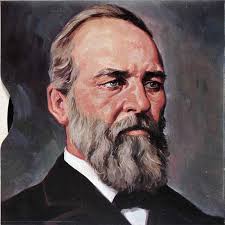
ETERNAL HOPE
James Garfield, the 20th president of the Untied States(1881), who was assiassinated after serving only four months, wrote;
The world's history is a Divine poem, of which the history of every nation is a canto and every man a word, its strains have been pealing along down the centuries, and though there have been mingled the discourds of warring cannons and dying men, yet to the Christain philosopher and historian-the humble listener-there has been a Dvine melody running through the song which speaks of hope and halcyon dys to come.
HOPE "....and I will fill this timeple with glory....Haggai 2:7
TRUE CHRISTIAN, TRUE CITIZEN
Theodore Roosevelt, the 26th President of the Untied States(1901-1909), the youngest man to hold the office, stated.
The true Christain is the true citizen, lofty of purpose, resolute in endeavor, ready for a hero's deeds, but never looking down on his task because it is cast in th day of small things; scorful of baseness, awake to his own duties as well as to his rights, follwoing the highter law with reverence, and in this world doing all that in his power lies, so that when death comes he may feel that mankind is in some degreee better because he lived.
Every thinking man , when he thinks, realizes that the teaching of the bible are so interwoven and entwined with our whole cvic and social life that it would be literally impossible to us to figure ourselves what life would be if these standards were removed. We would lose almost all the standards by which we now judge both public and private morals; all the standards towards which we, with more or less resolution, strive to raise ourselves.
MORAL STRENGTH..."For who has despised the day of small things"
Saving Principles
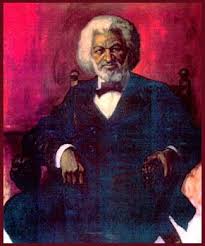
Frederick Douglass (1818-1895), an abolitionist, aorator, author, statesman, and one of the most prominent figures in African-American and American history, states: The Declaration of Independence is th ringbolt to the chain of your nation's destiny; so, indeed, I regard it. The principles contained in that instrument are saving principles. Stand by those principles, be true to them on all occations, in all places, against all foes, and at whatever cost.
DEFENDER " THUS SAYS THE LORD OF HOSTS; " EXECUTE TRUE JUSTICE....."
CHRISTOPHER COLUMBUS

Christopher Columbus (1451-1506) was an Italian navigator and explorer whose voyages across the Atlantic Ocean ushered in the first period of sustained contact between Europe and the Americas. though he was preceded by hundreds of years by other exploers, such as Leif Ericson, Columbus initiated widespread contact between Europeans and indigenous Americans in the Western Hemisphere
When Columbus saided from Spain in 1492, his motives may have been many. To open a trade route to the untapped watlth of the Orient would win glory and vast riches. he may have also felt it would secure a way to diminish the power of the Ottoman Turks who were threatening Europe at the time. But there certainly wa a Christain motive as well that underlay his mission.
Columbus was a devout Catholic who felt predestined, chosen for a mission. He felt his name, Christopher, which means" christ-bearer," was evidence of his destiny. He searched the Scriptures and thought he found assurance for a call to sail to the far reaches of the globe with the Christian message. Zechariah 9:10 said that " He shall speak peace to the nations; His dominion shall be' from sea to sea, and from the River to the ends of the earth. " And Psalm 107: 23,24 promised that " those who go down to the sea in ships, who do business on great waters, they see the works of the LORD, and His wonders in the deep."
Describing his motive, Columbus stated: "Who can doubt that this fire was not merely mine, but also the Holy Spirit who encouraged me with a radiance of marvelous illuminiation from his sacred Scripture,...urging me to press forward"? He felt that Almighty God has directly brought about his journey " With a hand that could be felt, the Lord opened my mind to the fact that it would be possible....and He opened my will to desire to accomplish that project....The Lord purposed that there should be something miraculous in the matter of the voyage to the Indies."
Although Columbus has come under criticism in recent years, his sense of having a mission from God eventually opened the way for millions of unreached people to hear the good news of salvation through Jesus Christ. As Pulitzer-Prize winning biograhpher Samuel Eliot Morison wrote, " This conviction that God destined him to be an intrument of spreading the faith was far more poetent that the desire to win glory, wealth, and worldy honors, to which he was certainly far from indifferent."
FAITH, " He shall seak peace to the nations....." ZECHARIAH 9:10
Liberty, A Gift of the Creator

Alexander Halilton (1755-1804), A Founding Father who cowrote the Federalitst Papers, stated concerning the nature ofr liberty: The fundamental source of all your errors, sophisms, and false reasonings, is a total ignorrance of the natural rights of mankind. Were you once to become acquainted with these, you could never entertain a thought that all men are not, by nature, entitled to a parity of privileges. You would be convinced that natural liberty is a gift of the beneficent Creator to the whole human race; and that civil liberty is founded in that and cannot be wrestled from any people, without the most manifest violation of justice.
FREEDOM Have we not all one Father: MALACHI 2:10
Loving Devotion of a Free People
In his Inaugual Address, Rutherford Hayes, the 19th president of the United States(1877-1881), states:
Looking for the guidance of the Divine Hand by which the destinies of nations and individuals are shaped, I call upon you, Senators, Representatives, judges, fellow citizens, here and everywhere, to unite with me in an earnest effort to secure to our country the blessings, not only of material property, but of justice, peace, and union-a union depending not upone constraint of force but upon the loving devotion of a free people; and that all thigns may be so orderes and settled upon the best and surest foundations that peace and happiness, truth and justice, religion and piety, may be established among us for all generations.
DEVOTION " .....open for you the windows of heaven...." MALACHI 3:10"
THE SUN OF RIGHTEOUSNESS
Rutgers University (originally chartered as Queen's College) was founded in New Jersy in 1766. Inspired by the motto of the University of Utrecht, Netherlands, which was " Sun of Righteousness, Shine Upon Us, " Rutgers University chose for its official motto: Sun of Righteousness, Shine upon the West Also
Inspiring " The Sun of Righteousness shall arise...." MALACHI 4:2
THE GOVERNMENT AND NATIVITY SCENES
Warren Earl Burger, Chief Justice of the United States from 1969 to 1986, delivered the Supreme Court's opinion in the 1985 cas of Lynch v Donnelly, which upheld that the city of Pawtucket, Phode Island, did not violate the Constitution by displaying a Nativity scene. Noting that presidential orders and proclamations form Congress have designated Christmas as a national holiday in religious terms for two centuries and in the Western world for twenty centuries, he wrote:
There is an unbroken history of official acknowledgment by all three branches of government of the role of religion in American life.... The constitution does not require in American life.... The Constitution does not require a complete separation of church and state. It affirmatively mandates accommodation, not merely tolerance, of all religions and forbids hostility towards any.... Anything less world require the " callous indifference" we have said was never intended by the Establishment Clause. Indeed, we have observed, such hostility would bring us into a " war with our national traditon as embodied in the First Amendment's guaranty of the free exercise of religion."
Freedom...they saw the young Child with Mary His mother, and fell down and worshiped Him. Matthew 2:11
George H.W. Bush placed his hand on Matthew 5 as he took the presidential oath of office in 1989
Harry S. Truman placed his hand on Matthew 5:3-11 and Exodus 20:3-17 as he took the presidential oath of office in 1949
THE MORAL PRECEPTS OF JESUS
In a letter to Dr. Benjamin in 1803, President Thomas Jefferson stated: The practice of morality being necessary for the well-being of society, He (GOD) has taken care to impress its precepts so indelibly on our hearts that they shall not be effaced by the subleties of our brain. We all agree in the obligation of the moral precepts of Jesus, and nowhere will they be found delivered in greater purity than in His discourses.
MORAL STRENGTH
Then He opened His mouth and taught them....MATTHEW 5:2
HONOR" A city that is set on a hill cannot be hidden" Matthew 5:14
God's Covenant People

Peter Bulkley(1583-1659) was the Puritan leader who founded the city of concord, Massachusetts. In his book of sermons, The gospel covenant, he states. We are as a city set upon a hill, in the open view of all the earth....We profess ourselves to e a people in covenant with God, and therefore...The Lrod our God..... will cry shame upon us if we walk contrary to the covenant which we have promised to walk in.. If we open the mouths of men against our prpfession, by reason of the scandalousness of our lives, we (of all men)shall have the greater sin.
Abraham Lincoln placed his hand on Matthew 7:1, 18:7, and Revelation 16:7 as he took the presidential oath of office in 1865
RELIGION SUPPORTS THE STATE
Robert Winthrop, a lawyer and philanthropist who served as the Speaker of the United States House of Respresentatives (1847-1849), stated:
The voice of experience and the voice of our won reason speak but one language....Both united in teaching us that men may as well build their houses upon the sand and expect to see them stand, when the rains fall, and the winds blow, and the floods come, s to found free insttutions uon any other basis than that of morality and virtue, of which the Word of God is the only authoritative rule, and the only adequate sanction.
All societies of men must be governed in some way or other. The less they have of stringent state government, the more they must have of individual self-government. the less they rely on public law or physical force, the more they must rely on private moral restraint.
Men, in a word, must necessarily be controlled either by a power within them or a power without them; either by the Word of God or by the strong arm of man; either by the bible or by the bayonet.
It may do for other countries and other governments to talk about the state supporting religion. Here, under our won free institutions, it is religion which must support the state.
MORAL STRENGTH"Therefore whoever hears these sayings of Mine, and does them........Matthew 7:24
GOOD WORKS
Benjamin Franklin, one of America’s renowned Founding Fathers, wrote;
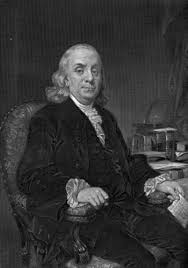
I can only show my gratitude for these mercies from God, by a readiness to help His other children and my brethren. For I do not think that thanks and compliments, though repeated weekly, can discharge our real obligations to each toher, and much less those to our Creator.
You will see in this my notion of good works, that I am far from expecting a merit heaven by them. By heaven we understand a state of happiness, infinite in degree, and eternal in duration. I can do nothing to deserve such rewards……
The faith you mention has certainly its use in the world. I do not desire to see it diminished, nor would I endeavor to lessen it in any man. But I wish it were more productive of good works that I have generally seen it; I mean real good works; works of kindness, charity, mercy, and public spirit; not holiday keeping, sermon reading or hearing; performing church ceremonies, or making long prayers, filled with flatteries and compliments.
The worship of God is a duty; the hearing and reading of sermons may be useful; but , if men rest in hearing and praying, as too many do, it is as if a tree should value itself on being watered and putting forth leaves, though it never produce any fruit.
WORSHIP: ‘ ….a tree is known for it’s fruit.” Matthew 12:33
Abraham Lincoln placed his hand on Matthew 7:1, 18:7, and Revelation 16:7 as he took the presidential oath of office in 1865
THE BIBLE AND MARRIAGE
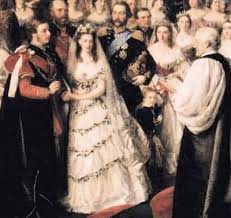
Our American society has been based upon the belief that the biblical view of a traditional marriage and family is the backbone of a civilized people. The biblical basis for understanding God’s intention for marriage is found in Genesis 2:24: “ Therefore a man shall leave his father and mother and be joined to his wife, and they shall become one flesh.” The creation of Adam and Eve(male and female) was the foundation of human civilization, and their union was the first marriage. Jesus also reminded us in the New Testament that marriage is an institution of God designed as a lifelong covenant relationship between a man and women(Mathew 19:1-6)
God’s command to Adam and Eve was to “be fruitful and multiply; fill the earth and subdue it” (Genesis 1:28). God’s design for procreation demanded the union of a man and woman. From this sanctified union come children, who are born into a secure home with a father and a mother to love, nurture, and teach them how to become healthy, productive, and responsible citizens. God’s plan, nature’s plan, and common senses plan all support a man and woman producing children within the institution of marriage.
Preserving the traditional family is vital to the future of America. We must join together to maintain the heritage given to us-marriage is one man and one women lovingly committed to each other for life. The family is a sacred institution; it is a basic unit of our society and essential to the well being of the greater community.
FAMILY VALUES:” For this reason a man shall leave his father and mother and be joined to his wife, and the two shall become one flesh.” Matthew 19:5
DEFENDING THE UNBORN
Henry Hyde served thrity-two years in the House of Representatives and was desribed as a passionate, eloquent champion and powerful defender of the unborn and of American freedom. On July 16, 1993, he stated:
" That all men are created equal and are endowed by their creator"-human beings upon creation, not upon brith. that is where our human dignity comes from. It comes from the Creator. it is an endowment, not an acievement.
By membership in the human family, we are endowed by our Creator with " inalienable rights." They cna't be voted away by a joury or a court. "
" Among which are life"-the first inalienable right, the first endowment from the Creator. Tht is mainstream America, The predicate for our constitution, our counrtry's birth certificate. To respect the right of life as an endowment from the Creator..........
It is the unborn who are the least of God's cretures. We have been told that whotsoever we do for the least of these we do unto Jesus.
DEFENDER, " IN AS MUCH AS YOU DID IT TO ONE OF THE LEAST OF THESE mY BROTHREN, YOU DID IT TO ME" MATTHEW 25:40